



As an Amazon Associate, we earn from qualifying purchases. This post contains affiliate links – if you buy through them, we may earn a commission at no extra cost to you.
There isn’t one single best guide for small garden spaces design that fits every person. The right pick depends on what you actually need to do outside and how you like to work through a project. Some buyers want fifty quick ideas they can try this weekend. Others need a fold-out board to move plant stickers around before they dig a single hole. What separates these books isn’t quality but the kind of help they offer. A workbook asks you to fill in pages about your own yard. A toolkit gives you physical pieces to arrange. Gardentopia Design Basics works well if you just want clear design rules, while Design-Your-Garden Toolkit is the choice when you’d rather plan with your hands before touching the soil.
1. Gardentopia Design Basics

Best for: someone who wants clear outdoor design rules without extra tools.
This book’s listing names it as a guide to design basics for creating beautiful outdoor spaces. That tells you the focus is on the core rules that make a yard look put together.
When you’re working with a tight area, knowing those fundamentals stops you from filling it with things that clash.
A buyer who needs to see a plan physically mapped out won’t find that support in this listing. It’s built for reading and applying ideas, not moving pieces around a table.
If you learn best by looking at finished examples and pulling principles from them, this matches that habit. But if you want to draft your beds before buying a single plant, another option here does that better.
The mistake people make here is expecting a workbook when they buy a book about basics. That confusion leads to time spent searching inside for templates that were never part of the deal.
If your main hurdle is arranging what you already like, start with the rules first. If your main hurdle is visualizing where things go, use a tool that lets you move pieces around.
Good if:
- You prefer learning the rules behind good layout first.
- You want a straightforward read without extra physical parts.
- You already know which plants you like but struggle to arrange them.
Skip it if:
- You need a hands-on tool to map out your space before planting.
2. Beginner’s Garden Planning Guide

Best for: a first-time gardener wanting fifty simple ideas to start quickly.
The listing promises fifty simple gardening ideas for adding style and personality to your outdoor space. That number matters because it means you aren’t staring at one long theory chapter. You can flip to an idea that fits your yard today. It also mentions sustainable gardening and using containers, which are two things people with limited room rely on heavily.
That makes it easy to follow. If you’ve already filled several yards and just need a new angle, this might repeat what you know.
Good if:
- You’ve never planned a garden and need a starting point.
- You want to use containers because your space is mostly concrete.
- You like picking from a list of distinct ideas rather than following one method.
Skip it if:
- You already have years of gardening experience and want advanced drafting techniques.
3. Design-Your-Garden Toolkit
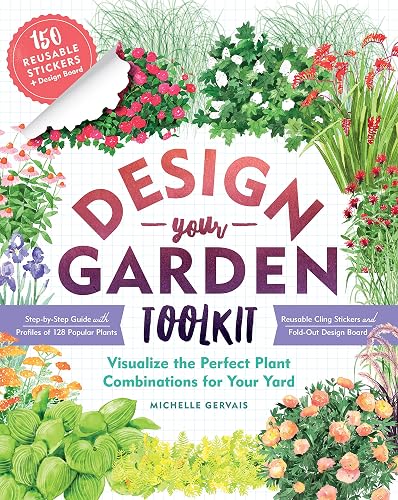
Best for a visual planner who wants to arrange plants before digging anything.
This listing stands out because it includes profiles of 128 popular plants, reusable cling stickers, and a fold-out design board. Those aren’t just words on a page. They’re physical tools you spread across a table to test combinations.
You can move a sticker, step back, and decide if the spacing works. You do this before spending money on roots and soil.
The step-by-step guide ties the stickers to actual planting logic. That means you aren’t just playing with shapes. You’re building a real plan.
Because the stickers are reusable, you can test multiple layouts for the same bed. Peel one up and try a different neighbor without wasting paper or starting over.
But this format requires table space and time to set up. Someone who wants to read a chapter on the train will struggle. Unfolding a board every time isn’t practical in transit.
The title promises help to visualize the perfect plant combinations for your yard. The board delivers that by letting you see the whole layout at once rather than imagining it from text.
Good if: – You learn by moving pieces around and seeing the whole layout at once. – You want to check how specific plants look next to each other before buying. – You enjoy a project that feels hands-on from the very first page.
Skip it if: – You want a standard book you can read in bed without setting up materials. – You already have a fixed plant list and only need placement advice.
4. Essential Garden Design Workbook

Best for: a methodical person who likes filling out structured planning pages.
The listing describes this as completely revised and expanded, and calls it a workbook. A workbook format means it expects you to write in it. You’ll measure your space and answer questions about your yard. You stop just picking pretty flowers. When your area is small, missing one of those details can ruin the whole layout. Filling out the pages helps catch those gaps early.
The full title is The Essential Garden Design Workbook: Completely Revised and Expanded.
A workbook demands effort. You have to sit down with a pencil and your yard’s measurements. If you just want inspiration photos to copy, this structure will frustrate you. It’s built for people who treat garden planning like a serious project. It isn’t a casual afternoon browse.
You must be willing to document your decisions directly on the planning pages. That’s how the book keeps everything centralized. Skipping that step defeats the purpose of choosing a workbook over a standard reading guide.
Good if: – You like following a structured process with clear steps to complete. – You want a unified spot to document your measurements and decisions. – You treat your outdoor project as something to plan carefully on paper.
Skip it if: – You don’t want to write or draw in your guide. – You’re looking for quick visual inspiration without homework.
5. Take It Outside Guide

Best for: someone turning a patio or doorway area into a styled extension indoors.
This listing frames itself as a guide to designing beautiful spaces just beyond your door, calling itself an interior design book. That “interior design” label is the key detail. It means the approach treats your patio, balcony, or entryway like another room in your house.
For small garden spaces design, this matters. Tight spots right outside a door often function more like living rooms than traditional gardens.
Treating the outdoors as an interior space changes what you buy. It also changes how you arrange it. You stop thinking only about soil. You start thinking about rugs, seating zones, and overhead shade.
If your goal is growing vegetables, this angle won’t help much. The book is tailored for the transition zone between inside and outside.
A buyer with a large backyard focused purely on horticulture should look elsewhere. The title promises spaces just beyond your door, not acreage.
The mistake people make here is buying an interior design book expecting planting plans. What they get instead is advice on styling and comfort. They end up disappointed when they need soil guidance.
When your outdoor space is paved rather than planted, the interior approach works best.
Good if:
- Your main outdoor area is a patio, deck, or balcony right outside a door.
- You want your outside seating to feel like a natural extension of your living room.
- You care more about styling and comfort than planting large garden beds.
Skip it if:
- Your primary goal is growing food or managing a large planted border.
- You want traditional landscaping advice focused entirely on soil and plants.
Where These Overlap
Some of these guides share enough DNA that choosing between them comes down to your preferred working style rather than a massive gap in content. Gardentopia Design Basics and the Essential Garden Design Workbook both aim to teach you the underlying rules of laying out a yard. The difference is delivery. One gives you the concepts to read and absorb. The other hands you pages to fill out with your own measurements. If you hate writing in books, the choice is made for you.
Beginner’s Garden Planning Guide and Take It Outside Guide overlap in their focus on accessible, immediate improvements. Both lean toward adding style without demanding a degree in landscaping. Yet the Beginner’s Guide spreads its ideas across general gardening and containers. Take It Outside stays strictly near the doorway. It treats the patio like an indoor room.
That distinction matters when you pick the wrong one for your actual space. If your project is a balcony or a stoop, the Beginner’s Guide will waste your time on general garden beds. If you have a full yard, Take It Outside stops at the threshold. Match the book to the square footage you’re actually trying to change.
Design-Your-Garden Toolkit genuinely stands apart. None of the others ship with a fold-out board and 128 plant stickers. That physical planning method doesn’t overlap with reading chapters or filling out workbook lines. If you need to visualize combinations with your hands, it’s the only option here built for that exact task.
Still Not Sure?
How often will I actually sit down and plan my yard?
Be honest about your habits before you pick a format. If you buy a book, read it once, and leave it on a shelf, a heavy workbook gathers dust. A toolkit with loose stickers might also go unused if you lack sustained focus. You benefit more from a guide offering quick, distinct ideas for ten free minutes. But if you love mapping out projects step by step on Sunday afternoons, a hands-on format rewards that patience.
Think carefully about how your weekends actually unfold in reality. If you rarely dedicate long blocks of time to projects, Beginner’s Garden Planning Guide fits a busy schedule better. It provides a long list of simple gardening ideas for adding style without demanding hours of study. This approach suits those who need inspiration in short bursts rather than structured lessons. Conversely, The Essential Garden Design Workbook serves those ready for deep engagement. Choose based on your actual available time, not your aspirational self.
What kind of space am I actually working with right now?
Not every small outdoor area is a patch of dirt. Some people must figure out how to use a concrete balcony. Others have a tiny grassy square that needs structure. If your space is mostly hardscape like a patio or deck, you need specific advice. Traditional planting guides won’t help much if you don’t have soil to dig into. Look at your floor surface first. If it’s mostly wood, stone, or concrete, standard garden books may fail you.
Take It Outside Guide addresses that exact transition zone between indoor furniture and open air. It treats paved areas like outdoor rooms rather than planting beds. This distinction matters because container gardening requires different design principles than in-ground landscaping. Gardentopia Design Basics also covers creating beautiful outdoor spaces broadly. Match the resource to your physical ground conditions. Ignoring this mismatch leads to buying advice you can’t physically implement in your specific yard.
Am I most likely to regret not seeing the layout before I plant?
A common mistake in a tight yard is putting things in the ground too soon. You might realize too late that plants block a path or crowd each other. Once roots are established, moving them becomes hard work. If you know you’ll second-guess your spacing, test the arrangement first. Reading about spacing is one thing, but physically moving pieces lets you spot mistakes instantly. Design-Your-Garden Toolkit gives you a board and stickers to test layouts safely.
This toolkit includes profiles of 128 popular plants alongside reusable cling stickers. You can visualize perfect plant combinations before committing to the dirt. Avoiding regret makes the planning step useful for cautious gardeners. RHS Encyclopedia of Garden Design also covers planning and building your perfect outdoor space comprehensively. Most buyers split into two clear groups when tackling small garden spaces. Pick the option matching how you actually work, check the details, and start measuring today.
Frequently Asked Questions
Do any of these small garden design books come with physical planning tools?
Yes, but only one does. Design-Your-Garden Toolkit is the only listing here that includes reusable cling stickers and a fold-out design board alongside profiles of 128 popular plants. The other options are books or workbooks based on their titles. If you specifically need physical pieces to arrange on a table before you plant, the Toolkit is the only choice that provides them.
Which guide is best if my small space is a patio instead of a lawn?
Take It Outside Guide is built for spaces just beyond your door. It explicitly categorizes itself as an interior design book focusing on patios, balconies, and entryways as indoor extensions. Unlike general gardening guides, it targets concrete or decking setups rather than soil-based landscapes.
Will the Beginner’s Garden Planning Guide cover container gardening?
Yes, Beginner’s Garden Planning Guide specifically mentions containers alongside sustainable gardening and style. This makes it relevant for small spaces where in-ground planting isn’t practical. Unlike other guides, it explicitly includes container approaches for yards relying on pots and raised planters rather than beds.
Is the Essential Garden Design Workbook meant to be written in?
Yes, Essential Garden Design Workbook is designed for active use with your own measurements and plans. The listing notes it is completely revised and expanded with updated exercises. Unlike concept-focused books, this workbook requires drafting specific project details directly into its pages.
Conclusion
Pick the resource that matches how you actually learn best, whether that’s reading rules or moving pieces around. You’ll save time and frustration when your planning tool fits your personal style. Start sketching or arranging today so your outdoor space feels right before you plant anything.
{“@context”:”https://schema.org”,”@type”:”FAQPage”,”mainEntity”:[{“@type”:”Question”,”name”:”Do any of these small garden design books come with physical planning tools?”,”acceptedAnswer”:{“@type”:”Answer”,”text”:”Yes, but only one does. Design-Your-Garden Toolkit is the only listing here that includes reusable cling stickers and a fold-out design board alongside profiles of 128 popular plants. The other options are books or workbooks based on their titles. If you specifically need physical pieces to arrange on a table before you plant, the Toolkit is the only choice that provides them.”}},{“@type”:”Question”,”name”:”Which guide is best if my small space is a patio instead of a lawn?”,”acceptedAnswer”:{“@type”:”Answer”,”text”:”Take It Outside Guide is built for spaces just beyond your door. It explicitly categorizes itself as an interior design book focusing on patios, balconies, and entryways as indoor extensions. Unlike general gardening guides, it targets concrete or decking setups rather than soil-based landscapes.”}},{“@type”:”Question”,”name”:”Will the Beginner’s Garden Planning Guide cover container gardening?”,”acceptedAnswer”:{“@type”:”Answer”,”text”:”Yes, Beginner’s Garden Planning Guide specifically mentions containers alongside sustainable gardening and style. This makes it relevant for small spaces where in-ground planting isn’t practical. Unlike other guides, it explicitly includes container approaches for yards relying on pots and raised planters rather than beds.”}},{“@type”:”Question”,”name”:”Is the Essential Garden Design Workbook meant to be written in?”,”acceptedAnswer”:{“@type”:”Answer”,”text”:”Yes, Essential Garden Design Workbook is designed for active use with your own measurements and plans. The listing notes it is completely revised and expanded with updated exercises. Unlike concept-focused books, this workbook requires drafting specific project details directly into its pages.”}}]}