




Roses, hydrangeas, wisteria, blackberry canes and lavender are the five plants to prune in october before winter arrives. The goal is removing stems that catch wind, hold disease or waste energy so branches don’t snap under ice weight or rock roots loose in wet soil.
October pruning list at a glance
Here’s every plant covered on this page, what you’re cutting it for, and one example you’d recognize in a garden.
| Plant name | Best used for | Concrete example |
|---|---|---|
| Hybrid tea roses | Preventing winter wind damage | ‘Mister Lincoln’ rose bush |
| Panicle hydrangeas | Removing heavy spent flower heads | Limelight hydrangea shrub |
| Wisteria vines | Stopping long runners from tangling | Chinese wisteria on a pergola |
| Blackberry bushes | Clearing dead fruiting canes | Apache thornless blackberry row |
| Lavender shrubs | Keeping woody centers from splitting | Munstead English lavender plant |
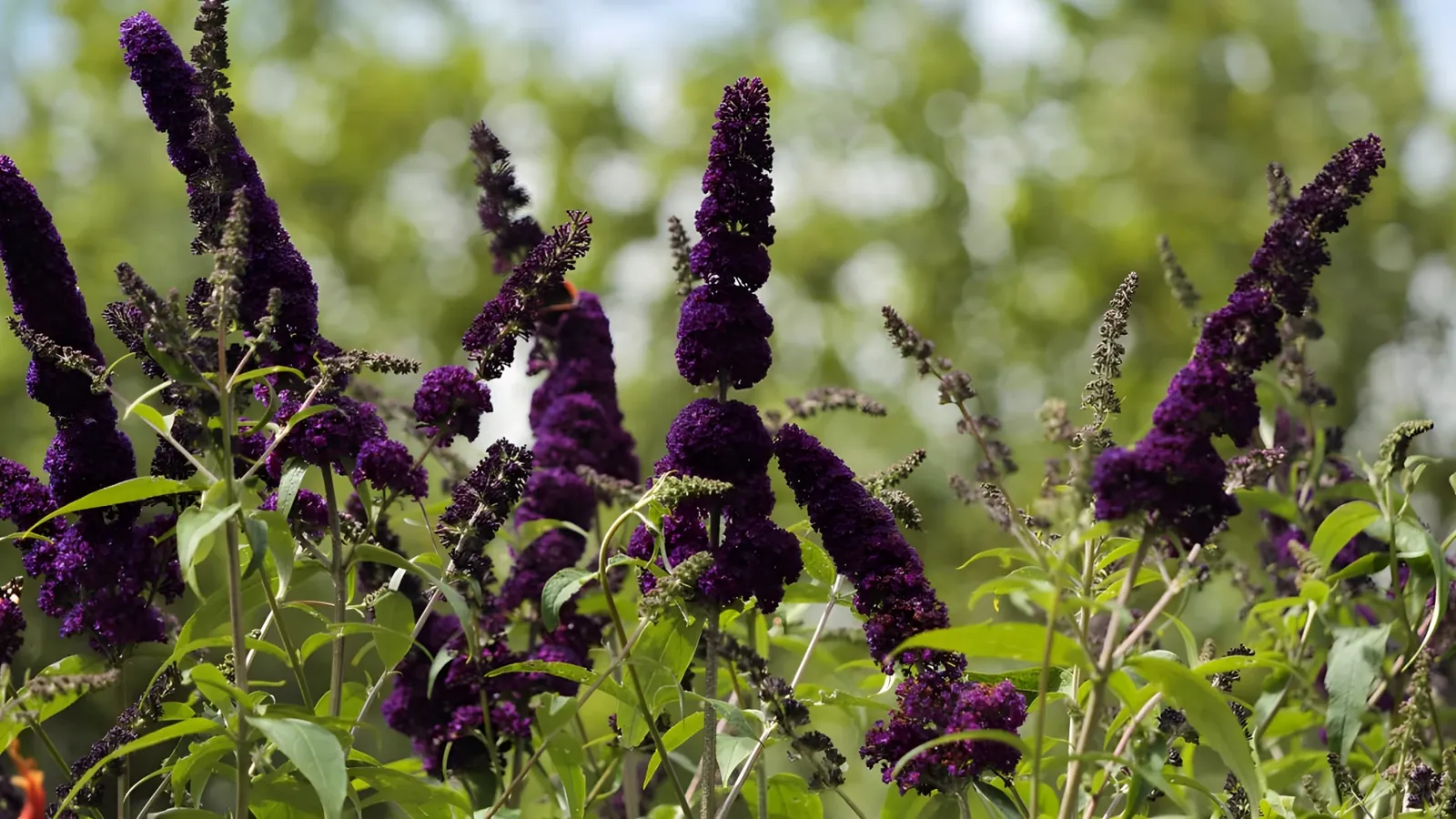
| Butterfly bushes | Reducing snow load on hollow stems | Black Knight buddleia shrub |
| Climbing roses | Securing long canes against walls | New Dawn climbing rose trellis |
Hybrid tea roses
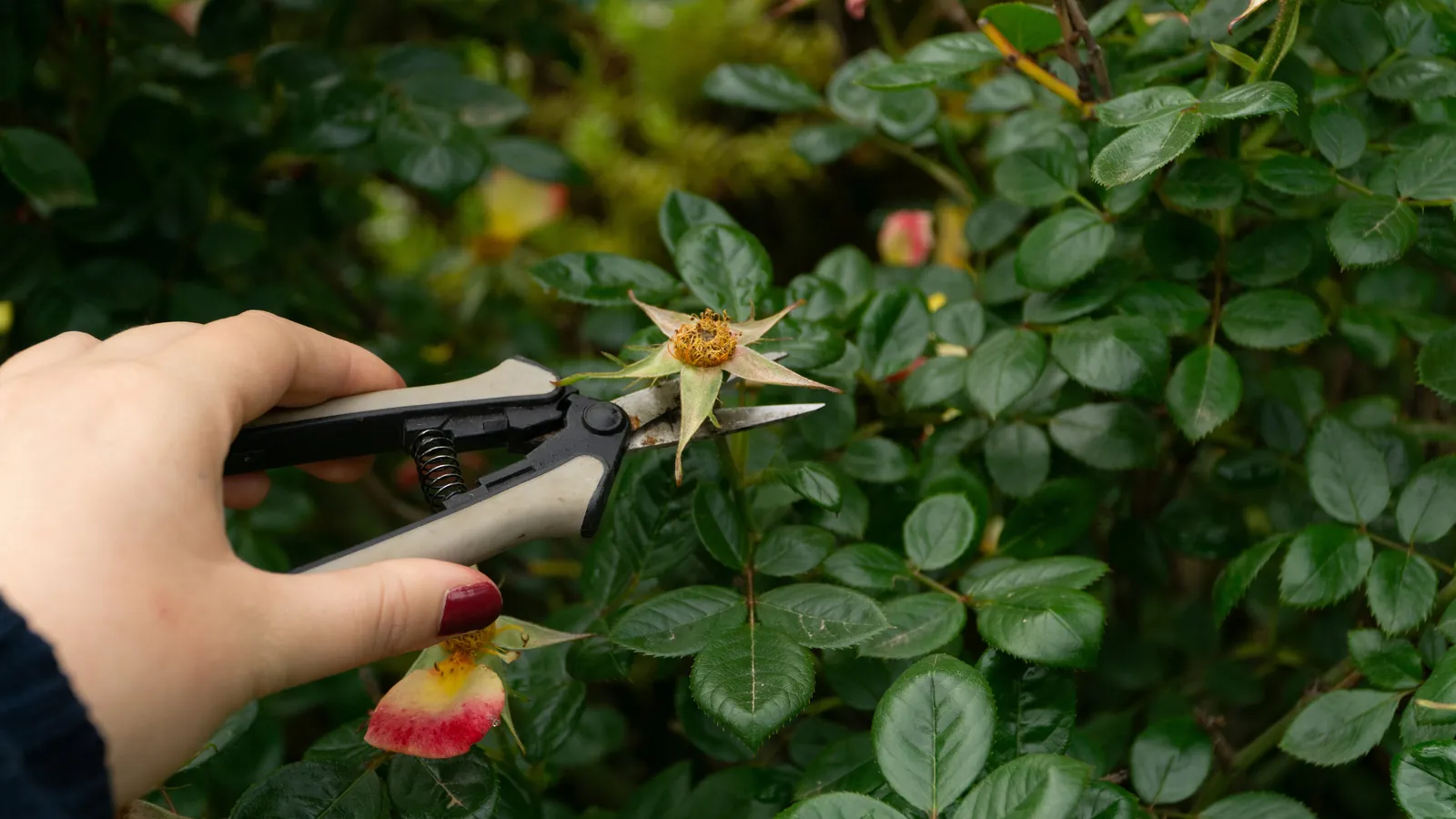
A hybrid tea rose gets cut back in October so winter winds don’t snap its long canes and tear the root crown out of wet ground. This applies to grafted bush roses grown for large, single-stem blooms, not low-growing shrub roses or old garden varieties that bloom once a year. If your rose blooms repeatedly until frost and stands taller than three feet, it fits here. Shrub roses that stay under two feet don’t need this autumn cut.
Cutting these stems down now gives you specific results come spring.
- Fewer broken canes after heavy ice storms, because shorter stems don’t catch as much wind.
- Less black spot fungus overwintering on fallen leaves, since you remove the lowest foliage too.
- A stronger flush of new basal shoots in April, because the plant pushes energy into fewer buds.
- Easier winter mulching around the graft union, which sits just above the soil line.
You aren’t doing the final shaping yet. That happens in late winter when you can see which buds survived the cold. Right now, you’re just reducing height. Cut every main cane down to about 18 inches tall, assuming you’re in USDA zones 5 through 7 where early freezes happen but deep cold comes later.
If you live in zone 8 or warmer, leave them at 24 inches, because they won’t face the same ice loads. Always make the cut a quarter inch above an outward-facing bud.
Don’t strip every leaf off if temperatures are still in the sixties during the day. The plant still needs them to store carbohydrates for winter. Wait until a frost turns them yellow, then pull them off by hand and throw them in the trash, not the compost pile. Leaving diseased leaves on the soil is how black spot returns every June.
The trade-off here is between safety and blooms. Cutting too short in October removes buds that might have survived a mild winter, giving you fewer flowers next year. Leaving them tall risks losing the whole cane to wind rock. Err on the side of leaving them slightly longer; you can always cut more in February.
Picture a ‘Peace’ rose bush standing four feet tall in a midwestern yard. In mid-October, after the first light frost, you take bypass pruners and reduce those five main canes to 18 inches, clearing away any thin, twiggy growth smaller than a pencil.
Panicle hydrangeas
Panicle hydrangeas get pruned in October specifically to remove heavy, dried flower cones that collect snow and bend branches to the breaking point. Unlike mophead hydrangeas that bloom on old wood, panicle types bloom on new wood but keep thick, permanent branches that carry real structural weight. This makes them the only hydrangea type where an autumn cut prevents physical damage.
Removing those spent blooms changes how the shrub handles winter.
- Branches stay upright instead of splaying flat under six inches of wet snow.
- Removing heavy spent blooms prevents branches from bending or breaking under snow load.
- Spring growth emerges evenly across the top instead of clustering where old blooms rotted.
- You avoid the brown, mushy mess that drops onto walkways when heavy cones finally fall.
If you grow mophead or oakleaf hydrangeas, skip this section entirely. Panicle types, like ‘Limelight’ or ‘Quick Fire’, form cone-shaped clusters that turn brown and papery by September. Those are the ones you’re targeting.
The rule is simple: if the flower head is shaped like a cone and feels dry like paper, cut the stem holding it. Don’t hack into the thick woody framework below. Follow the stem down from the dead flower until you hit the first pair of fat, healthy buds, and cut half an inch above them. On a mature shrub, this usually means removing about 6 to 10 inches of stem per branch.
This assumes a standard landscape planting in zones 4 through 8. If your shrub grows in a container on a patio, the roots freeze faster. Cut the flower heads off earlier, in late September, so the plant seals the wounds before pot-bound roots face cold air.
Think of a seven-foot ‘Limelight’ hydrangea lining a driveway. In late October, you snip off thirty dried white cones, leaving the sturdy branching structure completely intact beneath them.
Wisteria vines
Wisteria needs its second annual pruning in October to stop long, whippy summer runners from growing into gutters, wrapping around downspouts or tangling with neighboring trees. This vine puts out massive vegetative growth between May and September, and without a fall cut, those runners become woody ropes that pull structures apart. This task suits anyone growing wisteria on a strong pergola, wall trellis or dedicated arbor.
Cutting these runners back now delivers clear benefits for next year.
- Flower buds form on short spurs near the main trunk, and removing long runners forces energy into those spurs.
- Winter ice won’t accumulate on a dense web of thin branches, reducing the risk of your pergola collapsing.
- The vine stays within its designated space, saving you hours of untangling work in March.
- Airflow improves around the main stems, lowering the chance of powdery mildew settling in during damp autumns.
Wisteria gets pruned twice a year. The summer cut happens in July or August. October is the final tidy-up before dormancy. Avoid thick, main structural trunks. Only deal with thin shoots that grew since July.
Find every runner extending past the desired frame. Cut five or six buds back from the runner base. Remaining buds swell into flowering spurs next spring. Longer runners produce leaves but no flowers.
This requires reaching high places safely. If your wisteria covers a two-story wall, you’ll need a stable extension ladder and someone holding it. If getting up there carries a real risk of falling, hire an arborist who handles structural vine management.
No amount of flowers is worth a fall from twelve feet. Check your local cooperative extension office for guidance on managing large woody vines safely; Clemson University’s Home and Garden Information Center publishes detailed fact sheets on training and cutting back aggressive vines like this one.
Imagine a Chinese wisteria covering a wooden pergola. In mid-October, you trace twenty new runners that shot out three feet past the beams, cutting each one back to a stub holding six plump buds.
Blackberry canes
Blackberry bushes require October pruning to remove the canes that fruited this summer, known as floricanes, because they’re already dead and harbor pests. If your blackberries produced fruit this year, the stems that held those berries will never produce again.
Clearing out the old wood sets up the patch for success.
- New primocanes receive full sunlight instead of fighting through a canopy of dead sticks.
- Overwintering sites for spotted wing drosophila and cane borers are physically removed from the garden.
- Air moves freely through the row, drying morning dew faster and preventing cane and leaf diseases.
- Harvesting next summer becomes easier because you aren’t pushing through brittle, snapping debris.
Look closely at the base of the plant.
For trailing blackberries that you laid on the ground last winter, this October cut happens before you lift the new canes onto the wire trellis. For erect types, you just clear the center of the clump. Expect to remove about half the total volume of the bush. If you cut everything to the ground, you’ll get zero berries next summer. Only the brown, fruited canes go.
Picture a ten-foot row of ‘Triple Crown’ blackberries. On a dry afternoon in late October, you snip out fourteen brown, peeling canes at the soil line, leaving eight fresh reddish-green primocanes tied loosely to the wire.
Lavender shrubs
Lavender gets a light trim in October to prevent heavy snow from splitting the woody center of the plant open. This matters most for English lavender varieties grown in zones 5 through 8, where winter precipitation includes wet snow. French and Spanish lavenders don’t survive freezing winters outdoors anyway, so this step targets the cold-hardy types planted in borders or herb gardens.
A careful autumn cut protects the plant’s structure.
- Snow slides off a rounded mound instead of catching inside an open, leggy center.
- The woody base doesn’t crack under the leverage of ice-laden stems.
- Fungal rot struggles to start because air still circulates through the shortened foliage.
- Spring regrowth emerges evenly from the edges rather than shooting up wildly from the middle.
Here is the strict limit: never cut into the bare, brown wood at the base of a lavender plant. Lavender rarely pushes new green growth from old, leafless wood. If your shears hit a stem that has no gray-green leaves on it, stop cutting. Going deeper kills that branch permanently.
Trim only the soft, leafy growth that flowered this summer. Take off about one-third of the green foliage, shaping the plant into a neat, rounded mound. This assumes a mature plant that stands about 18 inches tall. For a small, newly planted lavender that’s only 8 inches high, just snip off the spent flower stalks and leave the leaves alone.
Do this early in October, while daytime temperatures are still above fifty degrees Fahrenheit. The plant needs a few weeks to heal the cuts before hard freezes arrive. If you wait until November and the ground is already frozen, the open wounds invite winter moisture straight into the stems, causing them to rot from the inside out.
Think of a ‘Hidcote’ lavender border. In early October, you use sharp hedge shears to round off the tops, removing the faded purple spikes and about two inches of silvery-green leaves, leaving a tight dome shape ready for snow.
Butterfly bushes
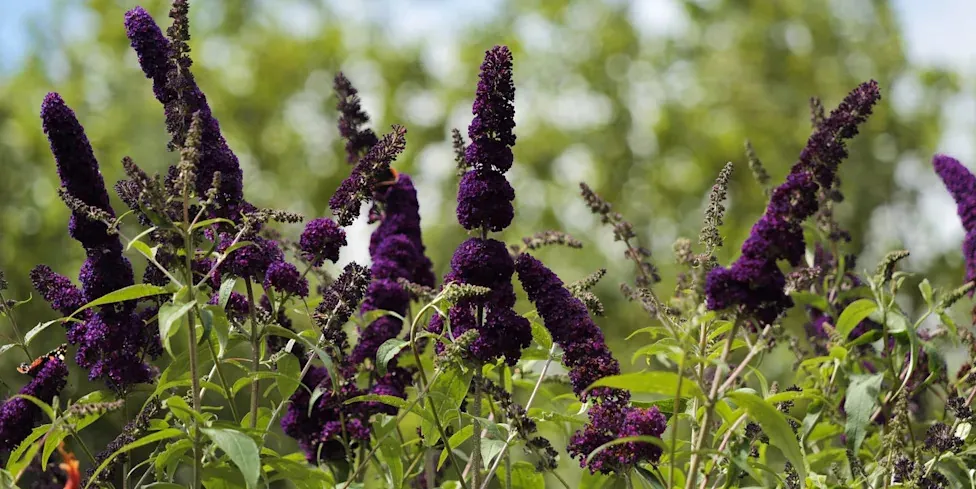
Butterfly bushes benefit from an October reduction to keep their fast-growing, hollow stems from snapping under winter ice loads. This shrub grows aggressively, sometimes adding six feet of height in a single season, and that soft wood holds no structural strength when frozen. Anyone growing Buddleia davidii in zones 5 through 9 faces this issue every autumn.
Taking the height down now prevents specific problems.
- Hollow stems don’t split open and fill with freezing water that rots the crown.
- The root system stays anchored because tall stems stop acting like levers in winter wind.
- You avoid the messy collapse that buries neighboring perennials under broken branches.
- Spring cleanup takes minutes instead of hours, since the bulk of dead wood is already gone.
Don’t cut butterfly bushes all the way to the ground in October. That’s a common error that leaves the crown exposed to deep freezes without the insulation of its own lower stems. Instead, reduce the overall height by about half. If your bush stands eight feet tall, cut it down to four feet. This assumes a standard planting in zone 6 or 7. In zone 5, where winters bite harder, leave it at five feet for extra crown protection.
Use loppers for the thick bottom stems and bypass pruners for the thinner tips. Make your cuts just above a set of leaves or a node. The remaining stems will die back further during winter anyway, but the lower portion shields the living root ball.
This plant spreads aggressively by seed in some regions. If you live in an area where butterfly bush is listed as invasive, cutting off the spent flower heads in October before they drop seeds is more important than reducing the height. Bag those seed heads and throw them away.
Imagine a ‘Black Knight’ buddleia towering over a fence. In late October, you lop the main stems back to four feet, removing dozens of brown, seedy flower spikes in the process.
Other plants to cut back
- Climbing roses need their long canes tied securely to trellises in October, with any damaged or diseased tips snipped off to prevent winter dieback from spreading down the stem. Reach for this if your rose grows vertically against a wall or fence.
- Ornamental grasses shouldn’t be cut to the ground yet, but you can trim broken or flopping blades in October to keep pathways clear. Do this only if the grass blocks a walkway; otherwise, leave it standing for winter birds.
- Hybrid clematis that bloomed on new wood this summer can have their tangled vines reduced by half in October to keep them from pulling down lightweight trellises under snow weight. Use this for Group 3 clematis only.
- Fruit tree suckers sprouting from the base of apple or pear trunks should be cut flush with the bark in October so the tree sends winter energy into its main branches instead of useless root shoots. Check for these whenever you inspect your orchard.
Choosing the right pruning method
What you already have growing in your yard decides which tool and timing you reach for first. Look at the plant’s structure before you pick up your shears. If you’re dealing with thick, woody canes that produced fruit this year, like blackberries, you need heavy loppers and a plan to remove entire stems at the soil line.
If you’re looking at soft, green growth on a lavender mound, you only need hand shears for a gentle rounding. Matching the tool to the wood type stops you from crushing delicate stems or struggling against thick ones.
How much time you can spend outside this month matters too. Wisteria demands patience and ladder work, often taking a full afternoon to trace every runner back to its base. If you only have thirty minutes on a Saturday, tackle the butterfly bush instead. Its hollow stems cut quickly, and halving the height takes just a few snips per branch. Don’t start a complex vine tangle when you’re rushing to finish before dark.
What you’re trying to protect settles the final choice. If your main worry is heavy snow snapping branches, focus entirely on the panicle hydrangeas and butterfly bushes first. Their wide profiles catch the most weight. If disease is your bigger problem—like black spot returning every spring on your roses—prioritize clearing fallen leaves and cutting those canes down to eighteen inches to improve airflow.
These tasks don’t compete with each other. You can reduce the butterfly bush on Monday and tie the climbing roses on Thursday. Picking one doesn’t mean abandoning the rest. However, don’t combine methods on the same plant. Never apply the hard-florican removal used for blackberries to a lavender shrub; cutting lavender to the ground kills it. Read the plant’s specific rule above, stick to that single approach, and move to the next bed.
If your garden holds all seven plants mentioned here, start with the ones closest to your house or walkways. Falling branches near doors cause immediate hazards, while a wisteria runner tangling at the back fence can wait until next weekend.
Related guides
- 10 Best Irrigation for Potted Plants Systems for Your Home
- How to Lift Heavy Potted Plants Safely With a Dolly or Towel
- Build a DIY Drip System for Potted Plants: Step-by-Step Guide
Frequently asked questions
Can I prune roses in October?
Yes, you can cut hybrid tea roses back to about 18 inches in October, assuming you live in USDA zones 5 through 7. This prevents winter wind from rocking the roots loose. Don’t do the final shaping yet; save that for late February when you can see which buds survived the cold. If you grow shrub roses under two feet tall, leave them alone entirely.
Why shouldn’t I cut lavender to the ground?
Because lavender rarely grows back from old, leafless wood. If you cut below the gray-green foliage into the bare brown stems, those branches stay dead permanently. You’ll end up with a hollow, misshapen plant that never recovers. Only trim the top third of the leafy growth in October to form a protective dome against snow.
How long do blackberry canes live?
Each individual blackberry cane has a fixed lifespan. The first year it grows green and produces no fruit. The second year it turns brown, fruits in summer, and dies by autumn. That’s why you must cut the brown, two-year-old canes out every October. The green ones you leave behind are your berry producers for next summer.
Is it safe to prune wisteria near power lines?
No, it isn’t. If your wisteria has grown into or near overhead electrical wires, don’t climb a ladder to reach it. Contact your local utility company to handle vegetation clearance near power infrastructure. A metal pole pruner or wet vine touching a live wire carries a fatal shock risk. Leave anything above safe reaching distance to trained professionals.
What happens if I skip October pruning?
Tall, unpruned plants catch winter wind and snow like sails. Rose canes snap at the base, hydrangea branches splay flat against the mud, and wisteria runners pull gutters off houses. Skipping the cut doesn’t kill the plant immediately, but it causes structural damage that takes years to fix. You’ll spend spring repairing broken wood instead of watching new growth emerge.
Does it matter if the wood is wet?
Yes, it matters significantly. Pruning soaking wet branches increases the chance of fungal spores entering the fresh cuts. Wait for a dry afternoon when the bark feels dry to the touch. If you live in a region where October brings constant rain, pick the longest dry window you get. Sharp tools also slip more easily on wet wood, risking injury to your hands.
How many buds should I leave on wisteria?
Leave exactly five or six buds on each wisteria runner you cut back in October. Count them starting from the base where the runner meets the main structural vine. Those specific buds will swell into short spurs that produce flower clusters next May. Leaving ten or fifteen buds just creates more leafy runners that hide the blooms.
Can I compost the pruned branches?
Only compost wood from healthy plants. Blackberry canes, rose stems showing black spot, or hydrangea leaves with powdery mildew must go into the trash or a burn pile. Home compost bins rarely reach the sustained high temperatures needed to kill those pathogens. Putting diseased wood in your compost just spreads the infection to your vegetables next spring.
Starting your October cuts
Grab your bypass pruners and walk the perimeter of your garden today. Start with the tallest plant nearest your house, whether that’s the butterfly bush leaning over the path or the wisteria creeping toward the gutter. Make the cuts described above while the afternoon is dry and the wood is easy to grip.
Within a week, you’ll notice the garden looks tighter and less vulnerable to incoming storms. The sign that you’ve done it right is clean, angled cuts sitting just above healthy buds, with no crushed bark or ragged tears left behind.
Stop cutting and call a certified arborist if you look up and realize the branches you need to reach require standing on an unstable roof or working within arm’s length of overhead power lines.
{“@context”:”https://schema.org”,”@type”:”FAQPage”,”mainEntity”:[{“@type”:”Question”,”name”:”Can I prune roses in October?”,”acceptedAnswer”:{“@type”:”Answer”,”text”:”Yes, you can cut hybrid tea roses back to about 18 inches in October, assuming you live in USDA zones 5 through 7. This prevents winter wind from rocking the roots loose. Don’t do the final shaping yet; save that for late February when you can see which buds survived the cold. If you grow shrub roses under two feet tall, leave them alone entirely.”}},{“@type”:”Question”,”name”:”Why shouldn’t I cut lavender to the ground?”,”acceptedAnswer”:{“@type”:”Answer”,”text”:”Because lavender rarely grows back from old, leafless wood. If you cut below the gray-green foliage into the bare brown stems, those branches stay dead permanently. You’ll end up with a hollow, misshapen plant that never recovers. Only trim the top third of the leafy growth in October to form a protective dome against snow.”}},{“@type”:”Question”,”name”:”How long do blackberry canes live?”,”acceptedAnswer”:{“@type”:”Answer”,”text”:”Each individual blackberry cane has a fixed lifespan. The first year it grows green and produces no fruit. The second year it turns brown, fruits in summer, and dies by autumn. That’s why you must cut the brown, two-year-old canes out every October. The green ones you leave behind are your berry producers for next summer.”}},{“@type”:”Question”,”name”:”Is it safe to prune wisteria near power lines?”,”acceptedAnswer”:{“@type”:”Answer”,”text”:”No, it isn’t. If your wisteria has grown into or near overhead electrical wires, don’t climb a ladder to reach it. Contact your local utility company to handle vegetation clearance near power infrastructure. A metal pole pruner or wet vine touching a live wire carries a fatal shock risk. Leave anything above safe reaching distance to trained professionals.”}},{“@type”:”Question”,”name”:”What happens if I skip October pruning?”,”acceptedAnswer”:{“@type”:”Answer”,”text”:”Tall, unpruned plants catch winter wind and snow like sails. Rose canes snap at the base, hydrangea branches splay flat against the mud, and wisteria runners pull gutters off houses. Skipping the cut doesn’t kill the plant immediately, but it causes structural damage that takes years to fix. You’ll spend spring repairing broken wood instead of watching new growth emerge.”}},{“@type”:”Question”,”name”:”Does it matter if the wood is wet?”,”acceptedAnswer”:{“@type”:”Answer”,”text”:”Yes, it matters significantly. Pruning soaking wet branches increases the chance of fungal spores entering the fresh cuts. Wait for a dry afternoon when the bark feels dry to the touch. If you live in a region where October brings constant rain, pick the longest dry window you get. Sharp tools also slip more easily on wet wood, risking injury to your hands.”}},{“@type”:”Question”,”name”:”How many buds should I leave on wisteria?”,”acceptedAnswer”:{“@type”:”Answer”,”text”:”Leave exactly five or six buds on each wisteria runner you cut back in October. Count them starting from the base where the runner meets the main structural vine. Those specific buds will swell into short spurs that produce flower clusters next May. Leaving ten or fifteen buds just creates more leafy runners that hide the blooms.”}},{“@type”:”Question”,”name”:”Can I compost the pruned branches?”,”acceptedAnswer”:{“@type”:”Answer”,”text”:”Only compost wood from healthy plants. Blackberry canes, rose stems showing black spot, or hydrangea leaves with powdery mildew must go into the trash or a burn pile. Home compost bins rarely reach the sustained high temperatures needed to kill those pathogens. Putting diseased wood in your compost just spreads the infection to your vegetables next spring.”}}]}