



Lifting a heavy potted plant safely means tilting the pot, sliding it onto a dolly or thick towel, and pushing it instead of carrying it. The exact method for how to lift heavy potted plants depends on whether the container weighs 30 pounds or 150 pounds. A 40-pound pot moves easily on a flat furniture slider across a smooth floor.
Three things change what you’ll actually do: the total weight of the wet soil and pot, the surface you’re moving it across, and the shape of the container. If your pot has no rim, sliders won’t grip it. If you’re moving it up stairs, a dolly becomes a tipping hazard.
Who needs help moving large pots
Someone with a 60-pound ceramic planter blocking a doorway needs this page. They’ve got a solid floor, one heavy pot, and no second person to grab the other side. What they need is a way to move that weight without hurting their back or cracking the ceramic base. This page gives them the exact steps for flat ground.
A different reader has a 200-pound concrete trough full of wet soil sitting on a wooden deck. They want to drag it to the lawn before winter. They don’t need lifting advice. They need structural limits for their deck boards, which is a job for a contractor. Dragging 200 pounds across soft wood splinters the planks and risks breaking through.
Then there’s the person with six medium terracotta pots, each around 25 pounds, sitting on a gravel path. They’re trying to rearrange a patio. Sliders sink into gravel, and dollies bounce off stones. They need a wheelbarrow with a wide tire, not the floor-sliding tricks described below.
This page serves the first reader best. It assumes you have one large pot weighing between 30 and 100 pounds, sitting on a hard, flat surface like tile, concrete, or sealed wood. It also assumes you can bend at the knees without pain. If your pot sits on dirt, carpet, or stairs, the tools here will slip or tip. Check your floor type before you buy any equipment.
What changes the safe lifting weight
The material of the pot decides your starting weight before you even add soil. Terracotta absorbs water and gets heavier when wet. A 16-inch unglazed clay pot can weigh 25 pounds empty, while a plastic pot the same size might weigh 3 pounds. You can check the bottom stamp or the manufacturer’s website for the dry weight.
Wet soil doubles the load you thought you were moving. One gallon of water weighs about 8.3 pounds. Don’t move a pot right after watering it. Wait two days for the excess moisture to drain out.
The shape of the container determines where your hands go. A tapered pot lets you slide a dolly blade underneath the narrow base. A straight-sided cylinder or a bowl shape leaves no gap for leverage. If your pot is wider at the bottom than the top, you’ll need a thick moving blanket instead of a rigid tool.
Floor texture dictates whether wheels or sliders work better. Smooth tile or sealed hardwood takes plastic furniture sliders perfectly. Rough concrete eats through felt pads in one trip, requiring heavy-duty rubber casters instead. Test a small corner with your slider before committing the whole pot’s weight to it.
People get the soil weight wrong most often. They guess based on the pot’s size, forgetting that dense root balls hold more water than loose potting mix. If you aren’t sure what you’re dealing with, try to tilt the pot one inch off the ground. If you can’t budge it with both hands and bent knees, the weight exceeds a safe solo lift.
How to Lift Heavy Potted Plants Step by Step
Clear a path from the pot’s current spot to its destination. Remove rugs, cords, and pet bowls. You need a straight line because steering a loaded dolly around corners shifts the center of gravity. Measure the doorways if you’re going inside; a 24-inch wide pot won’t fit through a standard 30-inch door once you add the dolly frame.
Stop watering the plant 48 hours before you plan to move it. This lets the soil drain down to its base weight. If the drainage hole is blocked, use a pencil to clear it so water actually escapes. Lift one edge of the pot slightly to confirm it feels lighter than it did yesterday.
Wrap the foliage gently with soft twine or old pantyhose if the plant is tall or bushy. Tie it loosely toward the center so branches don’t snap against doorframes. Don’t pull the stems tight enough to crease them. You’re just keeping the footprint narrow for the journey.
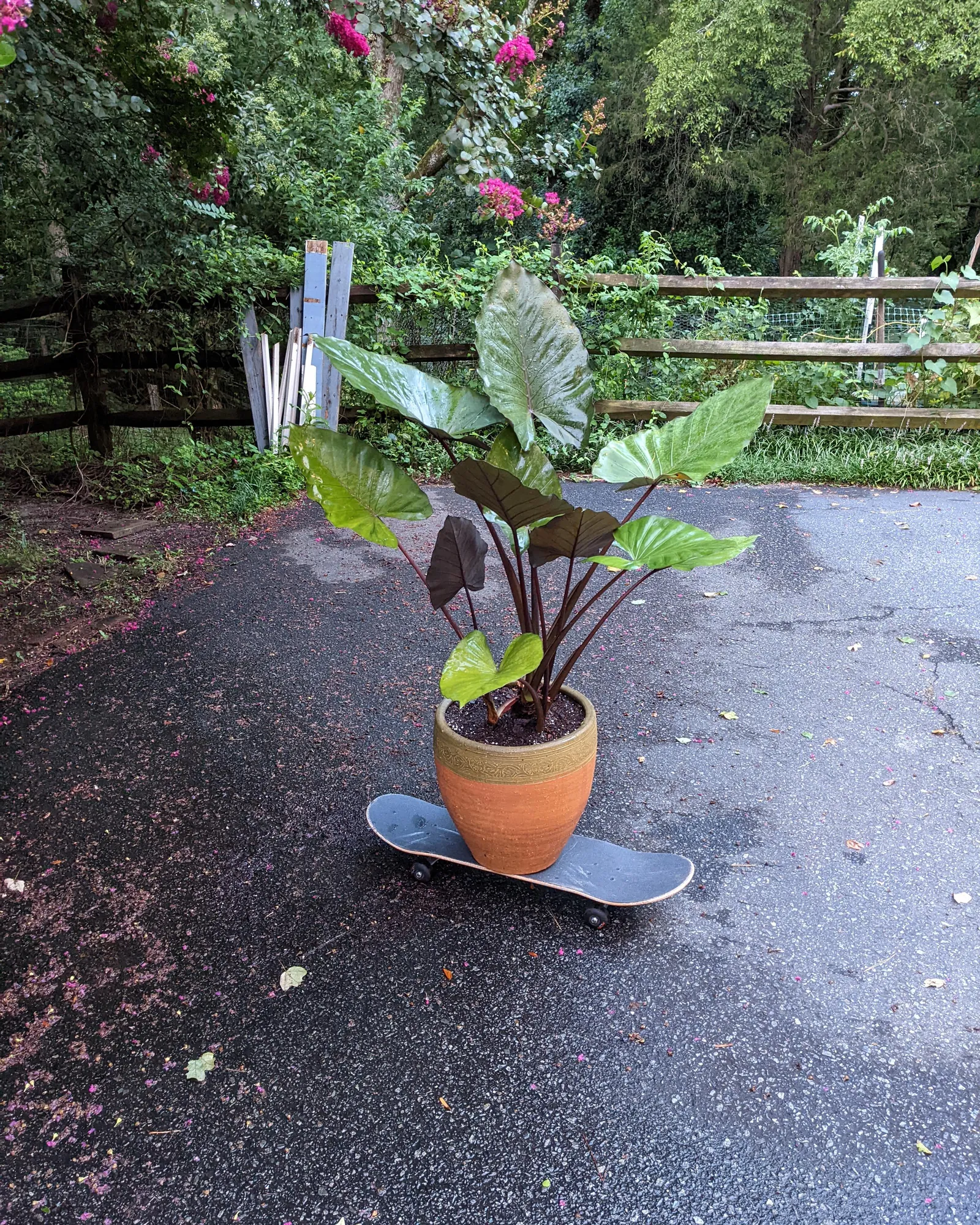
Place two heavy-duty furniture sliders under the pot’s base. Tilt the pot away from you by bending your knees and keeping your back straight. Slide the first pad under the lifted edge, lower it, then tilt the opposite way to place the second pad. If the pot weighs more than 50 pounds, use a pry bar wrapped in a towel to create the gap instead of your fingers.
Push the pot slowly along the floor using the palms of your hands against the thickest part of the container. Never push near the rim, as thin edges crack under pressure. Take short strokes, moving it about six inches at a time. Stop if you hear scraping; that means a slider folded under the weight.
If you must lift the pot onto a truck or higher surface, build a ramp from sturdy plywood. Push the dolly up the ramp rather than lifting vertically. If the incline is steeper than 15 degrees, the pot will slide backward off the dolly.
When you reach the final spot, tilt the pot and pull the sliders out one at a time. Lower it gently rather than dropping it, since ceramic shatters on impact. Untie the foliage immediately so the stems aren’t stressed longer than necessary.
The single judgment call that separates a safe move from a broken back is knowing when to stop pushing. If the pot doesn’t glide smoothly with moderate palm pressure, the friction is too high. Forcing it tears shoulder muscles. Switch to a wheeled dolly or call a second person at that point.
Choosing the right tool for the job
Different floors and weights demand different gear. Here is how to match your situation to the right equipment.
| Your situation | Tool to use | Effort required | Watch out for |
|---|---|---|---|
| Smooth indoor floor, under 60 lbs | Felt furniture sliders | Low pushing force | Sliders folding under weight |
| Rough concrete, under 80 lbs | Pneumatic tire dolly | Moderate pushing force | Wheels bouncing off stones |
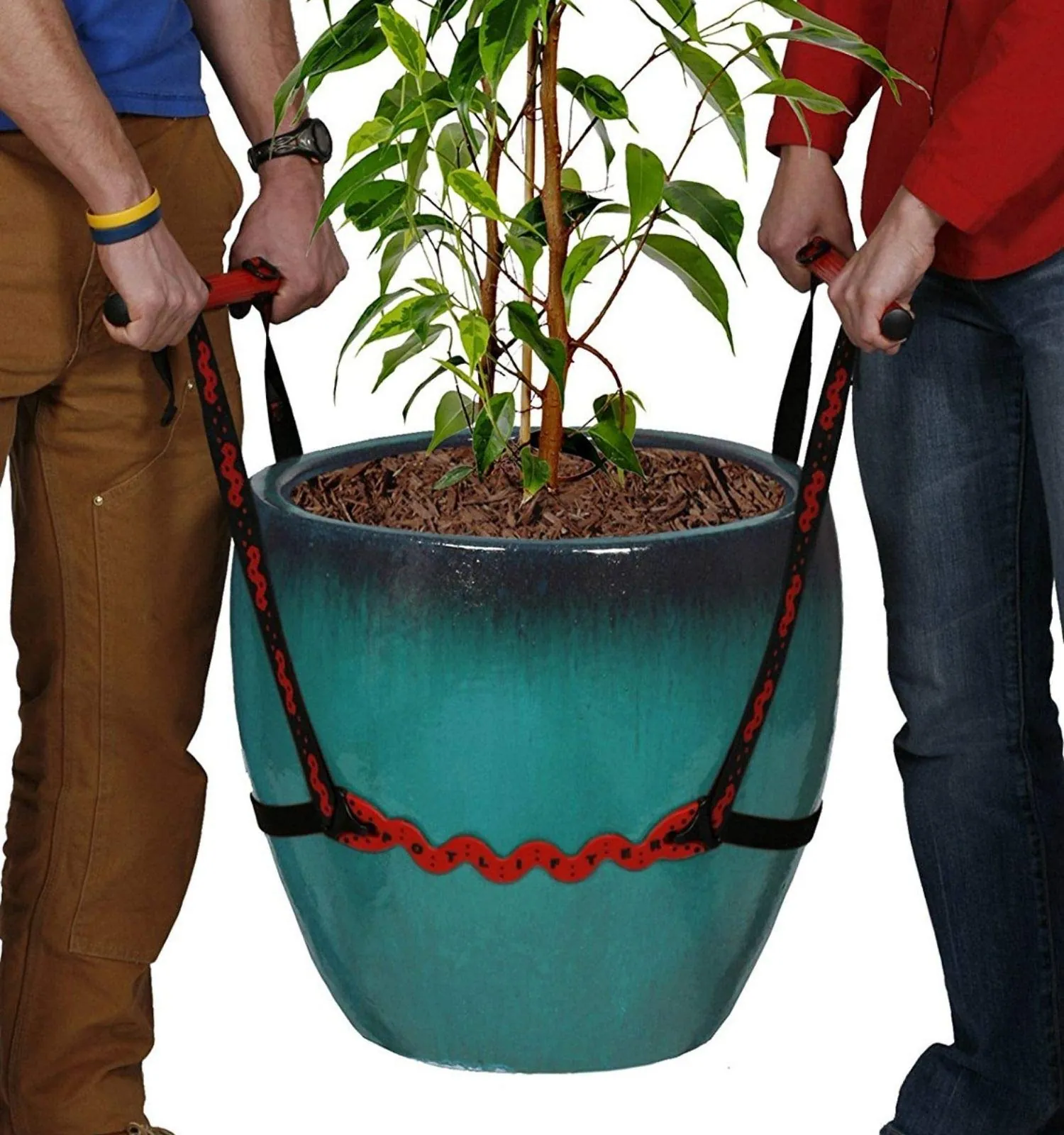
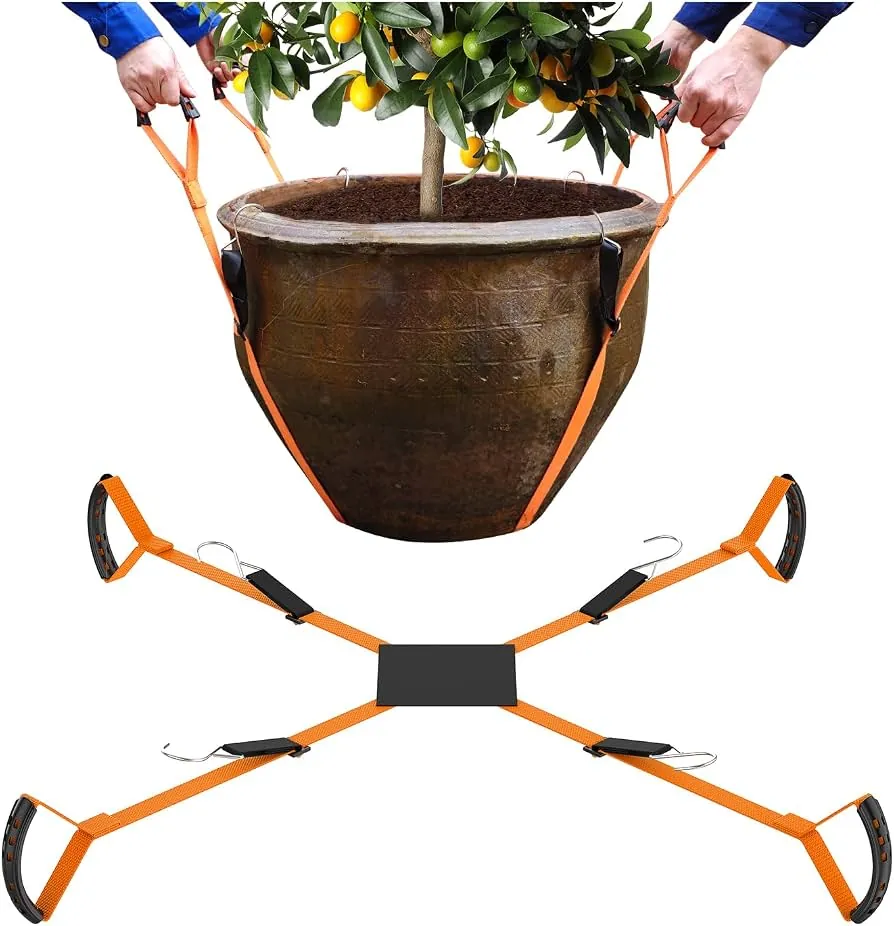
| Stairs, under 50 lbs | Two-person carry straps | High physical effort | Pot swinging into shins |
| Over 100 lbs, flat ground | Appliance dolly with strap | Moderate pulling force | Strap slipping off rim |
| Wooden deck, any weight | Thick moving blanket | Low dragging force | Blanket snagging on nails |
| Gravel path, under 70 lbs | Wide-tire wheelbarrow | High pushing force | Wheel sinking in soft spots |
Check the weight rating printed on the dolly’s frame before loading it. A hardware store hand truck rated for 150 pounds shouldn’t carry a 160-pound planter just because it “looks close.” If your pot has no printed weight, stand on a bathroom scale holding it, then subtract your own weight.
Details that keep pots and backs intact
Preparing the container
Tapping the sides of a terracotta pot tells you if it’s already cracked. A dull thud means the clay is compromised, and lifting pressure will split it open. Wrap masking tape in an X pattern around the middle of fragile pots to hold shards together if they break during transit.
Emptying the saucer underneath prevents a hidden spill. Water trapped in the drip tray sloshes when you tilt the main pot, soaking your shoes and making the floor dangerously slick. Dry the bottom of the pot completely so your sliders don’t hydroplane on a film of water.
Controlling the movement
Keeping your elbows tucked against your ribs transfers the pushing force through your skeleton instead of straining your shoulder joints. Extended arms act as long levers that multiply the strain on your rotator cuffs. Step forward with the foot closest to the direction you’re pushing.
Watching the base, not the top, keeps the pot balanced. Tilting the pot changes its orientation relative to the base, shifting the center of gravity. If the bottom edge starts to lift unevenly, stop immediately and reset the sliders before the whole thing tips sideways.
The NIOSH lifting equation published by the Centers for Disease Control and Prevention sets the recommended weight limit for a safe lift at 51 pounds under ideal conditions. That number drops significantly if you have to twist your torso or reach far from your body. If your pot exceeds that adjusted limit, mechanical assistance isn’t optional.
Heavy planter problems and fixes
Things go wrong when weight meets friction. Match what you see to the cause below.
| What you notice | What it usually means | What to do first | How to stop it happening again |
|---|---|---|---|
| Slider folds under pot | Weight exceeds pad rating | Pry pot up, replace pad | Use thicker rubber sliders |
| Dolly tips sideways | Center of gravity too high | Lower pot, strap tighter | Move soil to bottom half |
| Crack sound from clay | Existing fracture expanding | Stop moving, wrap tape | Inspect pots before lifting |
| Back pain while pushing | Twisting spine under load | Stand square, use legs | Clear wider path beforehand |
| Plant leans heavily | Root ball shifted inside | Tamp soil down gently | Avoid tilting past 30 degrees |
| Scratches on hardwood | Grit trapped under slider | Wipe floor, clean pad | Sweep path before every move |
If the pot cracks all the way through while you’re moving it, don’t try to catch the falling soil with your hands. Step back and let it drop. Wet soil weighs enough to crush fingers against the floor. Once it’s down, scoop the root ball into a temporary plastic nursery pot before attempting another move.
Safety limits for moving containers
Weight limits for safe lifting aren’t suggestions; they’re physiological boundaries. The National Institute for Occupational Safety and Health provides the framework for calculating safe loads based on distance, frequency, and posture. When you twist your spine while holding 40 pounds, the shear force on your spinal discs increases significantly, raising the risk of injury.
Tenants renting apartments face specific rules about balcony loads. Building codes typically limit residential balconies to 60 pounds per square foot, but older structures may hold less. Placing a 150-pound planter on a small cantilevered balcony risks structural failure. Check your lease agreement or ask your building manager for the exact load rating before moving massive pots outdoors.
Homeowners should verify driveway slopes. Pushing a wheeled dolly downhill adds the force of gravity to the pot’s momentum. If the slope is steeper than a slight grade, you can’t safely control a heavy planter alone. In that case, hire professional movers who carry liability insurance for property damage. Attempting to brake a rolling 100-pound pot with your body weight results in crushed feet or torn ligaments. Stop at the point where your boots start sliding forward.
What moving large pots costs
The cost here is mostly equipment and physical risk rather than ongoing fees. A set of four heavy-duty furniture sliders is inexpensive relative to the alternative at hardware stores. This assumes standard 3-inch round pads meant for hard floors. Larger rectangular glides for bigger bases cost slightly more.
A basic utility dolly with pneumatic tires is inexpensive relative to the alternative. Solid rubber wheels are cheaper but transmit every bump directly into the pot, risking cracked ceramics. If you only move plants once a year, renting a dolly from a local home improvement store for a half-day rate saves storage space in your garage.
The hidden expense is replacing broken items. Dropping a mature fiddle leaf fig in a glazed ceramic pot destroys both the container and the plant you spent years growing. Rushing the job to save ten minutes often costs far more in replacements than proper moving gear. Factor in the price of the pot itself when deciding whether to buy proper moving gear.
Time is the other currency. Moving a 70-pound planter 20 feet on sliders takes about five minutes of careful pushing. Dragging that same weight without sliders takes twice as long and leaves deep gouges in the floor that require refinishing. Always compare the cost of the right tool against the repair bill for doing it cheaply.
Keeping the setup ready for next time
Store your sliders and straps in a labeled bag hung near the garden tools. Rubber degrades when left baking on a hot patio, turning brittle and useless by the next season. Keep them indoors, away from direct sunlight and freezing temperatures.
Inspect the pot’s drainage holes every spring before your first big move. Roots grow through the holes and block water flow, meaning the soil stays heavier than expected. Poke a wire hanger through the opening to clear debris. If water pools on top for more than five minutes after watering, the drainage is compromised.
Clean the bottom of the pot before placing it back on the floor. Dirt crusts onto the base and acts like sandpaper against your hardwood. Wipe it with a damp cloth and let it dry completely. Leaving moisture trapped under a heavy ceramic pot stains porous tiles permanently.
Watch for white mineral rings forming around the base. Salt buildup from fertilizer makes the clay rough and catches on felt sliders. Scrub it off with a stiff brush and plain water. Vinegar dissolves the deposits faster but can etch certain glazes, so test a hidden spot first.
When not to move a heavy planter
If your pot sits on a second-story balcony with no elevator access, sliding it down exterior stairs is outside safe DIY limits. Hire insured movers who use stair-climbing dollies and harness systems. A dropped planter falling two stories carries enough force to cause fatal injuries to anyone below.
Pots containing diseased soil shouldn’t be dragged across shared pathways. Fungal spores and pests spread along the route you take. If the plant shows signs of root rot or insect infestation, isolate it in place and treat it before relocating. Moving spreads the problem to healthy plants nearby.
Containers made of antique or unfired clay lack the structural integrity for modern lifting methods. Applying pressure to the sides causes them to crumble. These pieces require custom-built wooden crates padded with foam, constructed by art handlers rather than moved with garden tools. If tapping the side produces a hollow, dusty sound instead of a ring, leave it stationary.
Very heavy pots concentrated on a small area of a suspended wooden floor can exceed local load capacity and risk joist damage. Floorboards designed for foot traffic deflect under concentrated static loads. Consult a structural engineer before placing massive planters on upper-level decks or interior rooms above crawl spaces.
Frequently asked questions
Can I drag a heavy pot across concrete?
Dragging bare ceramic across raw concrete grinds the glaze off and eventually wears through the clay wall. Always place a thick moving blanket or rubber mat underneath first. If you hear scraping, stop immediately; the friction is destroying the base.
How long should I wait after watering to move it?
Wait 48 hours for standard potting mix to drain excess water. Dense, peat-heavy soils retain moisture longer and may need three full days. Lift one edge slightly; if it feels significantly heavier than last week, the core is still saturated.
Why does my dolly keep tipping over?
The pot’s center of gravity sits too high on the dolly frame. Tall, narrow planters are naturally top-heavy. Lay the pot on its side strapped to a flat cart instead of standing it upright on a vertical hand truck.
Is it safe to lift a planter by the rim?
No. Rims are the thinnest part of any molded pot and snap under the leverage of the soil’s weight. Always support the base or the widest part of the body. If handles are molded into the sides, verify they’re solid clay, not glued decorations.
What happens if the pot cracks while moving?
Set it down immediately without twisting your body. Don’t try to catch falling soil. Wrap the entire pot tightly in stretch wrap or duct tape to hold the pieces together, then transfer the root ball into a plastic bucket.
Does pot shape change the lifting method?
Yes. Tapered pots allow dolly blades underneath the base. Straight cylinders require tilting the entire weight to insert sliders. Bowl shapes roll unpredictably and must be stabilized inside a square wooden crate before transport.
How many people do I need for a 100-pound pot?
Two people using shoulder dollies or forearm forklift straps. Without lifting straps, a 100-pound object is awkward enough that two people gripping bare clay often lose their hold. Mechanical aids distribute the load evenly.
Do plastic pots need the same care?
Plastic flexes instead of cracking, but thin walls buckle inward when squeezed by straps, crushing the root ball. Place a rigid board against the side before tightening any strap. Thick resin planters behave more like ceramic and need identical protection.
Start moving your heavy planter
Check your pot’s base for cracks and measure your path width today. Using furniture sliders on a dry pot lets you push up to 80 pounds across smooth floors without straining your back. If the pot refuses to glide when you push with both palms, or you feel sharp pain in your lower back, stop immediately and rent a wheeled dolly.
{“@context”:”https://schema.org”,”@type”:”FAQPage”,”mainEntity”:[{“@type”:”Question”,”name”:”Can I drag a heavy pot across concrete?”,”acceptedAnswer”:{“@type”:”Answer”,”text”:”Dragging bare ceramic across raw concrete grinds the glaze off and eventually wears through the clay wall. Always place a thick moving blanket or rubber mat underneath first. If you hear scraping, stop immediately; the friction is destroying the base.”}},{“@type”:”Question”,”name”:”How long should I wait after watering to move it?”,”acceptedAnswer”:{“@type”:”Answer”,”text”:”Wait 48 hours for standard potting mix to drain excess water. Dense, peat-heavy soils retain moisture longer and may need three full days. Lift one edge slightly; if it feels significantly heavier than last week, the core is still saturated.”}},{“@type”:”Question”,”name”:”Why does my dolly keep tipping over?”,”acceptedAnswer”:{“@type”:”Answer”,”text”:”The pot’s center of gravity sits too high on the dolly frame. Tall, narrow planters are naturally top-heavy. Lay the pot on its side strapped to a flat cart instead of standing it upright on a vertical hand truck.”}},{“@type”:”Question”,”name”:”Is it safe to lift a planter by the rim?”,”acceptedAnswer”:{“@type”:”Answer”,”text”:”No. Rims are the thinnest part of any molded pot and snap under the leverage of the soil’s weight. Always support the base or the widest part of the body. If handles are molded into the sides, verify they’re solid clay, not glued decorations.”}},{“@type”:”Question”,”name”:”What happens if the pot cracks while moving?”,”acceptedAnswer”:{“@type”:”Answer”,”text”:”Set it down immediately without twisting your body. Don’t try to catch falling soil. Wrap the entire pot tightly in stretch wrap or duct tape to hold the pieces together, then transfer the root ball into a plastic bucket.”}},{“@type”:”Question”,”name”:”Does pot shape change the lifting method?”,”acceptedAnswer”:{“@type”:”Answer”,”text”:”Yes. Tapered pots allow dolly blades underneath the base. Straight cylinders require tilting the entire weight to insert sliders. Bowl shapes roll unpredictably and must be stabilized inside a square wooden crate before transport.”}},{“@type”:”Question”,”name”:”How many people do I need for a 100-pound pot?”,”acceptedAnswer”:{“@type”:”Answer”,”text”:”Two people using shoulder dollies or forearm forklift straps. Without lifting straps, a 100-pound object is awkward enough that two people gripping bare clay often lose their hold. Mechanical aids distribute the load evenly.”}},{“@type”:”Question”,”name”:”Do plastic pots need the same care?”,”acceptedAnswer”:{“@type”:”Answer”,”text”:”Plastic flexes instead of cracking, but thin walls buckle inward when squeezed by straps, crushing the root ball. Place a rigid board against the side before tightening any strap. Thick resin planters behave more like ceramic and need identical protection.”}}]}