



You can hard prune lavender, but only if you cut into wood that still shows small green buds or fresh shoots. The answer to whether you can hard prune lavender is yes for young plants and no for old ones with bare, woody bases. Cutting below the lowest green growth on a mature plant usually kills it.
The species you’re growing, the age of the shrub, and the time of year decide what happens next. English types handle heavier cuts than French or Spanish ones, while older plants carry more risk regardless of how careful you are.
Who needs to prune lavender this way : Can You Hard Prune Lavender
Three different gardeners type this question, and they don’t all need the same answer. The first has an overgrown bush taking up too much path space. They want to shrink it back to a tidy mound in one afternoon without killing the roots.
The second gardener found a neglected plant at a new house. It’s tall, leggy, and bare at the bottom. They’re hoping a heavy cut will force thick new growth from the base so they don’t have to buy a replacement.
The third person just planted a small pot last spring. It grew faster than expected, and they want to shape it before winter sets in. They aren’t sure if cutting it back now will hurt the young stems.
This page serves the first two situations. If your plant is young, you don’t need a hard cut. Light shaping after the flowers fade is enough. For the neglected shrub with bare wood at the bottom, read carefully before picking up shears. A plant that’s been woody for several seasons won’t come back from a heavy chop.
The rest of these steps assume you’re working with a mature plant. It should still show some green leaves or tiny buds low down on the stems. If every inch of the lower branches is brown and smooth, put the shears away. You’ll need a new plant instead.
What decides if the plant survives
Five things control whether a heavy cut saves your shrub or finishes it off. Getting even one wrong changes the result completely.
Visible green growth near the base. This matters more than anything else. Look closely at the lowest few inches of every stem. If you see small green buds, pale shoots, or living leaves, the plant can push new growth after a cut. If the wood is entirely brown, dry, and smooth, there’s nothing left to sprout. This is where people go wrong most often. They assume dormant wood will wake up, but leafless lavender stems rarely produce new buds once they’ve hardened off.
The specific type you planted. English lavender (Lavandula angustifolia) handles reduction better than other kinds. French (L. dentata) and Spanish (L. stoechas) varieties are far less forgiving when you cut into older wood. Check your plant tag or compare the leaf shape to a university extension guide if you aren’t sure which one you own.
How old the shrub is. A three-year-old plant has flexible stems and active nodes. An eight-year-old plant has thick, hollow centers and very few living cells near the soil line. Age limits how far down you can safely go.
When you make the cut. Spring after new growth begins or immediately after flowering works best in most climates. The plant has finished blooming, and cooler weather slows water loss from the open cuts. Pruning in early spring risks frost damage on exposed stems, while mid-summer cuts invite heat stress.
Your local climate zone. Plants in wet, humid areas rot faster after heavy pruning because moisture settles into the open wounds. Dry climates give the cuts a better chance to heal. Your regional agricultural extension office publishes the exact timing windows for your zone.
How to cut lavender back safely
Follow these steps in order. Skipping ahead or bundling them together increases the chance you’ll cut past the living tissue.
- Water the plant deeply two days before you start. Give it about 1 gallon (3.8 liters) of water at the base if it’s a standard 2-foot-wide bush. Moist roots support the shock of losing its top growth. Don’t water on the day of the cut, as soggy soil invites root rot.
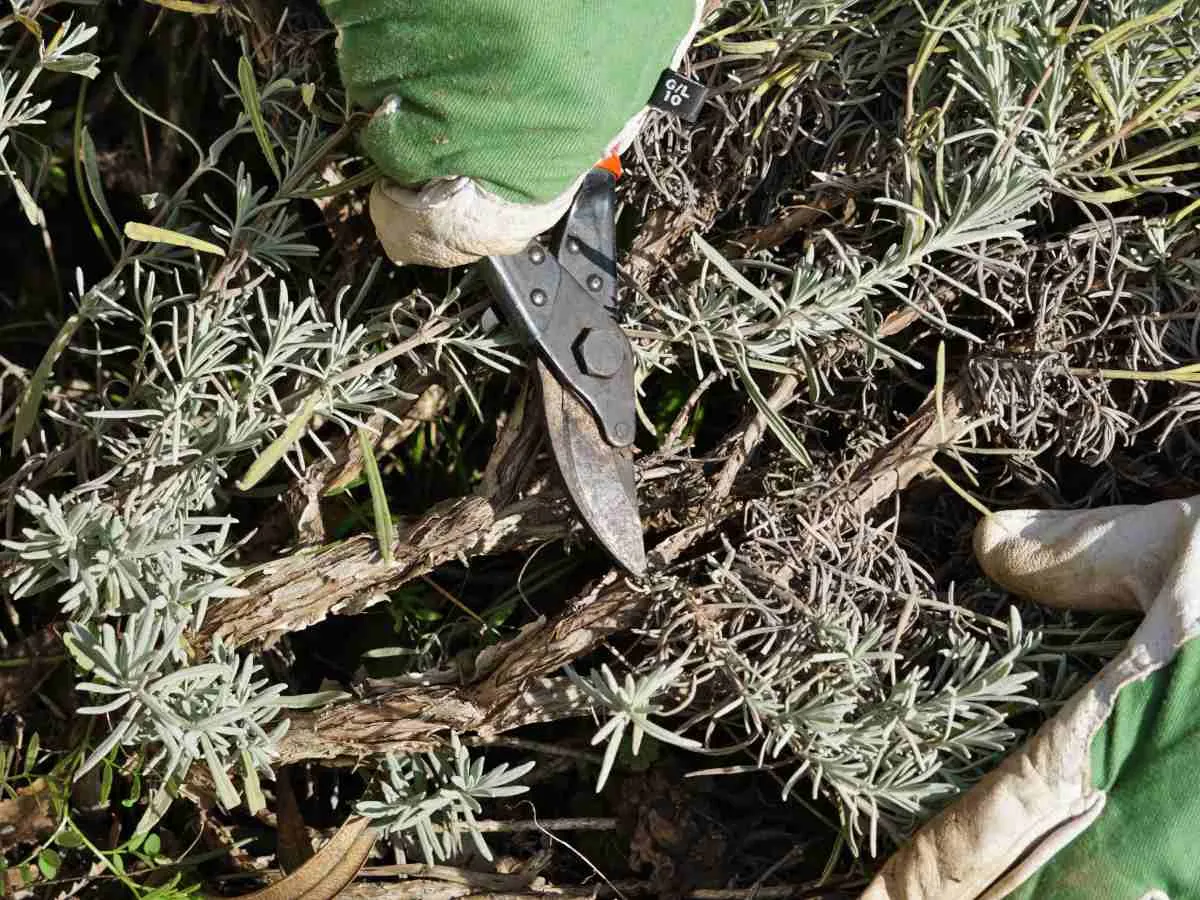
- Use bypass pruners or sharp hedge shears. Clean the blades with rubbing alcohol first. Dull tools crush the stems instead of slicing them, which slows healing. Bypass pruners work best for individual thick branches, while shears suit shaping a whole mound.
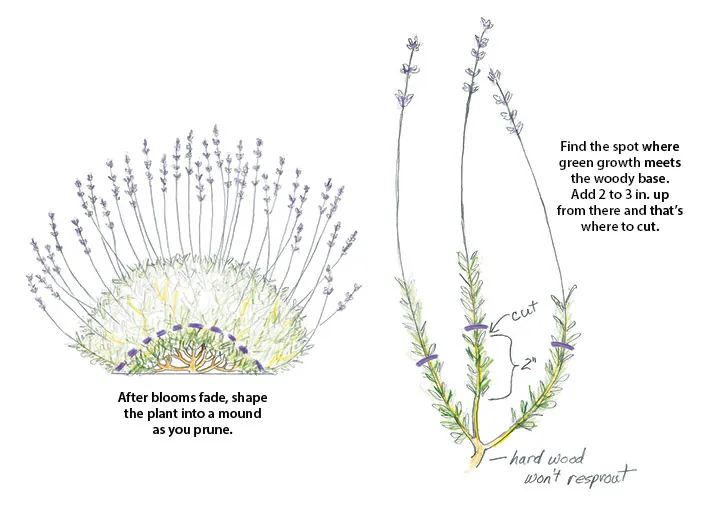
- Find the lowest green bud on each stem. Trace a branch down from the top until you spot a living leaf node or a small green bump. That bump is your absolute limit. You must leave at least 1 to 2 inches (2.5 to 5 cm) of green growth above the bare wood.
- Cut one-third of the total height off first. Make your cuts at a slight angle so rain runs off the wound. Step back and look at the shape. If you need to take more, do it in a second pass rather than chopping deep immediately.
- Shape the remaining growth into a rounded mound. Flat tops collect snow and standing water, which breaks stems in winter. A gentle dome lets rain slide off the center.
- Remove any dead or crossing branches entirely. Cut these flush with the main stem. Rubbing branches create open wounds that let fungal spores inside.
- Clear all clippings away from the base. Don’t leave cut stems piled around the crown. Trapped debris holds moisture against the wood and encourages rot.
- Hold off on fertilizer. Feeding a freshly pruned plant forces weak, tender growth that won’t survive the first cold night. Wait until you see fresh shoots in spring.
The single judgment call that separates a saved plant from a dead one is knowing when to stop cutting. If removing another inch means leaving zero green buds on a stem, leave that branch longer than the others. An uneven shrub lives; a perfectly round, bare stump doesn’t. If your plant has no green growth below the halfway mark, replacing it’s the only reliable option.
Situations that change the approach
Different conditions require different actions. Match your plant’s current state to the right row below so you don’t apply the wrong method.
| Plant condition | Action to take | Effort needed | Watch out for |
|---|---|---|---|
| Young, under two years | Pinch tips lightly only | Ten minutes | Cutting into bare wood |
| Overgrown English type | Remove one-third height | Thirty minutes | Leaving flat tops |
| Woody French variety | Replace instead of cutting | Buying new plant | Expecting regrowth from old wood |
| Floppy, split center | Tie stems, trim outer third | Twenty minutes | Tight ties cutting bark |
| Frost-damaged tips | Wait for spring growth | Five minutes | Cutting live wood too early |
| Fungal spots on leaves | Prune affected stems only | Fifteen minutes | Spreading spores via dirty tools |
A floppy plant that splits open in the middle isn’t always a candidate for a hard cut. Sometimes it just needs a lighter trim and a loose twine tie around the outer ring to hold the shape through winter. Check the center before deciding.
Details that keep lavender alive
Reading the stems correctly
Bare wood looks different depending on the season. In winter, dormant buds might be pale and tight against the stem, not bright green. Scratch the bark gently with your thumbnail. If you see pale green tissue underneath, that node is alive. Brown, dry dust means it’s dead.
Don’t guess by looking at the top of the plant. The healthiest growth is often hidden under the outer canopy near the base. Push the upper branches aside and inspect the lower stems in direct light.
Timing the cuts for your region
The window for safe pruning shifts based on your first expected frost date. Count backward roughly six weeks from that date. That’s your deadline. The plant needs those six weeks to seal the cuts before freezing temperatures arrive.
If you miss that window, wait until early spring after the last hard frost passes. Cutting in late autumn exposes open wounds to ice, which splits the stems down the middle. A split stem can’t transport water, and that entire branch dies by summer.
Check your local frost dates through a regional agricultural extension service or weather database to find your exact timeline. The map gives you the baseline temperature data needed to calculate that six-week safety buffer.
Lavender problems and fixes
Things go wrong when cuts are too deep, timed poorly, or made with dull tools. Here’s how to match the symptom to the cause.
| What you notice | What it usually means | What to do first | How to stop it happening again |
|---|---|---|---|
| Brown stems after cutting | Cut below living buds | Leave remaining green alone | Stop above visible growth |
| White powdery spots | Fungal infection from humidity | Remove affected branches | Space plants further apart |
| Center splitting open | Top-heavy, flat pruning | Trim sides, leave dome | Shape into a mound |
| No spring growth | Winter kill from late pruning | Replace the plant | Finish cuts six weeks earlier |
| Yellowing lower leaves | Waterlogged soil after trimming | Reduce watering frequency | Clear debris from base |
| Leggy new shoots | Too much nitrogen applied | Stop fertilizing immediately | Never feed right after cutting |
Yellow leaves at the base usually mean the soil stays too wet after you removed the top growth. Less foliage means the plant drinks less water. Adjust your watering schedule downward immediately after pruning, or the roots will suffocate.
Rules for cutting woody herbs
There’s no legal permit required to prune your own garden, but botanical science sets hard limits on woody subshrubs. The Royal Horticultural Society advises against cutting into old wood on lavender because these plants lack the dormant buds found on deciduous trees like roses or apple trees. Once a lavender stem turns fully woody, the cells responsible for generating new shoots are gone.
This biological rule applies everywhere, though your local climate dictates the timing. Agricultural extension offices in Mediterranean climates allow slightly later pruning than those in colder northern zones. Always check your specific regional guidelines rather than following a calendar meant for a different country.
If your plant is part of a protected heritage garden or a commercial farm subject to organic certification, different rules apply. Organic standards restrict certain treatments after pruning. Check with your certifying body before applying any wound sealants, as most are unnecessary and some violate organic protocols.
For plants showing signs of viral disease—like sudden ring spots on leaves—don’t just prune. Contact your local agricultural extension agent. Moving infected clippings spreads the virus to neighboring beds.
What this actually costs
The financial cost of pruning lavender yourself is nearly zero if you already own sharp bypass pruners. A decent pair is inexpensive relative to replacing the plant. Cheap shears crush stems, leading to dieback that forces you to replace the plant anyway.
The real currency here is time and risk. A standard bush takes about thirty minutes to assess and shape properly. Rushing it to save fifteen minutes often results in cutting below the living nodes. Replacing a mature, established lavender plant is inexpensive relative to the time required for a new one to reach the same size.
Effort scales with the plant’s condition. A regularly trimmed shrub needs five minutes of light shaping. A neglected, woody mess demands careful inspection of every single stem, pushing the job closer to an hour.
Water usage drops after a heavy prune. With fewer leaves, the plant transpires less. If you were watering twice a week, drop to once every ten days until new growth appears. Overwatering a reduced plant is the fastest way to kill it, and the cost of that mistake is starting over from scratch.
Caring for the plant afterward
Once the cuts are made, your only job is to manage moisture and watch for new growth. Don’t mulch heavily around the base. Thick mulch traps humidity against the freshly cut stems, inviting rot. A thin layer of gravel or coarse sand is better, as it reflects light upward and drains fast.
Wait for new green shoots to appear before resuming your normal watering schedule. In warm climates, this takes two to four weeks. In cooler zones, you might not see movement until spring. Until then, water only when the top two inches of soil feel completely dry to your finger.
If winter arrives before the cuts heal, protect the crown with a breathable fabric cover. Avoid plastic, which traps condensation and freezes against the wood. Remove the cover on mild days to let air circulate.
The sign that your plant needs attention again is when the new growth stretches out and loses its tight, mounded shape. When the stems flop sideways under their own weight, it’s time for another light trim. Don’t wait until it splits open again.
When replacing lavender makes more sense
A hard cut isn’t always the right move. If your plant is old and the bottom six inches are completely bare, brown wood, no amount of careful pruning will bring it back. Dig it up and plant a new one. You’ll spend less time establishing a fresh start than nursing a dying stump.
If the issue is a spreading fungal disease like Phytophthora root rot, cutting the top off won’t fix the infected soil beneath it. You need to remove the plant, improve the drainage in that spot, and wait a season before replanting.
Plants grown in deep shade stretch out seeking light. Pruning them shorter just forces them to stretch again faster. Move the plant to a spot that gets at least six hours of direct sun, or switch to a shade-tolerant ground cover instead.
If the stems snap easily and look hollow inside, the plant has exhausted its lifespan. Trying to shape brittle wood only shatters it further. Compost the remains and start fresh.
Frequently asked questions
Can I cut lavender back to the ground?
No, cutting it flush with the soil kills the plant. Lavender doesn’t grow back from the root crown like some perennials do. You must leave at least one to two inches of green, leafy growth above the woody base for it to survive.
Why is my lavender turning woody in the middle?
It’s aging naturally, but skipping annual trims speeds it up. Without yearly shaping, the plant puts energy into extending long stems rather than branching out at the base. The center opens up, sunlight hits the inner wood, and those lower buds die off permanently.
How long does lavender take to grow back after pruning?
Expect to see new green shoots within two to four weeks in warm weather, or the following spring if you prune in late autumn. This assumes you left living buds on the stems. If you cut into dead wood, it won’t grow back at all.
Is it safe to prune lavender in winter?
No, winter pruning exposes open cuts to freezing temperatures, which splits the stems and kills the branches. Wait until early spring after your last hard frost passes, or prune in late summer so the wounds seal before the cold arrives.
What happens if I cut into the bare wood?
That specific branch will die. Lavender stems lack dormant buds in the old, brown wood. Once you cut below the lowest green leaf node, the remaining stump can’t produce new growth and eventually dries out completely.
Does it matter which type of lavender I have?
Yes, the species changes how much you can safely remove. English lavender tolerates heavier shaping than French or Spanish types. If you aren’t sure what you planted, treat it gently and never remove more than one-third of the green growth at once.
How often should I trim my lavender bushes?
Twice a year keeps them compact. Do a light shaping after the spring flowers fade, and a slightly firmer trim in late summer before the weather cools. This prevents the woody center from opening up and extends the plant’s life by several years.
Will hard pruning kill my lavender plant?
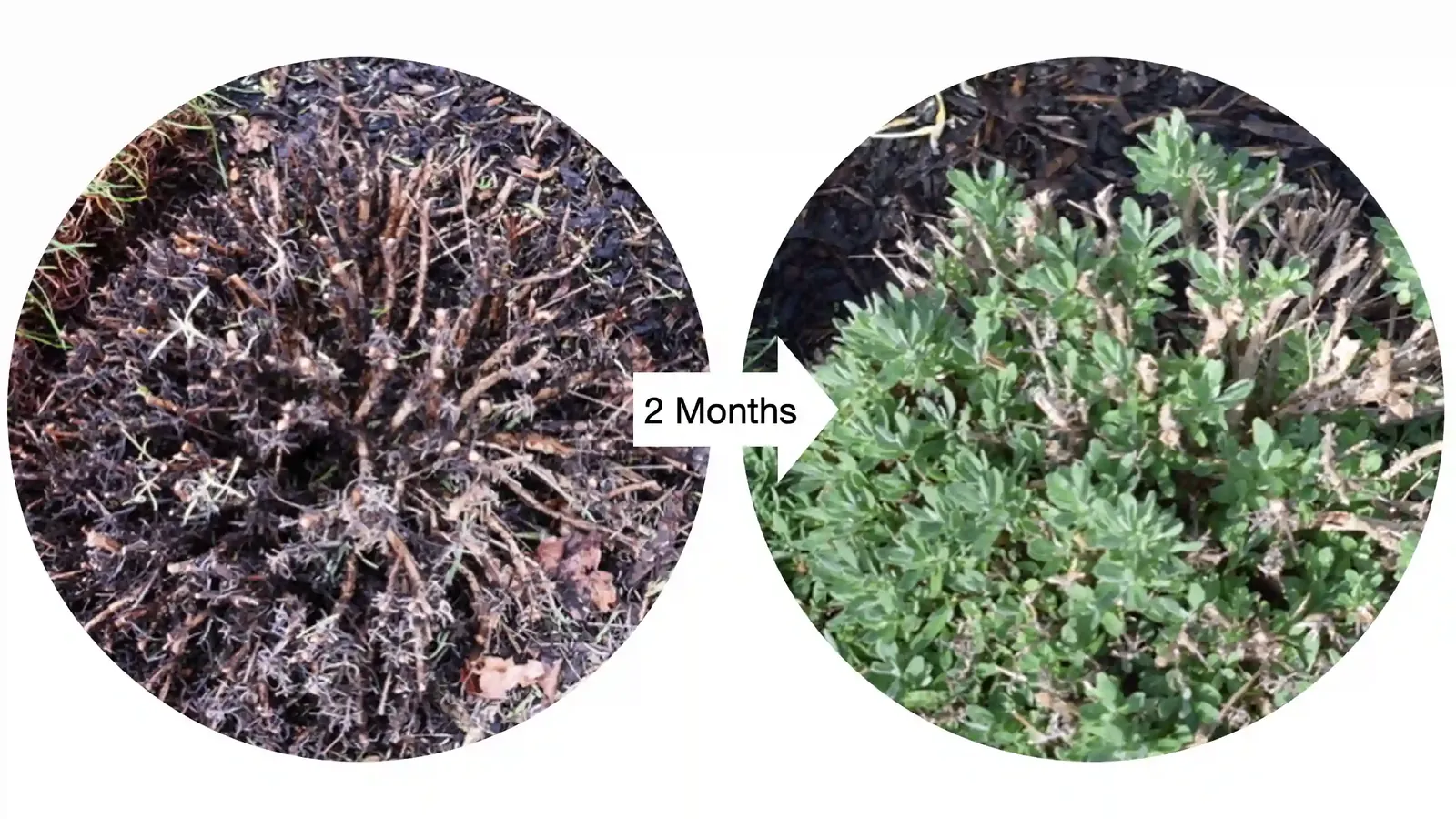
It will if you cut below the last living green buds. The plant relies on those remaining leaves to photosynthesize and push new growth. Leaving a few inches of green tissue is the difference between a rejuvenated shrub and a dead stump.
Starting your lavender cut today
Go outside and inspect the lowest stems of your plant for green buds before picking up your shears. If you find living nodes, trim back one-third of the height and shape the rest into a dome. You’ll see fresh silver-green shoots pushing out within a month if the weather stays warm. If every stem is bare and brown down to the soil line, pull the plant out and buy a replacement instead.
{“@context”:”https://schema.org”,”@type”:”FAQPage”,”mainEntity”:[{“@type”:”Question”,”name”:”Can I cut lavender back to the ground?”,”acceptedAnswer”:{“@type”:”Answer”,”text”:”No, cutting it flush with the soil kills the plant. Lavender doesn’t grow back from the root crown like some perennials do. You must leave at least one to two inches of green, leafy growth above the woody base for it to survive.”}},{“@type”:”Question”,”name”:”Why is my lavender turning woody in the middle?”,”acceptedAnswer”:{“@type”:”Answer”,”text”:”It’s aging naturally, but skipping annual trims speeds it up. Without yearly shaping, the plant puts energy into extending long stems rather than branching out at the base. The center opens up, sunlight hits the inner wood, and those lower buds die off permanently.”}},{“@type”:”Question”,”name”:”How long does lavender take to grow back after pruning?”,”acceptedAnswer”:{“@type”:”Answer”,”text”:”Expect to see new green shoots within two to four weeks in warm weather, or the following spring if you prune in late autumn. This assumes you left living buds on the stems. If you cut into dead wood, it won’t grow back at all.”}},{“@type”:”Question”,”name”:”Is it safe to prune lavender in winter?”,”acceptedAnswer”:{“@type”:”Answer”,”text”:”No, winter pruning exposes open cuts to freezing temperatures, which splits the stems and kills the branches. Wait until early spring after your last hard frost passes, or prune in late summer so the wounds seal before the cold arrives.”}},{“@type”:”Question”,”name”:”What happens if I cut into the bare wood?”,”acceptedAnswer”:{“@type”:”Answer”,”text”:”That specific branch will die. Lavender stems lack dormant buds in the old, brown wood. Once you cut below the lowest green leaf node, the remaining stump can’t produce new growth and eventually dries out completely.”}},{“@type”:”Question”,”name”:”Does it matter which type of lavender I have?”,”acceptedAnswer”:{“@type”:”Answer”,”text”:”Yes, the species changes how much you can safely remove. English lavender tolerates heavier shaping than French or Spanish types. If you aren’t sure what you planted, treat it gently and never remove more than one-third of the green growth at once.”}},{“@type”:”Question”,”name”:”How often should I trim my lavender bushes?”,”acceptedAnswer”:{“@type”:”Answer”,”text”:”Twice a year keeps them compact. Do a light shaping after the spring flowers fade, and a slightly firmer trim in late summer before the weather cools. This prevents the woody center from opening up and extends the plant’s life by several years.”}},{“@type”:”Question”,”name”:”Will hard pruning kill my lavender plant?”,”acceptedAnswer”:{“@type”:”Answer”,”text”:”It will if you cut below the last living green buds. The plant relies on those remaining leaves to photosynthesize and push new growth. Leaving a few inches of green tissue is the difference between a rejuvenated shrub and a dead stump.”}}]}