



As an Amazon Associate, we earn from qualifying purchases. This post contains affiliate links – if you buy through them, we may earn a commission at no extra cost to you.
Selecting an easy vegetable garden guide requires matching instructions to your actual space, schedule, and climate zone rather than choosing the thickest book. Methods that work in rural raised beds often fail on windy apartment balconies, and many resources assume prior knowledge that beginners lack. This page breaks down ten guides by what they actually teach so you can pick one fitting your real life.
What Actually Matters
Space Determines Method More Than Ambition Does
Your available growing area decides which gardening approach will succeed before you ever plant a seed. Books focused on raised beds assume you have ground space and can build or buy structures, while container guides work for balconies but limit what you can grow. Small-space titles bridge this gap with vertical and intensive techniques that maximize yield per square foot. Before ordering any guide, measure your actual usable space in feet and note whether it’s ground-level, elevated, or entirely in containers. A book written for in-ground rows won’t help someone with only a patio, and a container-only guide frustrates someone with a backyard waiting to be used. Match the method to your measured reality, not your hopes.
Climate Zone Timing Beats Generic Calendars Every Time
Gardening advice that doesn’t account for your specific frost dates and growing season length is just decoration. Some guides organize tasks month-by-month for broad regions, while others use weekly checklists tied to local conditions. The trade-off is between simplicity and precision: a monthly framework is easier to follow but may miss critical windows in shorter seasons, whereas weekly planning demands more attention but catches timing-sensitive tasks like transplanting and succession planting. Check your USDA hardiness zone and average last frost date before choosing. If your region has unusual weather patterns or microclimates, a generic national calendar will mislead you more than it helps, regardless of how well-organized it appears.
Seed Starting Requires Different Skills Than Transplanting
Growing from seed saves money and offers variety selection that nursery starts can’t match, but it adds weeks of indoor care, lighting, and hardening off that many beginners aren’t prepared for. Guides emphasizing seed starting cover germination temperatures, soil mixes, and transplant timing in depth, while those focused on transplants skip straight to planting out. The honest trade-off is time versus control: seed starting demands daily attention for an extended period before anything touches soil outside, but gives you access to hundreds of varieties unavailable as plants. Decide whether you have consistent indoor space and patience for that phase before committing to a seed-heavy guide, or choose one that balances both approaches for flexibility.
Perfectionism Kills More Gardens Than Pests Do
A primary reason new gardeners quit is the belief that mistakes mean failure rather than bad soil or wrong timing. Some guides address this psychological barrier with low-stress frameworks that normalize imperfection, while others present idealized outcomes that make setbacks feel catastrophic. The feature that sustains gardening is permission to have ugly plants and partial harvests, so choose a guide matching your emotional tolerance for uncertainty.
1. How to Start a Garden

Best for: Complete beginners needing foundational coverage
This guide targets readers who haven’t gardened before and need broad orientation rather than specialized technique. Its title suggests comprehensive basics, which serves someone unsure whether they’ll stick with gardening long enough to justify niche methods. The trade-off is depth versus breadth: a general introduction covers soil, sun, water, and plant selection adequately but won’t satisfy someone already committed to raised beds or year-round production. It’s not for gardeners who’ve grown vegetables before and want to optimize an existing system, since foundational content repeats what they already know.
2. Veg in One Bed

Best for: Gardeners committing to single raised bed method
This title focuses entirely on maximizing yield from one raised bed structure, organizing guidance month-by-month for continuous production. That specificity helps someone who’s decided on this exact method and wants detailed seasonal pacing rather than general principles. The trade-off is focus versus flexibility: a single-bed system simplifies management and reduces overwhelm, but locks you into one format that doesn’t translate to in-ground rows or multiple beds. It’s not for gardeners with irregular spaces, existing garden layouts they want to modify, or those uncertain whether raised beds suit their site conditions.
3. The Compact Garden

Best for: Small-space growers maximizing limited area
This guide addresses the constraint of restricted growing space directly, focusing on vegetables in small spaces. That specialization serves growers working in small spaces. It’s not for people with ample yard space who’d benefit more from lower-maintenance traditional layouts, since intensive techniques add unnecessary labor where space isn’t limiting.
4. Raised-Bed Gardening for Beginners
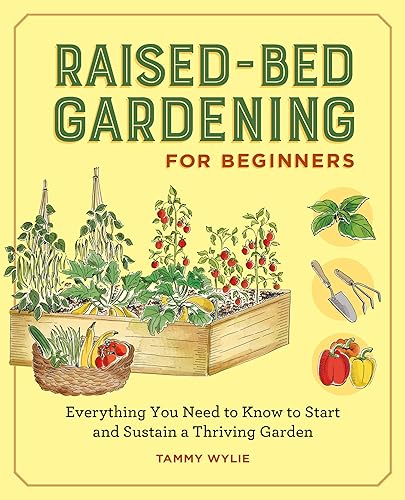
Best for: New gardeners building raised bed systems
This title combines beginner instruction with raised-bed methodology, emphasizing sustainability and self-sufficiency as motivating frameworks. That pairing helps someone who wants structured beds but hasn’t gardened before and needs both construction guidance and planting basics together. The trade-off is philosophy versus pragmatism: sustainability framing inspires commitment but may prioritize ideals over practical shortcuts that make early success more likely.
Pros
- Sustainability framing supports long-term motivation
- Beginner-appropriate despite structural complexity
- Self-sufficiency angle appeals to homestead-minded readers
Cons
- Philosophical framing may overshadow practical shortcuts
- Assumes ability to build or purchase bed structures
- Beginner content redundant for experienced gardeners
5. Week-by-Week Vegetable Gardener’s Handbook

Best for: Planners wanting precise seasonal task timing
This guide organizes gardening tasks into weekly increments rather than monthly blocks, promising perfectly timed actions for maximum harvest. That granularity helps detail-oriented gardeners who want explicit scheduling rather than general seasonal guidance. The trade-off is structure versus adaptability: weekly checklists reduce decision fatigue but assume your local conditions align with the book’s calendar, which varies significantly by zone and microclimate. It’s not for gardeners in regions with unusual weather patterns or those who prefer flexible frameworks they can adjust based on observation rather than predetermined dates.
Pros
- Weekly structure eliminates timing guesswork completely
- Harvest-focused organization motivates consistent action
- Detailed pacing suits methodical planners well
- Reduces decision fatigue through explicit scheduling
Cons
- Calendar may not match local climate variations
- Rigid structure frustrates adaptive gardening styles
- Weekly commitment demands consistent engagement
6. Starting Seeds Storey BASICS

Best for: Gardeners prioritizing seed propagation skills
This title focuses exclusively on growing vegetables, herbs, and flowers from seed rather than transplanting nursery starts. That specialization serves gardeners who want variety selection beyond local nursery offerings or who plan to propagate plants at home. Seed starting requires lights, trays, soil mix, and daily care before anything moves outdoors, but unlocks hundreds of varieties unavailable as transplants.
Pros
- Comprehensive seed-starting coverage beyond basics
- Includes herbs and flowers alongside vegetables
- Storey BASICS imprint signals reliable reference quality
- Unlocks variety selection unavailable as transplants
Cons
- Indoor phase delays visible outdoor progress significantly
- Requires equipment investment before first success
- Narrow focus excludes transplant-based gardening methods
7. Vegetable Gardener’s Container Bible
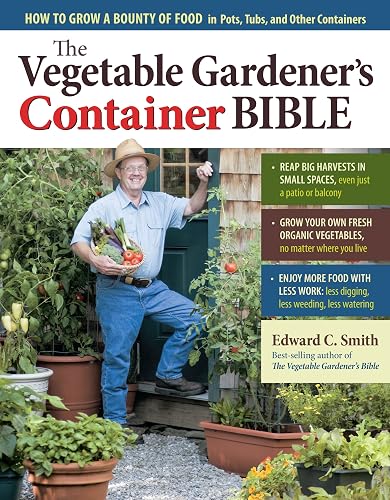
Best for: Container-only growers without ground access
This guide dedicates itself entirely to growing food in pots, tubs, and other containers rather than in-ground or raised-bed systems. That exclusivity serves balcony gardeners, patio growers, and anyone whose growing space is entirely above ground or paved. The trade-off is portability versus volume: containers allow mobility and soil control but severely limit root depth and plant size compared to in-ground growing. It’s not for gardeners with accessible soil who’d benefit from higher-yield in-ground methods, since container constraints cap production regardless of technique quality.
Pros
- Exclusively addresses container-specific challenges
- Covers diverse vessel types beyond standard pots
- Bounty framing counters container-limitation assumptions
- Essential for paved or elevated growing sites
Cons
- Container constraints permanently limit maximum yield
- Techniques don’t transfer to in-ground gardening
- Watering frequency exceeds in-ground requirements substantially
8. The Year-Round Vegetable Gardener

Best for: Growers extending seasons beyond typical limits
This title promises 365-day food production regardless of location, targeting gardeners who want to maximize annual yield through season extension techniques. That ambition serves cold-climate growers frustrated by short summers and warm-climate gardeners wanting winter production during mild months. Readers should master basic summer crops first, as advanced season-extension skills build upon rather than replace foundational knowledge.
Pros
- Addresses all climate zones rather than temperate only
- Maximizes annual yield through continuous production
- Season-extension techniques extend beyond basic growing
- Location-agnostic framing suits diverse geographies
Cons
- Advanced techniques overwhelm true beginners completely
- Year-round commitment demands significant ongoing effort
9. The Imperfect Gardener

Best for: Stressed beginners fearing failure and perfectionism
This guide explicitly addresses the psychological barriers to gardening, framing imperfection as normal rather than shameful. That emotional support serves anxious beginners, busy people with limited time, and anyone who’s quit gardening before due to perceived failure. The trade-off is reassurance versus rigor: stress-free framing encourages persistence but may underemphasize techniques that prevent common problems in the first place. It’s not for confident gardeners seeking technical optimization, since emotional validation doesn’t improve soil health or pest management where knowledge gaps exist.
Pros
- Directly addresses beginner anxiety and perfectionism
- Busy-person framing respects time constraints honestly
- Joy emphasis sustains motivation through inevitable setbacks
- Zero-perfection standard lowers barrier to continued effort
Cons
- Emotional focus may underserve technical skill development
- Stress-free framing could normalize preventable problems
- Less useful for confident gardeners seeking advancement
10. GrowVeg Beginner Guide
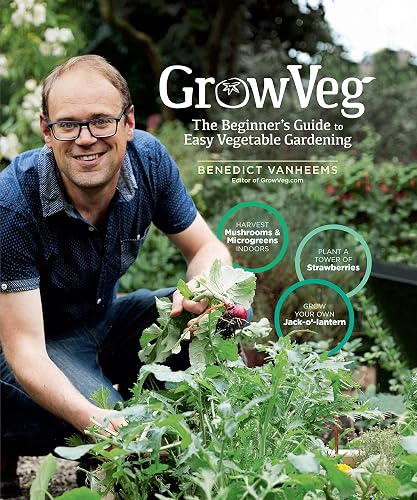
Best for: Digital-native learners preferring visual instruction
This title positions itself as an accessible entry point to easy vegetable gardening, suggesting clear visual or step-by-step formatting suited to modern learning preferences. The trade-off is accessibility versus comprehensiveness: simplified presentation aids initial understanding but may lack the depth needed when problems arise beyond covered scenarios. It’s not for readers who prefer thorough textual explanations with extensive troubleshooting sections, since streamlined formats often sacrifice nuance for clarity.
Pros
- Easy framing reduces intimidation for true beginners
- Visual learning style suits non-text-preferring readers
- Accessible presentation supports non-native English speakers
- Streamlined format prevents information overload early
Cons
- Simplified content may lack advanced troubleshooting depth
- Visual emphasis could underserve complex problem diagnosis
- Easy positioning might not challenge advancing gardeners adequately
Who Should Buy What to Start an Easy Vegetable Garden
Someone tackling how to start an easy vegetable garden for the first time should begin with How to Start a Garden for its broad foundational coverage, unless they’ve already committed to a specific method. Veg in One Bed suits those certain they want raised beds and monthly pacing, while The Compact Garden serves space-constrained growers who need density techniques. Raised-Bed Gardening for Beginners helps new gardeners wanting both construction and planting guidance together, whereas Week-by-Week Vegetable Gardener’s Handbook fits detail-oriented planners who trust structured calendars. Starting Seeds Storey BASICS is for propagators prioritizing variety selection, and Vegetable Gardener’s Container Bible serves those without ground access. The Year-Round Vegetable Gardener targets season-extenders ready for advanced techniques, The Imperfect Gardener supports anxious beginners needing permission to fail, and GrowVeg Beginner Guide helps visual learners overwhelmed by dense text. Match your current constraint—space, time, confidence, or method—to the guide addressing it directly rather than chasing comprehensive coverage you won’t use.
Mistakes That Catch Buyers Out
- Choosing a guide based on beautiful cover photos rather than whether its method matches your actual growing space and climate zone.
- Prioritizing seed-starting books when you lack indoor space and patience for an extended period of daily care before outdoor planting begins.
- Assuming “beginner” in a title means the content addresses your specific situation rather than generic fundamentals that may not apply to your constraints.
- Taking “easy” or “stress-free” claims at face value without recognizing that all vegetable gardening requires consistent attention regardless of framing.
How to Start a Garden provides a safe foundation for new vegetable growers because it covers essentials without assuming prior commitment to specialized methods. Before ordering, measure your growing space and confirm your USDA hardiness zone to ensure the advice applies to your specific location.
Related guides
- Garden Paths on a Budget: 4 Materials That Hold Up
- Best Tabletop Garden: Passive Hydroponic With LEDs
- How to Design a Low Maintenance Garden in Three Steps
Frequently Asked Questions
How do I know which gardening method suits my space?
Measure your usable growing area in square feet and note whether it’s ground-level, elevated, or entirely container-based before selecting a guide. Larger ground spaces suit raised-bed or in-ground methods, while smaller areas require compact or container-focused techniques. Your physical constraints matter more than your aspirations, since a method mismatched to your site fails regardless of how well-written the instructions are. Choose based on measured reality, not imagined possibilities.
Can I start gardening if I’ve killed plants before?
Yes, The Imperfect Gardener normalizes failure as part of learning rather than evidence of inability. Previous plant deaths usually result from mismatched conditions or inconsistent care, and beginner guides exist to close those knowledge gaps. Past results predict future outcomes only if nothing changes.
Do I need special equipment before buying a gardening book?
No, but certain guides assume equipment access that affects whether their advice is immediately actionable. Certain guides focus on specialized methods that may require specific tools or setups. General beginner guides typically require only basic hand tools and soil amendments available locally. Read the table of contents or description carefully to confirm whether prerequisites align with what you currently possess or can reasonably obtain before investing time in methods you can’t implement.
How important is my climate zone when choosing a guide?
Your USDA hardiness zone and local frost dates determine which planting calendars work where you live. Guides organized by month often reflect the author’s regional conditions, making zone-agnostic advice potentially misleading despite good organization. Always cross-reference the USDA Plant Hardiness Zone Map against any guide’s stated regional applicability before purchase.
Should I buy multiple guides covering different methods?
Buy additional titles only after completing one full growing season with a foundational guide and identifying specific knowledge gaps. Purchasing multiple books simultaneously creates paralysis through conflicting advice and divided attention rather than accelerated learning. Most beginners benefit more from mastering one coherent system before layering additional techniques, since gardening skills compound sequentially.
Conclusion
Pick the guide that fits your current space and schedule, then order it today. You’ll feel more confident once you’ve read a few chapters and started planning. Don’t wait for perfect conditions; your first season won’t be flawless, but you’ll learn exactly what your garden needs.
{“@context”:”https://schema.org”,”@type”:”FAQPage”,”mainEntity”:[{“@type”:”Question”,”name”:”How do I know which gardening method suits my space?”,”acceptedAnswer”:{“@type”:”Answer”,”text”:”Measure your usable growing area in square feet and note whether it’s ground-level, elevated, or entirely container-based before selecting a guide. Larger ground spaces suit raised-bed or in-ground methods, while smaller areas require compact or container-focused techniques. Your physical constraints matter more than your aspirations, since a method mismatched to your site fails regardless of how well-written the instructions are. Choose based on measured reality, not imagined possibilities.”}},{“@type”:”Question”,”name”:”Can I start gardening if I’ve killed plants before?”,”acceptedAnswer”:{“@type”:”Answer”,”text”:”Yes, The Imperfect Gardener normalizes failure as part of learning rather than evidence of inability. Previous plant deaths usually result from mismatched conditions or inconsistent care, and beginner guides exist to close those knowledge gaps. Past results predict future outcomes only if nothing changes.”}},{“@type”:”Question”,”name”:”Do I need special equipment before buying a gardening book?”,”acceptedAnswer”:{“@type”:”Answer”,”text”:”No, but certain guides assume equipment access that affects whether their advice is immediately actionable. Certain guides focus on specialized methods that may require specific tools or setups. General beginner guides typically require only basic hand tools and soil amendments available locally. Read the table of contents or description carefully to confirm whether prerequisites align with what you currently possess or can reasonably obtain before investing time in methods you can’t implement.”}},{“@type”:”Question”,”name”:”How important is my climate zone when choosing a guide?”,”acceptedAnswer”:{“@type”:”Answer”,”text”:”Your USDA hardiness zone and local frost dates determine which planting calendars work where you live. Guides organized by month often reflect the author’s regional conditions, making zone-agnostic advice potentially misleading despite good organization. Always cross-reference the USDA Plant Hardiness Zone Map against any guide’s stated regional applicability before purchase.”}},{“@type”:”Question”,”name”:”Should I buy multiple guides covering different methods?”,”acceptedAnswer”:{“@type”:”Answer”,”text”:”Buy additional titles only after completing one full growing season with a foundational guide and identifying specific knowledge gaps. Purchasing multiple books simultaneously creates paralysis through conflicting advice and divided attention rather than accelerated learning. Most beginners benefit more from mastering one coherent system before layering additional techniques, since gardening skills compound sequentially.”}}]}