




Mulch, gravel, stepping stones, and mown grass are the four main materials for garden paths on a budget that hold up under foot traffic. Mulch and grass cost almost nothing upfront but demand weekly or seasonal maintenance, while gravel and pavers require significant initial spending yet remain stable for years with minimal attention. Your choice depends entirely on whether you have more time or more money right now.
Five budget materials compared for garden paths
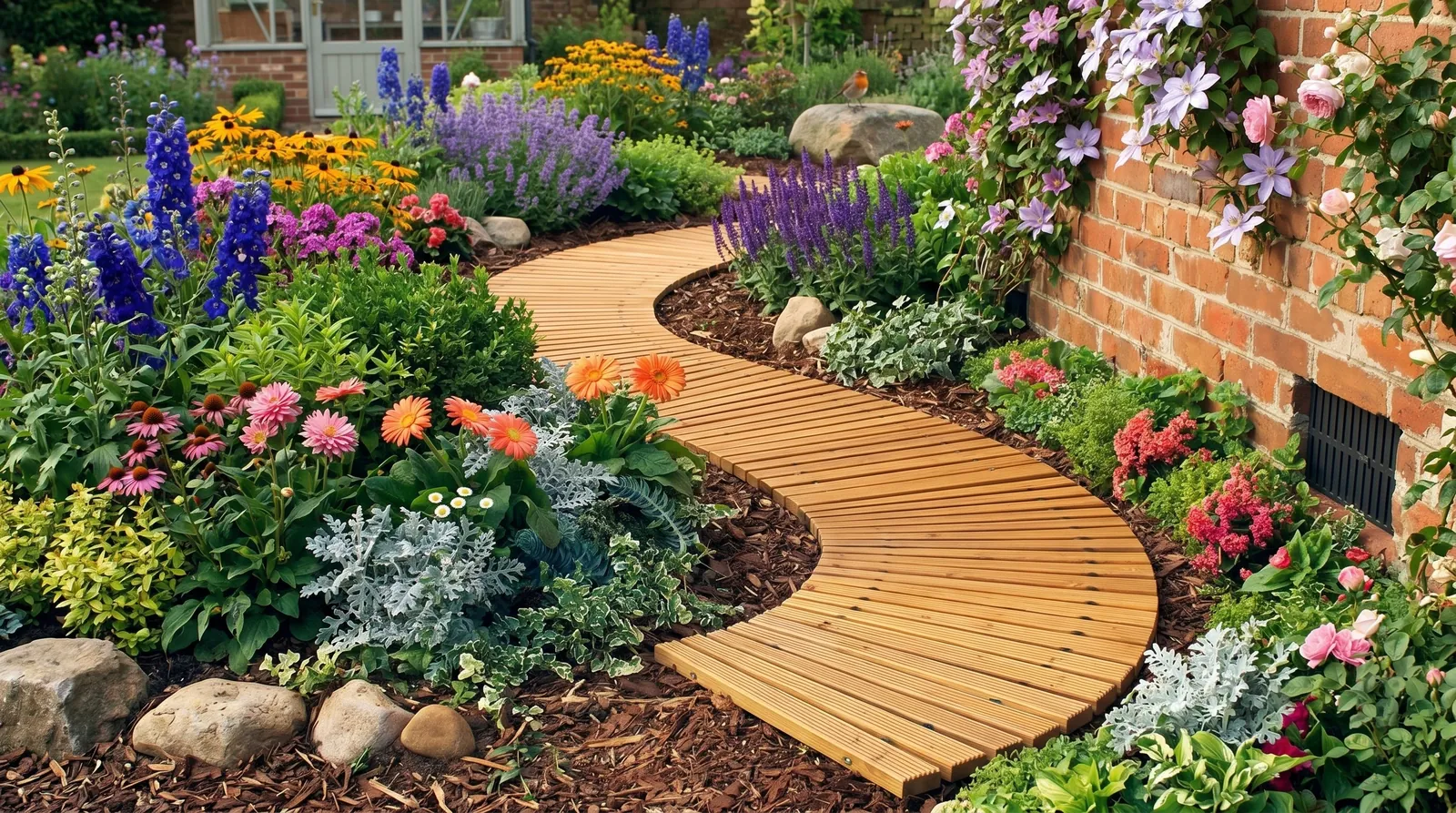
These five options cover nearly every low-cost pathway project a homeowner can complete without professional help. Each row names a specific material, its primary advantage for budget-conscious builders, and a recognizable example of where it works best.
| Material | Best for | Common example |
|---|---|---|
| Shredded hardwood mulch | Lowest upfront cost | Side yard walkway |
| Pea gravel drainage | Permeable surfaces | Patio access route |
| Concrete stepping stones | Stable footing | Stepping through lawn |
| Mown grass strip | Zero material cost | Orchard or meadow path |
| Crushed granite fines | Firm wheelchair surface | Accessible garden trail |
Loose materials like mulch and pea gravel migrate into surrounding beds after heavy rain. Install rigid plastic edging driven at least four inches into the soil to stop this drift. Without that border you’ll be buying replacement material every spring.
Pea gravel rolls underfoot if laid deeper than two inches. Keep the layer shallow over a compacted base of crushed stone. That thin profile stays firm when walked on while still letting water drain straight down.
Crushed granite fines lock together only when moistened and tamped with a hand compactor. Dry granite dust stays loose and scatters like sand. Mist the surface lightly before each pass until the path feels as solid as poured concrete.
Mown grass paths turn to mud if walked on daily during wet months. Reserve them for routes used mostly in dry weather.
Shredded hardwood mulch
Shredded hardwood mulch is the least expensive path material you can install this weekend using only hand tools and locally sourced organic matter. It suits renters, temporary gardens, or anyone who needs a usable walking surface immediately without committing to permanent hardscape. This material breaks down over time and requires annual replenishment, which is the trade-off for its near-zero startup cost.
- Suppresses weeds effectively when applied at three inches deep, blocking light from reaching weed seeds beneath the surface layer.
- Cushions footsteps and reduces mud splatter during rain compared to bare soil, keeping shoes cleaner on daily walks.
- Improves soil structure underneath as it decomposes, adding organic matter that benefits adjacent planting beds over several seasons.
- Allows instant modification of path width or curve without demolition, letting you adjust the layout as garden beds evolve.
A typical side-yard walkway measuring three feet wide by twenty feet long requires approximately two cubic yards of shredded hardwood, spread evenly at three inches deep after settling. Check your local municipal compost facility or arborist for free or low-cost sources before buying bagged product at retail prices.
If your path receives heavy wheelbarrow traffic or sits on clay soil, lay landscape fabric underneath to prevent the mulch from mixing into the subsoil and losing depth within months. Without fabric, expect to add another inch of fresh mulch each spring to maintain coverage. This material won’t support wheeled loads reliably; if you need to move carts regularly, choose crushed granite instead.
Pea gravel drainage
Pea gravel provides permanent permeability that mulch can’t offer, allowing rainwater to pass through instantly rather than pooling or running off. It suits areas with poor drainage, frequent rainfall, or where local regulations require permeable surfaces to manage stormwater runoff on residential properties. The small rounded stones shift underfoot initially but lock together somewhat after compaction and edging installation.
- Eliminates standing water on the path surface even during heavy storms, keeping the walking area dry and safe year-round.
- Resists decomposition entirely unlike organic mulches, requiring no annual replacement and lasting decades without degradation.
- Deters weed growth when installed over landscape fabric with proper edging, reducing maintenance to occasional raking and spot treatment.
- Reflects heat less than dark asphalt or concrete, keeping adjacent planting beds cooler during summer months.
Install pea gravel at two inches deep over a compacted base of crushed stone for paths expecting regular foot traffic; one inch suffices for decorative routes used occasionally. Metal or plastic edging is mandatory to contain the loose stones, as uncontained gravel migrates into lawn and beds within weeks.
According to the U.S. Environmental Protection Agency, permeable surfaces like gravel reduce stormwater runoff volume significantly compared to impervious alternatives. Rake the surface monthly to redistribute displaced stones and maintain even depth across high-traffic zones. If your slope exceeds five percent, gravel will wash downhill during rain regardless of edging; switch to stepping stones or crushed granite on steeper grades.
Concrete stepping stones
Concrete stepping stones create discrete, stable landing points through wet or uneven ground where continuous surfacing would fail or cost too much. They suit sloped sites, boggy soil, or transitional zones between lawn and garden beds where a solid surface matters more than continuous coverage. Each stone acts as an individual foundation independent of surrounding soil movement.
- Provides reliable footing on slopes up to fifteen percent grade without erosion risk that defeats loose materials like gravel or mulch.
- Elevates feet above saturated soil during wet seasons, preventing mud accumulation and protecting adjacent turf from compaction damage.
- Requires no edging or containment since each unit stays in place through weight and partial burial in prepared soil pockets.
- Allows grass or groundcover to grow between units, maintaining green space continuity while defining a clear walking route.
Space stones twelve to eighteen inches apart center-to-center for comfortable adult stride length; closer spacing suits children or elderly users. Dig each pocket six inches deep, fill with two inches of coarse sand for leveling, then set the stone flush with surrounding grade. This method demands precise placement and can’t be adjusted easily once installed, unlike loose-fill options.
If your soil freezes deeply in winter, frost heave may lift individual stones annually requiring resetting; in freeze-thaw climates, set stones in a deeper crushed-stone base for drainage or accept seasonal adjustment as ongoing maintenance. Stones smaller than twelve inches square tend to tip underfoot and feel unstable regardless of installation quality.
Mown grass strip
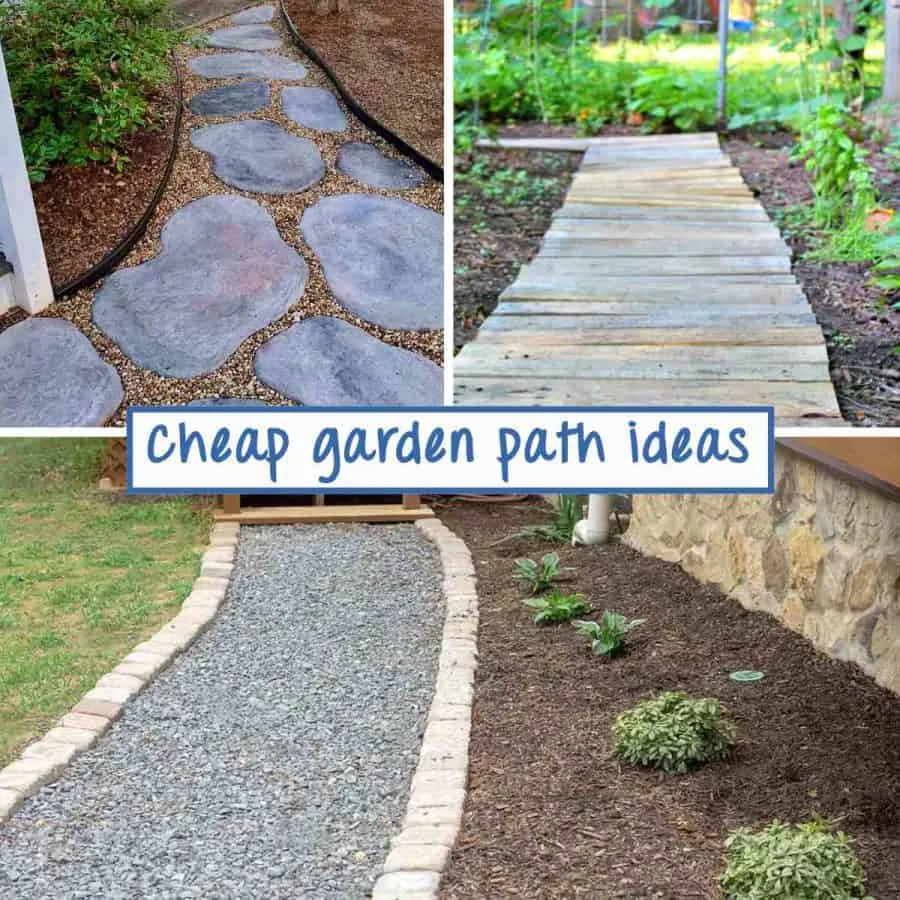
Mown grass strips eliminate material costs entirely by using existing turf maintained at a lower height than surrounding lawn to define a walking corridor. This option suits large properties, orchards, meadows, or any site where the ground is already established turf and drainage is adequate. The path exists purely through mowing pattern rather than added substance.
- Costs nothing beyond fuel and blade sharpening for the mower you already own, making it the true zero-budget option.
- Integrates seamlessly with existing lawn without visual disruption or material transitions that break landscape continuity.
- Adapts instantly to seasonal changes or new garden layouts simply by altering the mowing pattern next week.
- Supports light foot traffic adequately when soil is dry, providing sufficient firmness for casual garden access.
Mow the path strip at two inches height while leaving surrounding grass at three inches to create visible definition through texture contrast alone. Walk the same route consistently to compress soil gradually and establish a worn track that resists weed invasion naturally.
A common mistake is mowing the strip too short in an attempt to increase contrast. Cutting below one and a half inches scalps the turf and exposes bare soil. That bare patch invites crabgrass and broadleaf weeds that ruin the clean line you wanted. Keep your mower deck locked at two inches regardless of how subtle the difference looks on day one.
This approach fails completely in chronically wet areas where repeated foot traffic creates mud trenches rather than firm paths; install stepping stones or gravel there instead. If water pools on the surface for more than an hour after rain, the root zone stays saturated and compaction turns destructive rather than helpful.
During extended drought, the shorter grass browns first and shows wear patterns prominently; irrigate the strip separately if appearance matters during dry spells. Expect the defined path to disappear within six weeks if you stop mowing it distinctly, requiring re-establishment from scratch.
Other budget path options
Wood chips: Suits play areas and informal trails where cushioning matters more than precision. Obtain free loads from municipal tree services or arborists removing hazard trees. Ask specifically for hardwood chips rather than softwood. Softwood breaks down faster under foot traffic. Apply four inches deep and replenish annually as decomposition accelerates in contact with soil moisture. Avoid on slopes exceeding three percent where chips slide downhill after rain. A common mistake is dumping chips directly over existing turf without smothering the grass first. The living grass pushes through within a single season and creates an uneven, spongy surface that defeats the purpose of the path.
Decomposed granite: Creates firm, accessible surfaces suitable for wheelchairs and strollers when compacted properly with mechanical plate compactor. Install three inches deep over geotextile fabric and moisten during compaction to achieve binding. Costs more than gravel but provides superior stability for mobility-impaired users needing reliable traction. Specify stabilized decomposed granite if your path crosses an open area without overhead tree cover. Unstabilized material washes out during heavy storms and requires constant raking to maintain a flat grade.
Recycled brick fragments: Uses salvaged masonry from demolition sites or habitat restoration projects for rustic, irregular stepping patterns. Set pieces individually in sand pockets like concrete pavers but accept uneven spacing and varied heights as inherent character. Inspect each piece for structural cracks before installation to avoid future breakage under load. Discard any brick showing structural cracks or deep spalling, which indicate weakness that may fail under load.
Pine needle mulch: Works well under acid-loving plants like azaleas and blueberries where soil pH alignment matters alongside path function. Apply three inches thick and expect rapid settling requiring biannual topping in high-traffic zones. Source regionally where pine forests exist naturally; shipping needles cross-country negates budget advantage entirely.
Choosing the right path material
Your available weekend hours determine which material makes sense more than your aesthetic preference ever will. If you can commit two hours monthly to raking, weeding, and replenishing, mulch or grass keeps cash outlay minimal while accepting labor as payment.
If you’d rather spend one intensive weekend installing something permanent and then forget about it for years, gravel or stepping stones front-load the effort and cost to buy future freedom. Match the material to your actual schedule, not your aspirational one.
The condition of your existing soil settles questions that budget alone can’t answer. Poorly draining clay demands permeable gravel or elevated stepping stones regardless of cost preference, because mulch on wet clay becomes a muddy mess within weeks. Sandy, well-draining soil accepts any option including direct-mow grass strips that would fail elsewhere.
Test drainage by digging a hole twelve inches deep and filling it with water; if it hasn’t drained completely in four hours, assume poor drainage and choose accordingly. Ignoring this test wastes money on materials destined to fail in your specific conditions.
Traffic type and frequency override both budget and soil considerations when they conflict. Daily wheelbarrow runs to a compost pile require crushed granite or pavers no matter how attractive mulch looks in photos; loose materials rut immediately under concentrated wheel loads. Occasional evening strolls through flower beds allow softer, cheaper surfaces that wouldn’t survive utility traffic.
Be honest about how you’ll actually use the path versus how you imagine using it someday. Combining materials works when zones differ: stepping stones through the wet zone transitioning to mulch in the dry ornamental bed, for example. Picking one material for the entire length forces compromise everywhere instead of optimization where it matters most.
Frequently asked questions
How wide should a budget garden path be?
Three feet accommodates single-file walking and standard wheelbarrows without encroaching on adjacent beds. Two feet suffices for decorative routes meant only for foot traffic. Measure your widest expected load plus six inches clearance before deciding, because guessing narrow frustrates daily use permanently.
Can I install gravel directly on soil?
No, gravel sinks into bare soil within months, losing drainage function and requiring complete removal. Landscape fabric separating gravel from native soil prevents migration and extends service life by years. Always separate loose aggregate from earth with an appropriate geotextile barrier rated for pedestrian traffic.
How long does mulch last as a path surface?
Plan annual topping as essential path upkeep rather than optional improvement.
Is mown grass safe when wet?
Wet grass becomes slippery and unsafe for routine travel, especially on any slope exceeding three percent grade. Morning dew alone creates hazardous conditions before noon during humid seasons. Reserve grass paths for fair-weather access or install alternative surfacing for routes needed regardless of conditions.
What happens if I skip edging on gravel?
Uncontained gravel spreads laterally into adjacent lawn and planting beds within weeks of installation, creating maintenance nightmares and tripping hazards. Metal or rigid plastic edging anchored securely prevents migration and maintains clean lines indefinitely. Never consider edging optional for functional gravel pathways intended for regular use.
Does mulch attract termites or pests?
Mulch itself doesn’t attract termites to your property, but existing colonies may exploit the moist environment it creates near foundations. Maintain twelve-inch clearance between mulched paths and building foundations per integrated pest management guidelines. Keep mulch depth at three inches maximum to avoid excessive moisture retention against structures. Monitor foundation perimeter regularly regardless of path material choice. Termite risk relates to proximity to buildings and existing colony presence, not mulch type specifically.
Starting your garden path project
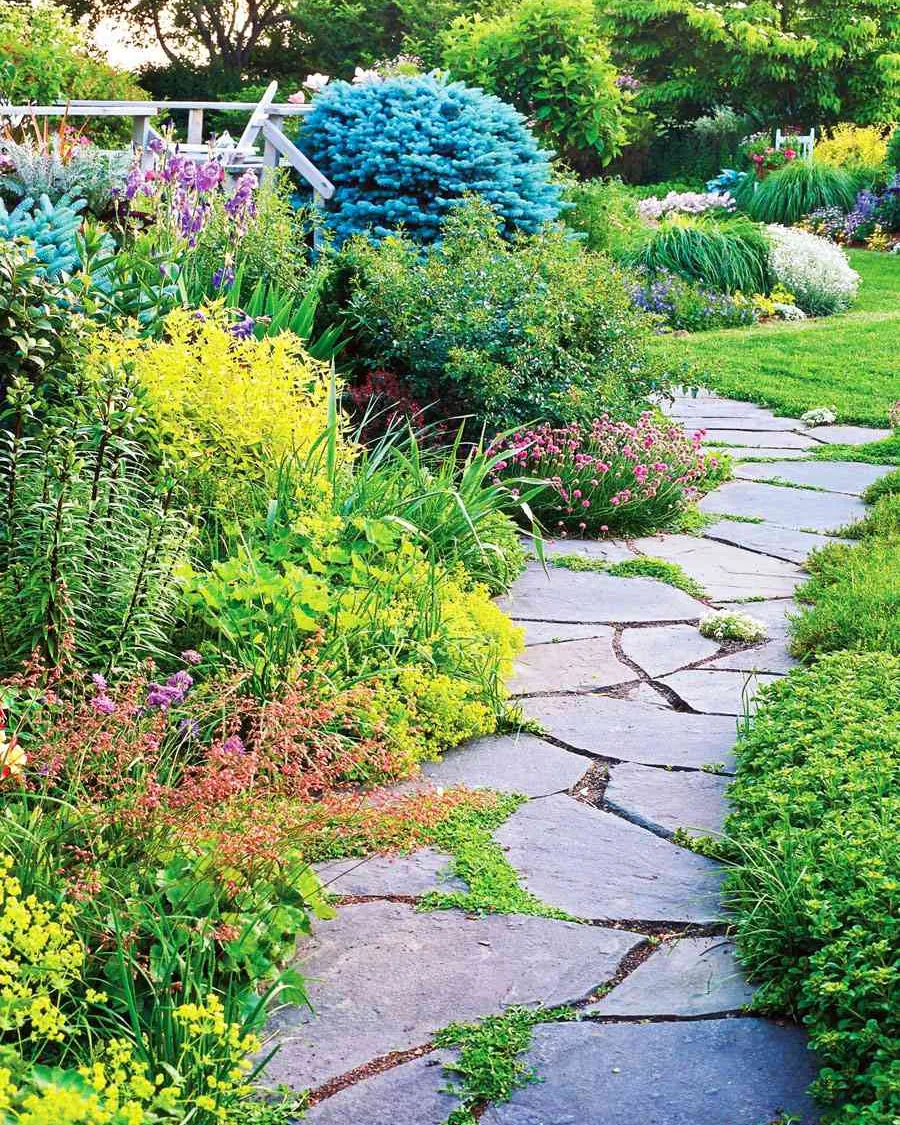
Begin by testing soil drainage in your intended path location this weekend using the twelve-inch hole method described earlier. The result tells you immediately which materials are viable for your site and which will waste money.
Clay that holds water past the twenty-four-hour mark demands a deeper gravel base than sandy loam. Skipping this adjustment causes pavers to heave after the first hard freeze.
Expect to spend your first full day preparing the base properly rather than installing visible surface material. This invisible work determines longevity more than top dressing ever will.
A common mistake is compacting the entire subbase in one thick lift instead of tamping four-inch layers. Doing it all at once leaves soft pockets that sink underfoot within months.
Stop and consult a landscape professional if your slope exceeds fifteen percent, your soil remains saturated despite drainage attempts, or you encounter buried utilities during excavation. These conditions exceed safe DIY scope.
Risking injury or infrastructure damage costs far more than professional guidance. Call 811 two full business days before any digging to have underground lines marked free of charge.
Conclusion
You’ll feel more confident once you’ve walked your chosen route a few times. Start small this weekend, and don’t worry if it isn’t perfect. Your garden will thank you when the path becomes part of your daily rhythm, not just another chore.
{“@context”:”https://schema.org”,”@type”:”FAQPage”,”mainEntity”:[{“@type”:”Question”,”name”:”How wide should a budget garden path be?”,”acceptedAnswer”:{“@type”:”Answer”,”text”:”Three feet accommodates single-file walking and standard wheelbarrows without encroaching on adjacent beds. Two feet suffices for decorative routes meant only for foot traffic. Measure your widest expected load plus six inches clearance before deciding, because guessing narrow frustrates daily use permanently.”}},{“@type”:”Question”,”name”:”Can I install gravel directly on soil?”,”acceptedAnswer”:{“@type”:”Answer”,”text”:”No, gravel sinks into bare soil within months, losing drainage function and requiring complete removal. Landscape fabric separating gravel from native soil prevents migration and extends service life by years. Always separate loose aggregate from earth with an appropriate geotextile barrier rated for pedestrian traffic.”}},{“@type”:”Question”,”name”:”How long does mulch last as a path surface?”,”acceptedAnswer”:{“@type”:”Answer”,”text”:”Plan annual topping as essential path upkeep rather than optional improvement.”}},{“@type”:”Question”,”name”:”Is mown grass safe when wet?”,”acceptedAnswer”:{“@type”:”Answer”,”text”:”Wet grass becomes slippery and unsafe for routine travel, especially on any slope exceeding three percent grade. Morning dew alone creates hazardous conditions before noon during humid seasons. Reserve grass paths for fair-weather access or install alternative surfacing for routes needed regardless of conditions.”}},{“@type”:”Question”,”name”:”What happens if I skip edging on gravel?”,”acceptedAnswer”:{“@type”:”Answer”,”text”:”Uncontained gravel spreads laterally into adjacent lawn and planting beds within weeks of installation, creating maintenance nightmares and tripping hazards. Metal or rigid plastic edging anchored securely prevents migration and maintains clean lines indefinitely. Never consider edging optional for functional gravel pathways intended for regular use.”}},{“@type”:”Question”,”name”:”Does mulch attract termites or pests?”,”acceptedAnswer”:{“@type”:”Answer”,”text”:”Mulch itself doesn’t attract termites to your property, but existing colonies may exploit the moist environment it creates near foundations. Maintain twelve-inch clearance between mulched paths and building foundations per integrated pest management guidelines. Keep mulch depth at three inches maximum to avoid excessive moisture retention against structures. Monitor foundation perimeter regularly regardless of path material choice. Termite risk relates to proximity to buildings and existing colony presence, not mulch type specifically.”}}]}


1 Comment
How to Design a Low Maintenance Garden in 3 Steps
October 02, 2026, at 12:07 pm[…] gravel or pavers for paths. Wood chips break down and need topping up every year. Crushed granite or set concrete pavers stay […]