



As an Amazon Associate, we earn from qualifying purchases. This post contains affiliate links – if you buy through them, we may earn a commission at no extra cost to you.
There isn’t one perfect pair of ergonomic pruners for small hands because hand size isn’t the only thing that matters. What truly decides the right tool is your grip strength, whether you have joint pain, and the thickness of branches you typically cut. These listings differ most in handle adjustability, cutting mechanisms like ratchets versus standard bypass, and grip cushioning rather than just overall length. The Felco F 14 suits buyers who want a compact, fully repairable Swiss tool with a narrow handle span, while the VOTREK Stepless Handle Pruners fit those who need to adjust the opening width to match their exact hand size or varying branch thicknesses.
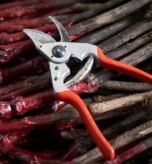
1. Felco F 14 Pruning Shears

Best for: Gardeners needing a compact, fully repairable Swiss-made pruner.
This pruner targets users with smaller hands who don’t want to sacrifice professional-grade build quality or longevity. Its forged aluminum handles are specifically shaped for a narrower grip, and the micrometric adjustment mechanism lets you tune blade tension as parts wear over years of use. Because every single part is replaceable, this tool doesn’t become waste when a spring breaks or a blade dulls; it simply gets maintained.
The carbon steel blades hold an edge well for clean cuts on live wood, and the rubberized grip helps absorb shock during repetitive pruning sessions. If you only prune occasionally and don’t value long-term serviceability, the lifetime warranty and modular design won’t matter to you. But if you want a tool that fits small hands without compromising on durability or precision, this listing delivers exactly that.
Good if:
- You want a pruner that lasts decades through part replacements
- Your hands are small but you still need professional cutting performance
- You prefer tuning blade tension yourself for consistent feel
Skip it if:
- You’d rather replace a worn tool than repair it
- You need a wider handle opening for larger branches
2. Ultra Sharp Japanese Steel Pruning Shears – Cuts 3X Easier
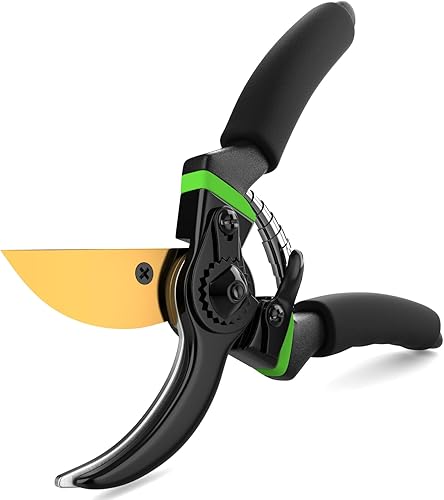
Best for: Seniors or arthritis sufferers needing effortless cutting action.
These clippers are designed for users whose primary barrier to pruning is hand weakness or joint pain, not just hand size. The SK5 steel blade with titanium coating reduces friction during cuts, and the non-slip textured handles help maintain control even when grip strength is limited. A built-in safety lock operates with one hand, which matters when finger dexterity is compromised. However, this focus on ease means the tool isn’t optimized for heavy-duty branch removal or professional landscaping tasks requiring maximum leverage.
The 7.5 cm blade length and 3.6 cm opening suit detail work and light shaping rather than thick limb removal. Rust-resistant materials reduce upkeep burden for gardeners who can’t manage frequent oiling or sharpening routines. If you have strong hands and prioritize cutting capacity over comfort features, this model’s design trade-offs won’t serve you well. But for those managing arthritis or age-related weakness, the reduced effort per cut directly translates to longer, less painful gardening sessions.
Good if:
- Joint pain limits how long you can prune comfortably
- You need one-handed safety lock operation due to limited dexterity
- Wet conditions make secure grip essential for safety
Skip it if:
- You regularly cut branches thicker than 3/4 inch
- Hand strength isn’t your limiting factor in pruning tasks
3. Stepless Handle Pruners

Best for: Users needing adjustable handle span for varying hand sizes.
VOTREK’s stepless adjustment system addresses a common frustration: fixed-handle pruners that fit neither small nor large hands perfectly. The thumb slider lets you set both handle span and blade opening continuously, adapting to your exact anatomy or switching between delicate stems and thicker branches mid-task. At 231 g with TPR-coated ergonomic curves, it balances weight and grip security for extended use.
The fully enclosed spring protects against sap and dirt intrusion that jams exposed mechanisms, extending reliable function between cleanings. High-carbon SK5 steel with Teflon coating handles branches up to 26 mm while resisting buildup. If your hand size falls squarely within standard pruner ranges and you never share tools, the adjustment feature adds complexity you won’t use. But for households with multiple users or individuals whose grip needs change throughout a session, this adaptability solves real fit problems.
Good if:
- Multiple people with different hand sizes share a single proner
- Your grip comfort changes depending on branch thickness
- Exposed springs jam frequently in your growing conditions
Skip it if:
- You prefer simple fixed-handle designs with fewer adjustment points
- Your hand size consistently fits standard non-adjustable pruners
4. Haus & Garten EnduroPRO Ergonomic Bypass Pruners

Best for: Gardeners prioritizing wrist alignment to reduce strain.
This pruner’s ergonomic design focuses specifically on wrist positioning rather than just grip size or cushioning. The handle angle aligns your wrist naturally during cuts, reducing cumulative strain that builds over long pruning sessions. Japanese high-carbon steel blades are heat-treated for hardness, and the titanium coating minimizes friction for cleaner cuts with less force. Heavy-duty anodized aluminum construction ensures the body withstands seasons of use without bending or corroding.
The proprietary blade design reduces friction and prevents rust. Drop-forged handles add structural integrity for demanding tasks like shaping dense shrubs or fruit trees. If your discomfort stems from grip pressure points rather than wrist position, other models with thicker cushioning may address your needs better. But for gardeners whose wrist alignment causes early fatigue or pain, this design targets the root cause rather than masking symptoms.
Good if:
- Wrist strain ends your pruning sessions prematurely
- You need durable construction for heavy seasonal use
- Clean cuts matter for plant health and healing
Skip it if:
- Finger or palm pain is your primary comfort concern
- You only prune lightly and rarely experience wrist fatigue
5. Fiskars SoftGrip Bypass Pruning Shears
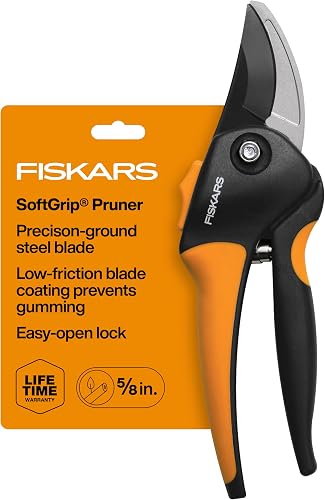
Best for: Beginners wanting reliable soft-grip comfort and warranty.
The SoftGrip handle provides non-slip security right out of the package. A self-cleaning sap groove prevents blade sticking that frustrates inexperienced users, and the easy-open lock simplifies storage. Steel blades stay sharp through typical home garden use, and the full lifetime warranty removes risk for first-time buyers.
The low-friction blade coating enhances rust resistance and smooth cutting action for flower stems, herbs, and light shrub work. Award-winning ergonomic features make pruning approachable rather than intimidating for those building confidence. If you’ve used pruners for years and already know your specific fit preferences, this model’s generalized comfort may feel imprecise. But for someone buying their first ergonomic pruners for small hands, the combination of soft grip, reliability, and warranty coverage makes it a safe starting point.
Good if:
- You’re buying your first ergonomic pruner and want guaranteed comfort
- Sap buildup has made previous pruners frustrating to use
- Lifetime warranty matters more than specialized features
Skip it if:
- You need precise handle sizing beyond standard soft grip
- Heavy-duty branch cutting is your primary task
6. EZ Kut Heavy Duty Pruning Shears Green

Best for: Weak-handed users needing ratchet-assisted cutting power.
This pruner uses a ratcheting mechanism to multiply cutting force across multiple stages, letting users with limited strength tackle branches up to 1.5 inches that would stall standard bypass pruners. Non-slip cushioned handles and shock-absorbing pads protect against jarring feedback during tough cuts. Cast aluminum construction provides durability that plastic-bodied ratchet pruners lack.
SK5 hardened carbon steel with non-stick coating maintains cutting performance through repeated use on thick stems and woody branches. The safety lock secures blades during storage, and the ergonomic grip accommodates extended heavy-duty sessions. If your pruning involves mostly thin stems or delicate flowers, the ratchet’s staged cutting action feels unnecessarily complex and slow. But for gardeners whose hand strength can’t match their pruning ambitions, this mechanism bridges the gap between capability and comfort.
Good if:
- Standard pruners can’t generate enough force for your branches
- Arthritis or weakness makes single-stroke cutting painful
- You need durable metal construction for heavy tasks
Skip it if:
- Most of your pruning involves stems under 1/2 inch
- Tool weight and bulk cause fatigue faster than cutting resistance
7. Gerossi Premium Bypass Pruning Shears
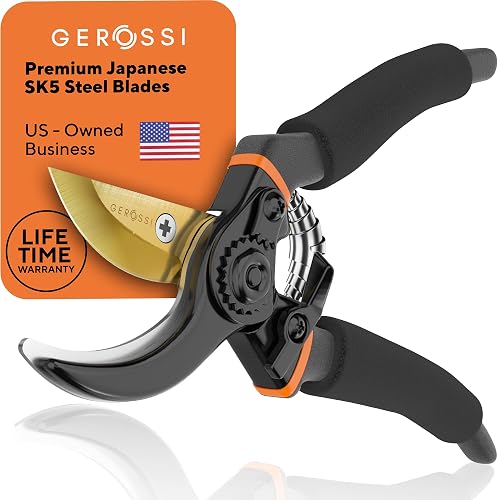
Best for: Gardeners wanting compact standard-fit ergonomics.
Gerossi offers a straightforward ergonomic design without adjustable spans, ratchets, or specialized mechanisms—just solid fundamentals executed well. SK5 carbon steel blades cut cleanly up to 3/4 inch, and non-slip ergonomic handles provide secure comfort for long sessions. The compression spring returns handles reliably, and the one-hand safety lock adds convenience. At 7 inches overall, it’s compact enough for small hands without sacrificing cutting capacity. This simplicity means no customization options if standard ergonomics don’t match your anatomy.
Suitable for bonsai, flowering plants, shrubs, herbs, and fruit tree stalks, it covers most home garden pruning tasks competently. The ergonomic handle shape distributes pressure evenly rather than targeting specific pain points. If you have diagnosed arthritis or need mechanical assistance to cut, this conventional design won’t address those specific challenges. But for gardeners with proportionally small hands who find standard pruners too large yet don’t need specialty features, this hits the middle ground effectively.
Good if:
- Standard pruners feel oversized but specialty tools seem excessive
- You want reliable performance across diverse garden plants
- One-handed safety lock operation matters for workflow speed
Skip it if:
- Joint pain requires mechanical cutting assistance
- You need adjustable handle span for variable tasks
8. Ultra Sharp Pruning Shears Hedge Clipper – Cuts 3X Easier

Best for: Users switching between precision and power cuts.
Craft911’s dual-size opening lets you toggle between narrow jaw width for detailed trimming and wider opening for tougher branches without changing tools. Soft ergonomic handles with non-slip grip accommodate weak or arthritic hands during extended hedge shaping or mixed pruning tasks. SK5 steel stays sharp for clean cuts that promote plant health, and rust-resistant coating extends service life. The one-year warranty provides baseline assurance.
The dual-opening mechanism suits cannabis trimming, bud work, and general hedge maintenance where branch thickness varies constantly. Senior-friendly design reduces fatigue during repetitive motions common in hedging. If you exclusively prune either very thin stems or consistently thick branches, the switching feature becomes unnecessary overhead. But for gardeners whose tasks shift between fine detail and moderate cutting within the same session, having both options in one tool eliminates disruptive tool swaps.
Good if:
- Your pruning alternates between fine trimming and thicker cuts
- Hand fatigue limits continuous hedging or shaping sessions
- Rust resistance matters in your humid growing environment
Skip it if:
- You only perform a single type of cutting task consistently
- Mechanical switching mechanisms worry you regarding durability
9. DECERK® Bypass Pruning Shears

Best for: Arthritic hands needing maximum grip cushioning.
DECERK’s 5mm foam grips specifically target pressure point pain by distributing grip force across your entire palm rather than concentrating it on sensitive joints. Optimized leverage multiplies cutting effort 4X for branches up to 3/4 inch, reducing the hand strength required per cut. Japanese SK5 steel hardened to 60 HRC holds an edge through thousands of cuts, while titanium and PTFE coatings prevent sap sticking. One-piece metal handles provide rigid support beneath the cushioning.
Tested through 5,000+ wear and slip cycles, the grips maintain security even when hands are tired or damp. The included spare return spring and lifetime warranty signal long-term support. If your hands are small primarily due to bone structure rather than joint condition, the generous cushioning may actually reduce control rather than enhance it. But for gardeners whose arthritis makes standard grips unbearable, this targeted cushioning addresses the specific source of discomfort.
Good if:
- Pressure points on standard grips cause immediate pain
- You need verified grip security through extended use
- Lifetime warranty and spare parts availability matter
Skip it if:
- Thick grips reduce your control rather than improving comfort
- Your hand pain stems from wrist position, not palm pressure
10. DECERK® 8.5″ Bypass Pruning Shears

Best for: Small-handed users prioritizing lightweight control.
At just 8.1 oz with anodized aluminum handles, these clippers reduce tool drag that fatigues small hands during repetitive deadheading or rose trimming. The 4X lever-action design compensates for lighter weight by multiplying cutting force for branches up to 3/4 inch. Ergonomic non-slip cushioned grips absorb pressure, and spring-assisted opening reduces effort for weaker hands. Japanese SK5 steel with titanium coating delivers clean bypass cuts tested through 5,000 cycles. The pink finish and gift-ready packaging target aesthetic preference alongside function, which may deter buyers indifferent to color.
Fifteen percent lighter than standard steel pruners, they maintain durable strength while minimizing arm and hand fatigue over long sessions. The 7.5 cm blade and 3.6 cm opening suit everyday garden work rather than heavy limb removal. If you prioritize maximum cutting capacity or prefer neutral tool aesthetics, the weight savings and color choice won’t align with your needs. But for small-handed gardeners who find standard pruners tiringly heavy, this weight reduction directly enables longer, more comfortable pruning.
Good if:
- Tool weight causes fatigue before your pruning is complete
- You want lighter pruners without sacrificing cutting leverage
- Spring-assisted opening reduces repetitive strain
Skip it if:
- Maximum branch-cutting capacity is your top priority
- Weight savings matter less than raw durability or neutrality
Where These Overlap
Several models here converge on similar core specs: SK5 steel blades, non-slip ergonomic handles, and 3/4-inch cutting capacity appear across Ultra Sharp Arthritis Clippers, Gerossi Premium Bypass, and both DECERK options. Where listings don’t differentiate clearly, the deciding factors become grip texture, weight, and warranty terms rather than cutting performance itself. The Felco F 14 and Haus & Garten EnduroPRO stand apart through distinct engineering philosophies—repairable modularity versus wrist-aligned ergonomics—that serve fundamentally different user priorities. VOTREK’s stepless adjustment and EZ Kut’s ratchet mechanism occupy unique niches with no direct overlap elsewhere in this list. If two products seem identical on paper, check whether one includes spare springs, specifies grip thickness, or offers lifetime versus limited warranty coverage; those details determine long-term satisfaction when core functions match. Don’t invent differences where listings show none—the absence of distinction is itself useful information.
Still Not Sure?
How often will I actually use these pruners?
Daily professional use demands repairability and edge retention found in the Felco F 14, whose replaceable parts extend service life indefinitely. Weekend gardeners pruning seasonally benefit more from the Fiskars SoftGrip Bypass, whose lifetime warranty and low-maintenance design suit intermittent use without upkeep burden. Honest assessment prevents overspending on durability you won’t utilize or underinvesting in a tool that fails mid-season. Match purchase to actual frequency, not aspirational gardening plans.
What existing tools must these work alongside?
If you already own loppers for thick branches, prioritize precision and comfort in hand pruners like the Gerossi Premium Bypass for complementary detail work. Without loppers, consider the EZ Kut Heavy Duty’s 1.5-inch ratchet capacity to handle occasional thicker cuts your pruner must cover alone. Tool ecosystem gaps dictate whether specialization or versatility serves you better. Audit your current kit before choosing to avoid redundant capabilities or uncovered tasks.
Which limitation am I most likely to regret?
Choosing ultra-lightweight DECERK Women’s Clippers risks insufficient capacity if your garden matures beyond 3/4-inch stems. Selecting the bulky EZ Kut Heavy Duty for primarily fine work means carrying unnecessary weight every session. Anticipate future garden evolution and honest physical limitations rather than optimizing solely for current conditions. Regret usually stems from mismatched trajectory, not present inadequacy. Choose based on where you’re headed, not just where you’re today.
Most buyers split between two camps: those needing precise fit customization choose VOTREK Stepless Handle Pruners for adjustable span, while those prioritizing decades-long repairability select Felco F 14 for its modular Swiss construction. Your next step is measuring your hand span and assessing whether maintenance willingness aligns with Felco’s service model or VOTREK’s adjust-and-forget convenience. Both solve small-hand ergonomics differently; neither is universally superior. Trust your specific constraints over general recommendations.
Frequently Asked Questions
Do ergonomic pruners for small hands actually reduce joint pain?
Yes, but only if the ergonomic feature targets your specific pain source. DECERK Arthritic Pruners address palm pressure points through 5mm foam cushioning, while Haus & Garten EnduroPRO reduces wrist strain via handle alignment. Generic “ergonomic” labels don’t guarantee relief; match the design intervention to your diagnosed or experienced discomfort location. Pain from finger joints won’t improve with wrist-aligned handles, and vice versa. Identify your pain origin before selecting.
Can adjustable-handle pruners maintain tension over time?
VOTREK Stepless Handle Pruners use a thumb slider mechanism backed by lifetime warranty, signaling manufacturer confidence in long-term adjustment stability. However, any moving adjustment point introduces potential wear that fixed-handle designs avoid entirely. If you prune daily in sandy or sap-heavy conditions, enclosed mechanisms fare better than exposed sliders. Check warranty terms covering adjustment components specifically, not just general defects. Durability depends on your environment and maintenance discipline.
Are ratchet pruners suitable for small hands despite added bulk?
EZ Kut Heavy Duty’s ratchet mechanism enables cutting capacity impossible with standard bypass designs, but its size suits medium-to-large hands per the listing. Small-handed users with severe weakness may still benefit if cutting necessity outweighs bulk discomfort, but test grip span before committing. Ratchets trade ergonomic compactness for mechanical advantage; neither trait dominates universally. Assess whether your limitation is strength or fit—if it’s purely size, ratchets may worsen control despite reducing effort.
Does blade coating affect maintenance requirements for arthritic users?
Titanium and PTFE coatings on DECERK and Ultra Sharp models reduce sap adhesion, meaning less scrubbing force during cleanup—a direct benefit for painful hands. Uncoated carbon steel requires more aggressive cleaning to prevent corrosion and sticking. However, coatings eventually wear and require gentler cleaning methods to preserve them. For arthritic users, reduced immediate maintenance effort often outweighs eventual recoating needs. Prioritize coatings if post-pruning cleanup currently causes pain or avoidance.
Conclusion
Before you buy, hold a few options at your local garden center if you can. Feeling how the handles rest in your palm tells you more than any spec sheet. Don’t rush it—your wrists will thank you every time you step outside to trim.
{“@context”:”https://schema.org”,”@type”:”FAQPage”,”mainEntity”:[{“@type”:”Question”,”name”:”Do ergonomic pruners for small hands actually reduce joint pain?”,”acceptedAnswer”:{“@type”:”Answer”,”text”:”Yes, but only if the ergonomic feature targets your specific pain source. DECERK Arthritic Pruners address palm pressure points through 5mm foam cushioning, while Haus & Garten EnduroPRO reduces wrist strain via handle alignment. Generic “ergonomic” labels don’t guarantee relief; match the design intervention to your diagnosed or experienced discomfort location. Pain from finger joints won’t improve with wrist-aligned handles, and vice versa. Identify your pain origin before selecting.”}},{“@type”:”Question”,”name”:”Can adjustable-handle pruners maintain tension over time?”,”acceptedAnswer”:{“@type”:”Answer”,”text”:”VOTREK Stepless Handle Pruners use a thumb slider mechanism backed by lifetime warranty, signaling manufacturer confidence in long-term adjustment stability. However, any moving adjustment point introduces potential wear that fixed-handle designs avoid entirely. If you prune daily in sandy or sap-heavy conditions, enclosed mechanisms fare better than exposed sliders. Check warranty terms covering adjustment components specifically, not just general defects. Durability depends on your environment and maintenance discipline.”}},{“@type”:”Question”,”name”:”Are ratchet pruners suitable for small hands despite added bulk?”,”acceptedAnswer”:{“@type”:”Answer”,”text”:”EZ Kut Heavy Duty’s ratchet mechanism enables cutting capacity impossible with standard bypass designs, but its size suits medium-to-large hands per the listing. Small-handed users with severe weakness may still benefit if cutting necessity outweighs bulk discomfort, but test grip span before committing. Ratchets trade ergonomic compactness for mechanical advantage; neither trait dominates universally. Assess whether your limitation is strength or fit—if it’s purely size, ratchets may worsen control despite reducing effort.”}},{“@type”:”Question”,”name”:”Does blade coating affect maintenance requirements for arthritic users?”,”acceptedAnswer”:{“@type”:”Answer”,”text”:”Titanium and PTFE coatings on DECERK and Ultra Sharp models reduce sap adhesion, meaning less scrubbing force during cleanup—a direct benefit for painful hands. Uncoated carbon steel requires more aggressive cleaning to prevent corrosion and sticking. However, coatings eventually wear and require gentler cleaning methods to preserve them. For arthritic users, reduced immediate maintenance effort often outweighs eventual recoating needs. Prioritize coatings if post-pruning cleanup currently causes pain or avoidance.”}}]}