


As an Amazon Associate, we earn from qualifying purchases. This post contains affiliate links – if you buy through them, we may earn a commission at no extra cost to you.
There’s no single best pruning shear. There’s a best one for your hand, your grip and the branches you actually cut. Three things decide it: how wide the handles sit in your palm, how much force the tool asks of your fingers, and whether you need a clean bypass cut on living stems or raw power through dry wood. These ten tools differ on exactly those points, not on rank. Two of them split most buyers. The Felco F 14 is built for small hands that want a tool to last, and the Ultra Sharp Pruning Shears is built for a weak grip that wants the cut to come easy.
1Best for Small Hands

Felco F 14
2Easiest on Weak Grip

Ultra Sharp Pruning Shears
3Best Ratchet for Weak Hands

Ironwood H107 Ratchet
4Most Heavy-Duty Ratchet

EZ Kut Ratchet Shears
5Best Cushioned Grip

DECERK Bypass Pruners
6Best Adjustable Handle

Stepless Handle Pruning Shears
7Best Ratchet Value

Gerossi Ratchet Pruners
8Best Dual-Size Opening

WORKPRO Bypass Shears
9Best for Precision Snips

Fiskars Micro-Tip Scissors
10Simplest Everyday Pruner
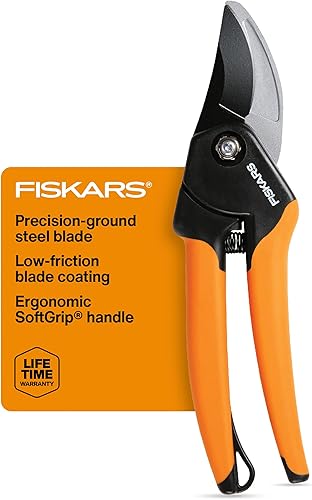
Fiskars SoftGrip Bypass
1. Felco F 14 Pruning Shears
Best for: Small hands that want one tool for years
A small hand on a full-size pruner loses leverage. You can’t wrap your fingers all the way around the handle, so you squeeze with your fingertips, and your hand cramps after twenty cuts. The Felco F 14 is listed at 7.1 inches and for small hands, so the tool is sized to a shorter palm and a smaller grip. That’s the whole point of this model in the Felco range.
The build is the other half of the story. Forged aluminum handles, carbon steel blades, and a micrometric adjustment mechanism that lets you take up play and swap the blade yourself. Every part is replaceable and maintainable, and the listing backs the handles with a lifetime warranty. That matters if you prune every week, because a tool you can service is a tool you keep.
You’ll adjust it, you’ll replace parts eventually, and the rubberized grips and bumper are there to soften the work. It’s also a bypass pruner, so it’s for living growth rather than dried hardwood.
Good if:
-
Your hands are small and full-size pruners feel like a stretch
-
You cut living stems and branches regularly
Skip it if:
-
You want a tool that never needs adjusting or a new blade
-
You mainly cut thick, dry branches, where a ratchet does the work for you
2. Ultra Sharp Pruning Shears Hedge Clipper – Cuts 3X Easier
Best for: A weak grip that wants less effort per cut
If squeezing is the hard part, the answer isn’t a sharper blade alone. It’s a mechanism that asks less of your hand. This pruner is listed as cutting three times easier, and it uses a dual-size opening so you can set the jaw width to the branch and to your hand. A narrow opening means less travel to close the blades, which is exactly what a weak or painful grip needs.
The handles are soft, ergonomic and non-slip, and the listing says they stay held even in wet conditions. That’s a real detail for anyone whose grip fades in the rain or with sweat. There’s a one-handed safety lock with thumb control, so you’re not fighting the tool to open or close it. The blade is SK5 carbon steel with a rust-resistant coating.
The warranty is one year. Compare that with the lifetime coverage on several others here, and it tells you this is built as an easy-cutting everyday pruner rather than a heirloom.
Good if:
-
Arthritis or weakness makes a full squeeze painful
-
You want to switch jaw width between thin stems and thicker cuts
-
You garden in wet conditions and need a grip that holds
Skip it if:
-
You want the longest possible warranty on the tool
-
You need to get through thick, dry branches, where a ratchet helps more
3. Ironwood Tool Company Ratchet Pruning Shears
Best for: Weak hands cutting branches up to an inch
A ratchet changes the physics. Instead of a single hard squeeze, you make several smaller ones, and the mechanism holds the progress between them. That’s why the Ironwood H107 is recommended in its own listing for arthritis, carpal tunnel and weaker strength, and why it’s rated to cut up to one inch. If a single squeeze is the thing that stops you, this is the design that removes it.
The details support long sessions. Aluminum handles keep it light, the grip is ergonomic, and the blade carries a non-stick coating so sap doesn’t gum up the cut. There’s a hand guard that the listing says extends reach and hand mobility in tight areas of shrubs, and the design avoids metal-to-metal contact to cut friction and extend blade life.
The trade-off is the ratchet action itself: it works in several smaller squeezes rather than a single full one. This one earns its place on thicker cuts.
Good if:
-
You have arthritis, carpal tunnel or a weak grip
-
You cut branches close to an inch thick
-
You want a light tool with a guard for reaching into shrubs
Skip it if:
-
You mostly deadhead flowers and trim thin stems
-
You prefer the single-motion feel of a standard bypass pruner
4. EZ Kut Heavy Duty Pruning Shears Green
Best for: Thick branches and medium-to-large hands
This is the heavy-duty end of the ratchet group. The listing rates it for branches up to 1.5 inches, and it pairs a ratcheting mechanism with a cast aluminum body, a hardened SK5 carbon steel blade and a non-stick coating. The ratchet reduces the effort needed, which is why the listing calls it suitable for arthritis or weak hands despite the size.
That size is the catch, and the listing says so plainly: it’s best suited for medium to large hands. If your hands are small, the extra capacity comes with a handle you may not close comfortably. The cushioned non-slip handle and shock-absorbing pads are there for long sessions, and there’s a built-in safety lock. EZ Kut has been a US-based brand in Illinois since 1988.
So this is the pick when the branch is the problem, not your hand. For small hands wanting the same ratchet benefit, the Ironwood or the Gerossi will fit better.
Good if:
-
You regularly cut branches up to 1.5 inches
-
Your hands are medium to large
-
You want a full-metal body for heavy work
Skip it if:
-
Your hands are small, since the listing names larger hands
-
You only trim flowers and thin green stems
5. DECERK® Bypass Pruning Shears
Best for: Tired palms that need pressure spread out
Pressure points are the quiet problem. A hard handle digs into the same spot on your palm, and after an hour that spot is the reason you stop. The DECERK pruners use 5mm cushioned foam grips to spread grip pressure more evenly, and the listing cites 5,000+ wear and slip tests behind the hold. For arthritic or tired hands, that cushioning is the feature, not a detail.
Under the foam there’s solid metal, so the handles stay rigid while the outside stays soft. The blade is Japanese SK5 steel at 60 HRC, tested through 5,000+ cuts, with titanium and PTFE coatings to reduce sap buildup and resist moisture. It cuts up to 3/4 inch, and a return spring opens the blades after each cut while a thumb lock allows one-hand opening.
Two things to know. The listing notes a light protective oil may be on the blade on arrival, which is normal and not a sign of prior use. And it asks you to wipe sap and moisture off, dry the blade and store it dry. There’s a spare return spring in the box and a lifetime warranty.
Good if:
-
Palm pressure is what makes you stop, not the cut itself
-
You want cushioned grips over a rigid metal frame
-
You value a spare spring and lifetime warranty
Skip it if:
-
You want a bare metal handle with no foam to maintain
-
You need to cut branches thicker than 3/4 inch
6. Stepless Handle Pruning Shears
Best for: A household where several hand sizes share the same pruner
Most pruners fix the handle span at the factory. This one doesn’t. A thumb slider sets both the handle span and the blade opening, steplessly, so it adapts to small or large hands, including women, seniors and gardeners with arthritis or weak hands. If two people in the same house prune, or your grip changes with the seasons, that adjustment is the reason to pick it.
The rest of the design is built for messy work. The spring is fully enclosed inside the housing rather than exposed, which the listing says helps prevent rust and jamming from dirt, sap and moisture. The blade is high-carbon SK5 with a Teflon nonstick coating, cutting up to 26 mm. At 231 g (8.1 oz) it’s light, with a non-slip TPR coating and a shock-absorbing structure for damp or sweaty hands.
The side thumb lock works right- or left-handed, even with gloves. And it’s backed by a lifetime warranty. The trade-off is that an adjustable mechanism is one more thing to set before you cut, which suits a thoughtful gardener more than a grab-and-go one.
Good if:
-
More than one person with different hand sizes uses the same pruner
-
You want the handle span to change with the job
-
You prune with gloves or damp hands
Skip it if:
-
You’d rather pick up a tool and cut without adjusting anything
-
You want an exposed spring you can see and oil directly
7. Gerossi Ratchet Pruning Shears Heavy Duty
Best for: A single pruner for both light and thick cuts
Two modes in one body is the idea here. The Gerossi runs as a traditional single-cut pruner for everyday trimming, then switches to a three-step ratchet mode that the listing says multiplies hand power threefold for tougher stems and dried-out branches. That makes it a sensible pick for weak hands, arthritis or elderly gardeners who don’t want two tools on the shelf.
The blade is high-carbon SK-5 steel with ultra-fine polishing and a corrosion-resistant coating, and the listing rates the cut at up to 3/4 inch. The body and handles are built heavy-duty for durability, the handles are ergonomic and non-slip for long sessions, and the safety lock can be engaged and disengaged with one hand.
The honest note is the mode switch. You’re choosing between single-cut and ratchet depending on the branch, which is flexible but asks you to think about it. For a gardener who wants one motion every time, a plain bypass pruner is simpler.
Good if:
-
You want ratchet power without giving up a normal cutting mode
-
You have weak hands, arthritis, or you’re pruning into older age
-
You cut a mix of green stems and dried branches
Skip it if:
-
You want one cutting action and no mode to choose
-
Your branches run thicker than this pruner can handle
8. WORKPRO 8″ Bypass Pruning Shears
Best for: Switching between thin stems and thicker branches
This is the dual-size opening idea in an 8-inch bypass pruner. A small and a wide opening setting let you match the jaw to the job, so quick one-hand trimming and thicker branch cutting use the same tool. The listing frames it for users with different hand sizes and different tasks, which is the practical case for an adjustable opening.
The cutting end pairs a premium SK5 steel main blade with a non-stick coating and a heat-treated stainless steel secondary blade, for smooth cuts that reduce plant damage. A strong spring opens the blades after each cut to cut down hand fatigue, and the tri-material ergonomic handle has a soft non-slip grip. There’s a one-hand safety lock for safe carrying.
If your pruning is roses, shrubs, vegetables and small tree branches, that’s the right match.
Good if:
-
You want two opening sizes in one bypass pruner
-
You trim a mix of thin stems and branchy growth
-
You want a spring that opens the blades for you
Skip it if:
-
You need to cut dry, dead wood, where bypass pruners struggle
-
You want a ratchet to reduce the squeeze on thick cuts
9. Fiskars 6″ Steel Micro-Tip Pruning Scissors
Best for: Detail work, herbs and flower stems
Not every pruning job needs a pruner. This is a 6-inch pair of micro-tip snips, and the point of the micro-tip is that it cuts all the way to the tip. That’s what lets you get into a tight cluster of stems or take a single herb sprig without crushing the plant next to it. The stainless steel blades are listed to stay sharp through heavy use.
For a weak or small hand, the case is different from the pruners here. There’s no ratchet and no adjustable span. What you get is a light, small tool for light jobs, plus a sheath for storage and a lifetime warranty. The listing names cutting flower stems and maintaining an herb garden as the tasks it’s built for.
So it’s a companion, not a replacement. If your pruning means deadheading, snipping herbs and shaping small plants, this covers it. If you’re cutting woody branches, you need one of the pruners above.
Good if:
-
Your work is herbs, flower stems and small plants
-
You want to cut right at the tip in tight spots
-
You want a sheath and a lifetime warranty
Skip it if:
-
You need to cut woody branches or shrubs
-
You want a ratchet or adjustable handle to reduce effort
10. Fiskars SoftGrip Bypass Pruning Shears
Best for: A first pruner for everyday garden upkeep
This is the plain, dependable option. The shape is designed to work in both right and left hands, so a left-handed gardener isn’t stuck with a tool built for the other one. The SoftGrip handle is there to reduce hand fatigue, and the bypass action cuts green, living stems and branches up to 5/8 inch while minimizing crushing.
The blade is fully hardened and precision ground, with a low-friction rust-resistant coating that helps it glide through wood, reduces sap buildup and resists rust. It’s a straightforward tool with a lifetime warranty, and the listing keeps its claims modest.
It cuts green stems and branches up to 5/8 inch. For a first pruner doing routine maintenance on shrubs, vines and roses, that’s plenty. For thick branches or a painful grip, look at the ratchet models.
Good if:
-
You’re buying your first pruner for routine garden care
-
You’re left-handed and want an ambidextrous shape
-
You cut green stems up to 5/8 inch
Skip it if:
-
You need to cut branches thicker than 5/8 inch
-
You want a ratchet or an adjustable handle span
Also Worth Considering
Three more tools came up in this category. The 8.5″ Pruning Shears is listed as a professional garden clipper with a sharp Japanese blade, described as cutting three times easier and framed as arthritis-friendly for seniors, with bonsai cutters in its name. The Corona 3214D ComfortGEL Bypass Hand is a bypass pruner with the ComfortGEL handle that gives it its name. And the Corona Tools Ratchet Hand Pruner is a ratcheting pruner with a comfortable grip, for anyone who wants the ratchet action in a Corona tool.
Where Small Hands and Weak Grip Overlap
The two Fiskars tools barely compete. One is a 6-inch micro-tip snip for herbs and flower stems, the other a 5/8-inch bypass pruner for green growth. Different jobs, different hands. If you’re choosing between them, the question is what you cut, not which is better.
The ratchet group overlaps far more. The Ironwood H107, the EZ Kut, and the Gerossi all use ratcheting to reduce the squeeze, and all three are aimed at weak hands or arthritis. The listings separate them on capacity and hand size: Ironwood at one inch, EZ Kut at 1.5 inches but suited to medium-to-large hands, Gerossi with a single-cut mode as well. If your hands are small, the Ironwood and Gerossi fit the brief better than the EZ Kut.
The bypass pruners overlap on function and split on mechanism. The Felco F 14 and the DECERK both target comfort, but one does it with small-hand sizing and serviceable parts, the other with cushioned grips and a rigid frame. The WORKPRO and the Ultra Sharp both offer a dual-size opening, so the difference between them comes down to which handle shape suits your hand.
Still Not Sure?
How often will I really use these?
Be honest about the job. If you prune a few times a season, a simple bypass pruner like the Fiskars SoftGrip Bypass covers it, and a ratchet or adjustable handle is more mechanism than you need. If you’re out there weekly through the growing season, the effort per cut starts to matter, and that’s when the Ultra Sharp Pruning Shears or a ratchet model earns its place. Frequency decides whether you want a simple tool or one that saves your hand.
What do I already own that this has to work with?
Look at your other tools before you buy. If you have nothing for detail work, the Fiskars Micro-Tip Scissors fills a gap the pruners can’t. And if your pruning is mostly herbs and flowers, you may need snips rather than a pruner at all.
What am I most likely to regret?
A pruner sized for large hands is a daily annoyance for a small one, and no blade sharpness fixes that. The EZ Kut listing is upfront that it suits medium-to-large hands, so small-handed buyers should look at the Felco F 14 or the Stepless Handle Pruning Shears instead.
Frequently Asked Questions : Best Pruning Shears for Small Hands and Weak Grip
What size pruning shears fit small hands?
Measure your hand against the handle span each listing states. The Felco F 14 is listed at 7.1 inches and built for small hands, so the span matches a shorter palm. The Stepless Handle Pruning Shears take a different route: a thumb slider adjusts the handle span to fit small or large hands.
Do ratchet pruning shears really help weak hands?
Yes, by changing the motion. A ratchet splits one hard squeeze into several smaller ones and holds the progress between them, so your hand never has to deliver full force at once. The Ironwood H107 is recommended in its listing for arthritis, carpal tunnel and weaker strength, and the Gerossi says its ratchet mode multiplies hand power threefold. The trade-off is a different cutting rhythm, with more strokes per branch.
What’s the difference between bypass and anvil pruning shears?
Bypass blades pass each other like scissors, which gives a clean cut on living, green growth. Anvil blades close onto a flat surface instead, which suits dry, dead wood. Most tools here are bypass, including the WORKPRO, the Fiskars SoftGrip Bypass and the DECERK. The Gerossi is listed as a ratchet pruner with a single-cut mode as well. Match the type to what you actually cut.
How do I keep pruning shears cutting well?
Keep the blade clean and dry. The DECERK listing asks you to wipe away sap and moisture after pruning, dry the blade, and store the shears somewhere clean and dry. The WORKPRO and Ultra Sharp both use non-stick coatings to reduce sap buildup.
Conclusion : Best Pruning Shears for Small Hands and Weak Grip
If your hands are small and you want one tool that lasts, the Felco F 14 is the pick, with a handle span built for a shorter palm and parts you can replace. If your grip is the problem, the Ultra Sharp Pruning Shears asks less of it, with a dual-size opening and a three-times-easier cut.
{“@context”:”https://schema.org”,”@type”:”FAQPage”,”mainEntity”:[{“@type”:”Question”,”name”:”What size pruning shears fit small hands?”,”acceptedAnswer”:{“@type”:”Answer”,”text”:”Measure your hand against the handle span each listing states. The Felco F 14 is listed at 7.1 inches and built for small hands, so the span matches a shorter palm. The Stepless Handle Pruning Shears take a different route: a thumb slider adjusts the handle span to fit small or large hands.”}},{“@type”:”Question”,”name”:”Do ratchet pruning shears really help weak hands?”,”acceptedAnswer”:{“@type”:”Answer”,”text”:”Yes, by changing the motion. A ratchet splits one hard squeeze into several smaller ones and holds the progress between them, so your hand never has to deliver full force at once. The Ironwood H107 is recommended in its listing for arthritis, carpal tunnel and weaker strength, and the Gerossi says its ratchet mode multiplies hand power threefold. The trade-off is a different cutting rhythm, with more strokes per branch.”}},{“@type”:”Question”,”name”:”What’s the difference between bypass and anvil pruning shears?”,”acceptedAnswer”:{“@type”:”Answer”,”text”:”Bypass blades pass each other like scissors, which gives a clean cut on living, green growth. Anvil blades close onto a flat surface instead, which suits dry, dead wood. Most tools here are bypass, including the WORKPRO, the Fiskars SoftGrip Bypass and the DECERK. The Gerossi is listed as a ratchet pruner with a single-cut mode as well. Match the type to what you actually cut.”}},{“@type”:”Question”,”name”:”How do I keep pruning shears cutting well?”,”acceptedAnswer”:{“@type”:”Answer”,”text”:”Keep the blade clean and dry. The DECERK listing asks you to wipe away sap and moisture after pruning, dry the blade, and store the shears somewhere clean and dry. The WORKPRO and Ultra Sharp both use non-stick coatings to reduce sap buildup.”}}]}


