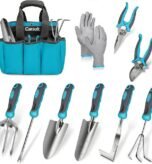




Gardeners often use ergonomic hand tools for gardening to reduce wrist strain and fatigue during long sessions in the soil. These tools typically feature contoured, non-slip grips and extended handles that help keep the wrist in a neutral position. While their shared goal is to make digging and weeding more comfortable, they differ significantly in their leverage mechanisms and the specific gardening tasks they’re designed to perform.
Types of Garden Hand Tools
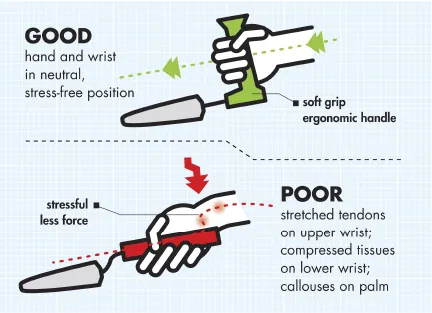
Many gardeners find relief by switching to specialized gear designed for comfort and efficiency.
| Tool Name | Best For | Concrete Example |
|---|---|---|
| Ratchet Pruners | Cutting thick stems | Bypass style with gear assist |
| Padded Trowel | Digging small holes | Aluminum handle with foam grip |
| Long-Reach Cultivator | Removing surface weeds | Telescoping handle with offset head |
| Vertical Grip Weeder | Extracting deep roots | Pistol-grip handle for leverage |
| Wrist-Support Shears | Repetitive light pruning | Shears with forearm stabilizer |
Ratchet Pruners
Ratchet pruners use a mechanical gear system to multiply your hand strength when cutting through woody stems. They suit gardeners who have limited grip strength or those who prune thick branches that would usually require two hands.
- Increases cutting force by using a multi-step clicking mechanism.
- Reduces the need for repetitive, high-tension squeezing.
- Protects the hand from sudden impact when the blade finishes a cut.
- Allows for clean cuts on branches up to 1 inch in diameter.
If you’re pruning thin green stems, use standard bypass shears instead, as the ratchet mechanism is slower for light work. For example, you might use these to trim a lilac bush branch measuring 0.75 inches in thickness without needing to squeeze the handles multiple times.
Padded Trowels
A padded trowel features a high-density grip that cushions the palm to prevent blisters and pressure points. These are ideal for anyone who spends more than 30 minutes at a time digging in compacted soil or potting plants.
- Absorbs vibration and impact when breaking through rocky ground.
- Provides a wider surface area to distribute pressure across the palm.
- Prevents hand slipping even when the grip is wet or muddy.
- Reduces the risk of nerve compression in the wrist.
If you have very small hands, choose a trowel with a narrower handle diameter to maintain full control. A standard use case involves planting 12 individual flower bulbs into a garden bed while maintaining a comfortable, firm grip throughout the process.
Long-Reach Cultivators
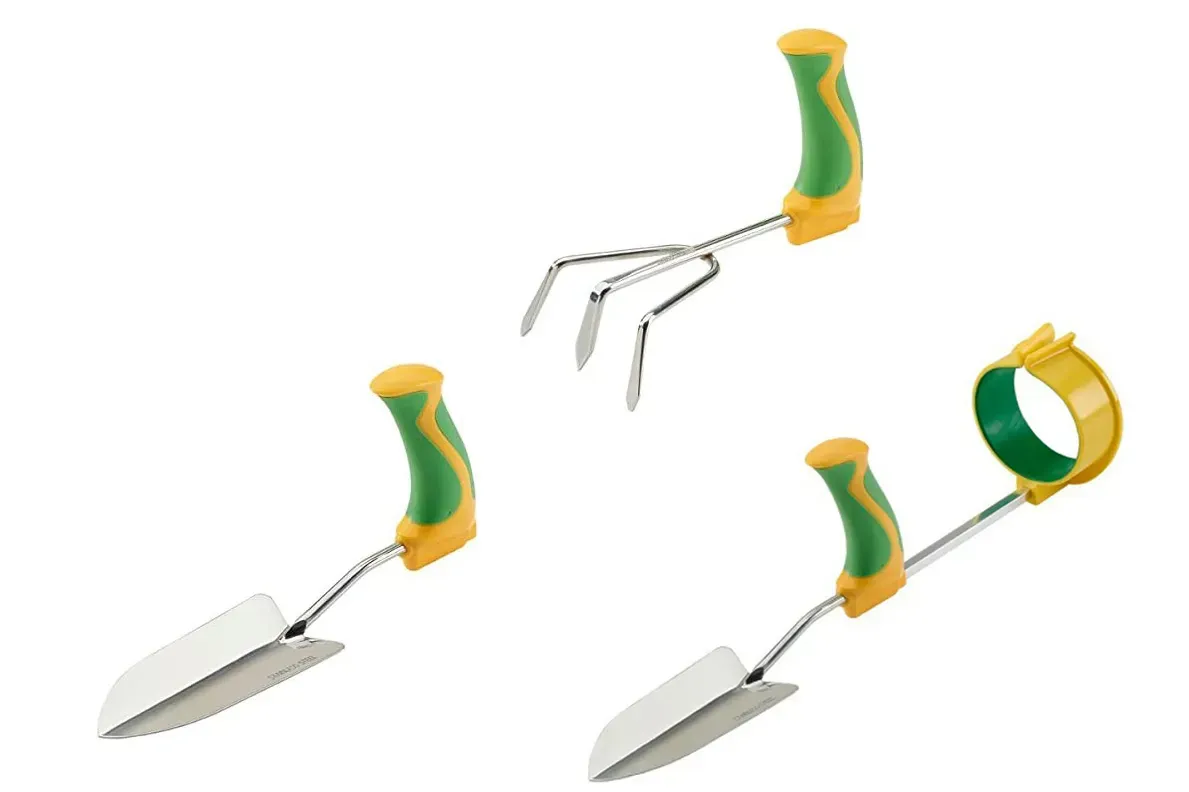
Long-reach cultivators use an extended shaft to allow you to stand upright while working, which shifts the physical load from your lower back to your larger arm muscles. They’re best for people who experience back pain when bending over for long periods.
- Maintains a neutral spine position during light soil aeration.
- Increases reach, allowing you to access the back of wide garden beds.
- Uses a sweeping motion that requires less wrist rotation than hand tools.
- Decreases the time spent kneeling on hard surfaces.
Note that using these requires more storage space than standard hand tools because of their length. Always check your local garden center to see if the tool’s length matches your height, as a tool that’s too short will still force you to bend over.
Vertical Grip Weeders
Vertical grip weeders utilize a pistol-grip handle that lets you keep your wrist straight while pulling weeds from the earth. They suit gardeners who struggle with carpal tunnel or general wrist arthritis.
- Aligns the hand and forearm to prevent awkward bending.
- Uses the natural strength of the elbow rather than the small muscles of the wrist.
- Provides a high-leverage point for extracting taproot weeds like dandelions.
- Minimizes the twisting motion required to loosen soil around a plant.
If you’re working in loose, sandy soil, a standard hand fork may be faster, but this tool is superior for heavy clay where resistance is high. For instance, you might use this tool to pull a 6-inch deep dandelion root while standing or kneeling comfortably.
Other Useful Ergonomic Options
Wrist-Support Shears: These include an extended cuff that rests against your forearm, transferring the weight of the tool away from the wrist joint. They’re excellent for gardeners with weak wrists or early-stage carpal tunnel syndrome. If your shears feel heavy after ten minutes of pruning, the cuff is your solution.
Soft-Touch Hand Forks: These feature flexible, rubberized tines that bend slightly when hitting obstacles. They’re best for gardeners who work in rocky soil and want to prevent tool breakage. If you feel a sharp jolt in your elbow when striking a stone, switch to these immediately to avoid tendonitis.
Trigger-Action Sprayers: These use a lever that you press with your whole hand rather than a single finger. They’re recommended for anyone who applies liquid fertilizer or pest control solutions frequently. Using a single-finger trigger for more than five minutes often causes repetitive strain; the whole-hand lever prevents this fatigue entirely.
Choosing the Right Tool
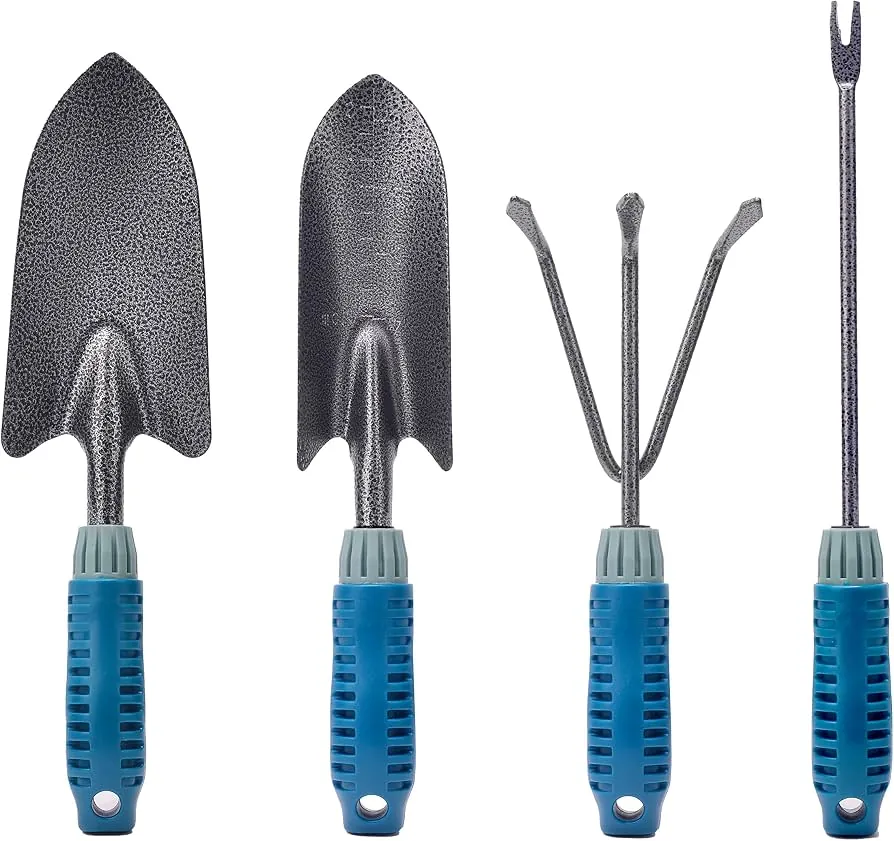
Choosing the right tool depends on your physical needs and the specific tasks you perform most often. If your main concern is hand fatigue, prioritize tools with thick, cushioned handles like the padded trowel. If wrist pain is your primary barrier, reach for tools with a vertical grip or forearm support.
For tasks involving heavy resistance, such as cutting thick wood or digging in hard clay, select tools with mechanical assists like ratchets or long handles to leverage your body weight. You can often combine these tools, but picking one that addresses your specific ache or pain is more important than having a large collection of gear.
Frequently asked questions
Can ergonomic tools stop wrist pain completely?
No tool can stop pain completely, but they reduce strain by keeping your wrist in a neutral position while you work. If you feel sharp pain during use, stop immediately and rest. If the pain persists after you finish, consult a doctor to rule out underlying injury or nerve issues.
How do I know if a tool fits my hand size?
A tool fits correctly when you can wrap your fingers around the grip without your fingertips touching your palm. If your hand feels cramped, the handle is too small; if you can’t maintain a firm grip, the handle is too large for your hand size.
Is it safe to use these tools if I have arthritis?
Yes, these tools are often recommended for people with arthritis because they minimize the force needed for gripping and twisting. However, you should limit your gardening sessions to 20-minute intervals to avoid overworking your joints, regardless of the tools you choose to use.
How long do these tools usually last?
Most high-quality tools last for a significant period with regular use, provided you clean them after each session. You can extend this lifespan by keeping the metal parts dry and applying a light coat of oil to moving gears or springs before storing them for the winter.
What happens if I use a tool that’s too heavy?
Using a tool that’s too heavy leads to rapid muscle fatigue and increases the risk of tendonitis in your forearm. If you find yourself needing to set the tool down every few minutes, it’s likely too heavy for your current strength level and you should switch to a lighter model.
Does the material of the handle matter?
Yes, the material significantly impacts comfort, as rubberized or foam grips absorb vibration while hard plastic handles transfer it to your hand. If you’re working in rocky or hard ground, always choose a grip that includes a soft, non-slip coating to protect your palms.
Conclusion
Start by testing a single tool during a short 15-minute garden session to see how your wrist feels afterward. You should expect to feel less tension in your forearm compared to using standard metal tools. If you notice persistent numbness or sharp pain in your fingers during or after use, stop using the tool and speak with a physical therapist to check your grip and form.
Related guides
{“@context”:”https://schema.org”,”@type”:”FAQPage”,”mainEntity”:[{“@type”:”Question”,”name”:”Can ergonomic tools stop wrist pain completely?”,”acceptedAnswer”:{“@type”:”Answer”,”text”:”No tool can stop pain completely, but they reduce strain by keeping your wrist in a neutral position while you work. If you feel sharp pain during use, stop immediately and rest. If the pain persists after you finish, consult a doctor to rule out underlying injury or nerve issues.”}},{“@type”:”Question”,”name”:”How do I know if a tool fits my hand size?”,”acceptedAnswer”:{“@type”:”Answer”,”text”:”A tool fits correctly when you can wrap your fingers around the grip without your fingertips touching your palm. If your hand feels cramped, the handle is too small; if you can’t maintain a firm grip, the handle is too large for your hand size.”}},{“@type”:”Question”,”name”:”Is it safe to use these tools if I have arthritis?”,”acceptedAnswer”:{“@type”:”Answer”,”text”:”Yes, these tools are often recommended for people with arthritis because they minimize the force needed for gripping and twisting. However, you should limit your gardening sessions to 20-minute intervals to avoid overworking your joints, regardless of the tools you choose to use.”}},{“@type”:”Question”,”name”:”How long do these tools usually last?”,”acceptedAnswer”:{“@type”:”Answer”,”text”:”Most high-quality tools last for a significant period with regular use, provided you clean them after each session. You can extend this lifespan by keeping the metal parts dry and applying a light coat of oil to moving gears or springs before storing them for the winter.”}},{“@type”:”Question”,”name”:”What happens if I use a tool that’s too heavy?”,”acceptedAnswer”:{“@type”:”Answer”,”text”:”Using a tool that’s too heavy leads to rapid muscle fatigue and increases the risk of tendonitis in your forearm. If you find yourself needing to set the tool down every few minutes, it’s likely too heavy for your current strength level and you should switch to a lighter model.”}},{“@type”:”Question”,”name”:”Does the material of the handle matter?”,”acceptedAnswer”:{“@type”:”Answer”,”text”:”Yes, the material significantly impacts comfort, as rubberized or foam grips absorb vibration while hard plastic handles transfer it to your hand. If you’re working in rocky or hard ground, always choose a grip that includes a soft, non-slip coating to protect your palms.”}}]}