



Tomatoes, broccoli, carrots, lettuce, and radishes are the best vegetables to plant in october in florida because the heat finally breaks and the soil stays warm enough for roots. The single thing that separates them is how long they take before you can pick them. October gives you a window where the heavy rain has passed but frost isn’t a threat yet.
Florida fall vegetables at a glance
Here is every crop covered on this page, matched with what it does best and a variety you’ll find at any garden center.
| Vegetable | Best used for | Common variety to try |
|---|---|---|
| Tomatoes | Slicing fresh or cooking down | Better Bush hybrid |
| Broccoli | Heavy side dishes and roasting | Waltham 29 |
| Carrots | Sweet raw snacking | Danvers Half Long |
| Lettuce | Fast daily salad greens | Black Seeded Simpson |
| Radishes | Quick harvests in small beds | Cherry Belle |
| Kale | Cold-hardy winter greens | Dwarf Blue Curled |
| Bush beans | Fast protein before frost | Provider |
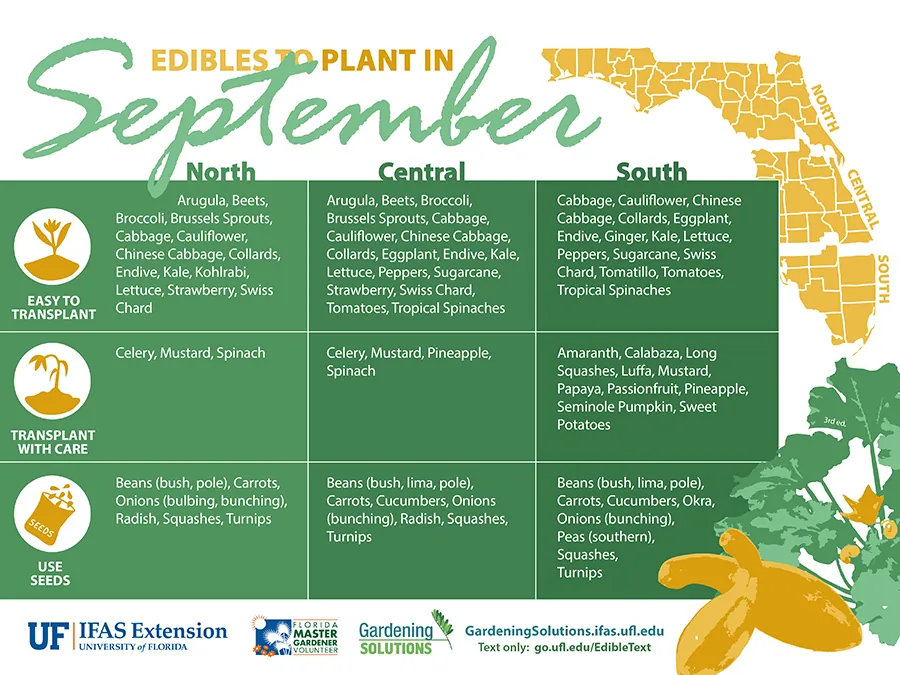
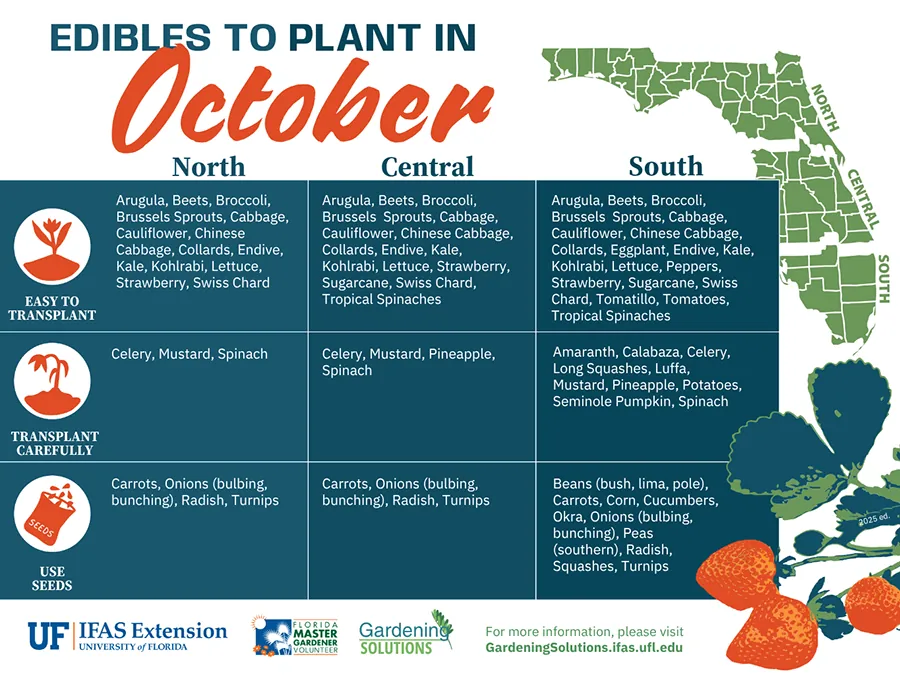
Florida’s fall window opens in September up north but waits until October in the southern counties. Planting too early means your seedlings cook in afternoon heat that still reaches the nineties.
Carrots and radishes go straight into the ground everywhere in the state. Tomatoes and broccoli need transplants if you want fruit before the shortest days arrive in December.
Better Bush sets fruit even when night temperatures stay above seventy-five. That matters because nights cool down much later here than they do in northern gardens.
Waltham 29 takes about eighty-five days from transplant to first harvest. Count back from your average first frost date to find your last safe planting weekend.
Growing tomatoes in October
A tomato planted in October avoids the blossom drop that ruins summer crops when daytime temperatures stay above 90°F. It suits anyone with a sunny spot and the patience to wait 60 to 85 days for ripe fruit.
You’ll need a cage or stakes ready on planting day, because Florida’s sandy soil doesn’t hold heavy vines upright on its own. If your bed gets six hours of direct sun, set transplants out; if it gets less than that, grow leafy greens instead.
- Produces full-sized slicing fruit without the flowers falling off in extreme heat.
- Ripens evenly when night temperatures drop into the 60s, which October finally delivers.
- Yields steadily for four to six weeks once the first cluster turns color.
- Resists early blight better than summer plantings because the humidity drops.
Space determinate types like ‘Better Bush’ 24 inches apart in rows 3 feet apart. Bury the stem up to the top two sets of leaves so extra roots form along the buried stalk. Water 1 inch per week, measured with a rain gauge set in the bed, not by guessing with a hose.
Fertilize with a low-nitrogen blend (like 5-10-10) at planting, then again when the first fruits are the size of golf balls. Too much nitrogen grows a massive green bush with no tomatoes. Check your county’s exact last recommended planting date through the UF/IFAS Florida vegetable guide, because northern zones freeze earlier than southern ones.
Set a ‘Roma’ transplant into a 5-gallon container filled with potting mix on October 5 in central Florida, water it with 1 quart at planting, and expect the first red fruit around December 1 if nights stay above 50°F.
Planting broccoli for winter harvest
Broccoli forms tight heads only when average daily temperatures sit between 60°F and 70°F, making October the right month to start it. It fits a gardener who wants one large harvest from each plant rather than picking daily.
Unlike tomatoes, broccoli tolerates light shade and actually bolts slower if it gets afternoon cover from a tree or fence. This crop trades space for yield: one plant takes up nearly 2 square feet but gives you just one main head and a few smaller sideshoots afterward.
- Grows a dense central head weighing 8 to 12 ounces under steady cool weather.
- Produces secondary florets for two more weeks after the main head is cut.
- Survives brief dips to 28°F without turning bitter or splitting.
Sow ‘Waltham 29’ seeds half an inch deep directly in the bed, or set nursery transplants out at 18 inches apart in rows 3 feet apart. Broccoli drinks heavily; give it 1.5 inches of water weekly, split over two days so the shallow roots never dry out completely.
Side-dress with a balanced fertilizer (10-10-10) three weeks after transplanting, using 1 tablespoon per plant scratched into the soil surface. Cut the main head when the buds are tight and dark green, leaving 5 inches of stem attached. Don’t pull the plant after cutting. Leave it in the ground and keep watering, because the side shoots will swell over the next 14 days.
Plant five ‘Packman’ transplants on October 10 in a raised bed, spacing them 18 inches apart, and cut the first 6-inch head roughly 55 days later when the buds are still tight.
Sowing carrots in Florida sand
Carrots push straight down through loose soil, rewarding anyone willing to prep a bed deeply before sowing. They suit patient growers who want a sweet, crunchy root that stores well in the ground until needed.
The trade-off here is time versus effort: carrots demand almost no care once established, but they take 70 to 80 days to reach full size, tying up that patch of dirt all winter. If your soil is heavy clay, skip them; the roots will fork and stunt. They need at least 8 inches of loose, rock-free dirt to grow straight.
- Develops high sugar content when nights cool into the 50s during the final month.
- Stores safely in the soil for weeks after maturing, letting you pull only what you need.
- Takes up very little horizontal space, fitting 16 plants across a single square foot.
- Avoids the root-knot nematode damage that plagues summer sowings in southern soils.
Sow ‘Danvers Half Long’ seeds a quarter-inch deep, dropping 2 to 3 seeds per inch along the row. Thin them to 2 inches apart once the tops are 3 inches tall; pulling the extras stops the remaining roots from crowding and twisting.
Water lightly every day for the first 14 days because carrot seeds die if the surface crusts over. After they sprout, switch to 1 inch of water twice a week. Don’t use fresh manure or heavy nitrogen. It forces the roots to branch into hairy, bitter forks instead of growing one clean taproot.
Broadcast a packet of ‘Nantes’ seeds over a 2-by-4-foot raised bed on October 15, thin to 2 inches apart at day 21, and pull your first finger-thick carrots around January 5.
Starting lettuce for quick salads
Lettuce germinates in 3 to 5 days when soil sits between 60°F and 70°F, giving you the fastest return of any October crop. It suits renters, container growers, or anyone who eats salads daily and wants to stop buying plastic clamshells at the store.
Leaf types let you harvest outer leaves continuously, while heading types force you to wait 55 days and cut the whole plant at once. Pick leaf varieties if you want food next week; pick romaine if you want crunch next month.
- Provides edible leaves within 21 days of sowing if you pick the outer ones young.
- Stays sweet and tender as long as daytime highs remain below 80°F.
- Fits into shallow containers only 4 inches deep, ideal for patios and balconies.
- Regrows after cutting if you leave 1 inch of stem above the soil line.
Sow ‘Black Seeded Simpson’ seeds on the surface and press them in lightly; they need light to sprout, so don’t bury them. Space rows 6 inches apart, or scatter seeds in a wide container and thin to 4 inches apart once true leaves appear. Water gently with a fine spray nozzle so you don’t wash the tiny seeds into a pile.
Feed with half-strength liquid fish emulsion every two weeks. Stop fertilizing a week before you plan to harvest, or the leaves taste bitter. Heat makes lettuce bolt and turn bitter instantly, so if an unseasonable 85°F day is forecast, drape a shade cloth over the bed by noon.
Scatter seeds in a 12-inch window box on October 1, mist daily, and clip your first 3-inch leaves for a sandwich on October 22.
Other cool-season crops worth trying
These options fill the gaps left by the main four, offering different textures, timelines, and uses for empty bed space.
- Radishes push out of the ground in 22 to 30 days, feeding impatient growers who want something crunchy fast. Sow ‘Cherry Belle’ seeds half an inch deep and 1 inch apart anytime in October. They mark slow-germinating rows perfectly when mixed with carrot seeds.
Thin them to 2 inches apart once the first true leaves appear. Crowded radishes grow long and stringy instead of round.
- Kale handles temperatures down to 20°F without dying, suiting northern Florida gardeners expecting hard freezes. Set ‘Dwarf Blue Curled’ transplants 12 inches apart. Harvest the lowest leaves first, and the center keeps producing new growth all winter.
Leave at least four inner leaves on the plant every time you harvest. Stripping it bare forces the kale to restart from scratch.
- Bush beans finish their entire lifecycle in 50 to 55 days, rewarding those who missed the spring planting window. Sow ‘Provider’ seeds 1 inch deep and 3 inches apart during the first two weeks of October. Planting after October 15 risks frost killing the blossoms before pods set.
Inoculate the seeds with a cowpea-type rhizobium inoculant before sowing if beans haven’t been grown in that bed recently.
- Spinach prefers soil under 65°F to germinate, making late October safer than early October in central zones. Sow ‘Bloomsdale’ seeds half an inch deep. Chill the seeds in a damp paper towel in the fridge for five days before planting if the soil is still warm.
Space rows 6 inches apart rather than broadcasting seed thickly. Overcrowded spinach stays small and bolts faster when warm days return.
- Cauliflower demands steady moisture and blanching to keep the curds white, fitting only attentive growers. Tie the outer leaves over the head when it reaches 2 inches wide to block the sun. Inconsistent moisture stresses the plant and can cause the curd to rice or split.
Use a clothespin or soft twine so the leaf ribs don’t snap. Broken leaves expose the developing head to direct light again.
Picking the best vegetables to plant in October in Florida
The amount of sunlight your bed gets decides your list before anything else does. If your space catches six or more hours of direct sun, plant tomatoes or bush beans. If it gets three to five hours, stick to lettuce, spinach, or kale, because fruiting crops won’t set pods or ripen in the shade. Count the hours on a clear day in early October before buying seeds.
Your timeline matters just as much. If you’re moving in November or only want a quick project, radishes and leaf lettuce are done in under a month. If you’re staying put and want food through January, broccoli, carrots, and tomatoes need that 60-to-80-day runway. Planting a 75-day carrot on October 25 in northern Florida risks freezing soil before the root finishes swelling.
Soil depth is the third filter. Raised beds filled with 10 inches of loose mix handle carrots and broccoli easily. Shallow containers under 6 inches deep restrict you to lettuce, radishes, and herbs. Pushing a carrot into 4 inches of dirt yields a stunted, forked root you won’t want to eat.
You can combine these crops in the same bed if you respect their spacing. Plant fast radishes between slow carrots; the radishes are harvested before the carrots need the room. But don’t mix heavy feeders like tomatoes and broccoli in the same container. They’ll fight for the same nutrients and both will stall. Pick the crop that matches your sun, your schedule, and your soil depth, and leave the rest for another season.
Frequently asked questions
Can I plant tomatoes outside in October?
Yes, if you live in central or south Florida where the first frost doesn’t arrive until late November or December. North Florida growers should use determinate varieties and be ready to cover them if temperatures drop below 40°F. Transplants do better than seeds this late in the year because they shave three weeks off the growing time.
How late is too late for fall vegetables?
Mid-October is the cutoff for long-season crops like tomatoes and broccoli in central Florida. South Florida pushes that to early November. Anything requiring 70 days to mature shouldn’t go into cold ground after October 15 up north, because the slowing daylight stalls growth. Check your local extension office’s specific zone dates.
Why are my carrot seeds not sprouting?
Carrot seeds die if the top half-inch of soil dries out during the first 14 days. Watering once a day isn’t enough in sandy soil; you might need to mist the bed morning and evening. Old seeds also fail. Carrot seed loses viability quickly, so use packets bought within the last year.
Is it safe to reuse summer soil for fall crops?
Yes, but you must amend it first. Summer crops drain the soil of nitrogen and leave behind root diseases. Pull all old roots, turn the top 6 inches, and mix in 2 inches of finished compost before sowing fall seeds. Skipping this step invites the same fungal issues that killed your summer squash.
What happens if we get an early frost?
Leafy greens like kale and lettuce survive a light frost (down to 28°F) without cover. Fruiting crops like tomatoes and beans suffer blackened leaves and dropped blossoms at 32°F. Drape a frost blanket or an old bedsheet over the plants before sunset to trap the ground’s heat overnight.
Does the moon phase affect planting dates?
No scientific evidence supports planting by the lunar calendar. Soil temperature, moisture, and day length dictate germination rates. Focus your effort on preparing the seedbed and timing your watering rather than waiting for a specific moon phase to put seeds in the dirt.
How often should I water new seeds?
Water newly sown seeds lightly every single day until they break the surface. Once seedlings have two true leaves, shift to deeper watering twice a week. Sandy Florida soil drains fast, so a heavy soaking twice a week builds deeper roots than a daily sprinkle that evaporates by noon.
Do I need to fertilize right away?
Not for root crops. Carrots and radishes fork and grow hairy roots if fed heavy nitrogen at planting. Leafy greens and tomatoes benefit from a starter fertilizer mixed into the planting hole. Wait until the first true leaves appear before applying liquid feeds to avoid burning tiny seedling roots.
Your first steps in the garden
Clear your chosen bed of summer weeds and dead roots today. Turn the top 6 inches of soil with a garden fork. Mix in a 2-inch layer of compost to replace what the summer heat burned away.
Sow radish and lettuce seeds tomorrow morning while the soil is cool and moist. Press them firmly into the dirt. You’ll see pale green loops pushing through the surface in 4 to 6 days. Keep the bed damp until then. That quick sprout is your sign the soil temperature is right for everything else.
If the seeds sit for 10 days without cracking open, dig one up. A mushy, dark seed means the soil stayed too wet and rotted it. You’ll need to improve drainage before trying again.
A firm seed that simply split without a root tells a different story. The soil was likely too cold or too dry to trigger growth. Scratch the surface with your fingernail. If it turns powdery an inch down, water lightly each morning until those pale loops appear.
{“@context”:”https://schema.org”,”@type”:”FAQPage”,”mainEntity”:[{“@type”:”Question”,”name”:”Can I plant tomatoes outside in October?”,”acceptedAnswer”:{“@type”:”Answer”,”text”:”Yes, if you live in central or south Florida where the first frost doesn’t arrive until late November or December. North Florida growers should use determinate varieties and be ready to cover them if temperatures drop below 40°F. Transplants do better than seeds this late in the year because they shave three weeks off the growing time.”}},{“@type”:”Question”,”name”:”How late is too late for fall vegetables?”,”acceptedAnswer”:{“@type”:”Answer”,”text”:”Mid-October is the cutoff for long-season crops like tomatoes and broccoli in central Florida. South Florida pushes that to early November. Anything requiring 70 days to mature shouldn’t go into cold ground after October 15 up north, because the slowing daylight stalls growth. Check your local extension office’s specific zone dates.”}},{“@type”:”Question”,”name”:”Why are my carrot seeds not sprouting?”,”acceptedAnswer”:{“@type”:”Answer”,”text”:”Carrot seeds die if the top half-inch of soil dries out during the first 14 days. Watering once a day isn’t enough in sandy soil; you might need to mist the bed morning and evening. Old seeds also fail. Carrot seed loses viability quickly, so use packets bought within the last year.”}},{“@type”:”Question”,”name”:”Is it safe to reuse summer soil for fall crops?”,”acceptedAnswer”:{“@type”:”Answer”,”text”:”Yes, but you must amend it first. Summer crops drain the soil of nitrogen and leave behind root diseases. Pull all old roots, turn the top 6 inches, and mix in 2 inches of finished compost before sowing fall seeds. Skipping this step invites the same fungal issues that killed your summer squash.”}},{“@type”:”Question”,”name”:”What happens if we get an early frost?”,”acceptedAnswer”:{“@type”:”Answer”,”text”:”Leafy greens like kale and lettuce survive a light frost (down to 28°F) without cover. Fruiting crops like tomatoes and beans suffer blackened leaves and dropped blossoms at 32°F. Drape a frost blanket or an old bedsheet over the plants before sunset to trap the ground’s heat overnight.”}},{“@type”:”Question”,”name”:”Does the moon phase affect planting dates?”,”acceptedAnswer”:{“@type”:”Answer”,”text”:”No scientific evidence supports planting by the lunar calendar. Soil temperature, moisture, and day length dictate germination rates. Focus your effort on preparing the seedbed and timing your watering rather than waiting for a specific moon phase to put seeds in the dirt.”}},{“@type”:”Question”,”name”:”How often should I water new seeds?”,”acceptedAnswer”:{“@type”:”Answer”,”text”:”Water newly sown seeds lightly every single day until they break the surface. Once seedlings have two true leaves, shift to deeper watering twice a week. Sandy Florida soil drains fast, so a heavy soaking twice a week builds deeper roots than a daily sprinkle that evaporates by noon.”}},{“@type”:”Question”,”name”:”Do I need to fertilize right away?”,”acceptedAnswer”:{“@type”:”Answer”,”text”:”Not for root crops. Carrots and radishes fork and grow hairy roots if fed heavy nitrogen at planting. Leafy greens and tomatoes benefit from a starter fertilizer mixed into the planting hole. Wait until the first true leaves appear before applying liquid feeds to avoid burning tiny seedling roots.”}}]}