

As an Amazon Associate, we earn from qualifying purchases. This post contains affiliate links – if you buy through them, we may earn a commission at no extra cost to you.
Finding the right soil for a new garden project can feel overwhelming. Many products look similar, but the ingredients determine how well your plants will grow over the season. This guide helps you understand exactly what to look for so you can stop guessing and start planting. We focus on the quality of ingredients, ease of use, and nutrient density to help you choose the best option for your yard. For most gardeners, Espoma Organic Raised Bed is the top choice because it’s ready to use and contains a complete mix of organic ingredients right out of the bag.
What Actually Matters : Raised bed soil calculator
Nutrient Density
The health of your vegetables depends on the food available in the soil. Look for mixtures that include compost, worm castings, or organic meals like feather or kelp meal. These provide a slow release of nutrients, which is better than synthetic options that wash away quickly. A nutrient-dense soil provides a foundation of organic amendments to support plant growth. Check the label for a diverse list of organic inputs; the more varied the ingredients, the better the foundation for your plants’ root systems.
Drainage and Aeration
Plants need oxygen at their roots just as much as they need water. If soil is too dense, it compacts and “drowns” the roots. Look for ingredients like perlite, pumice, or coconut coir, which help keep the mix loose. Proper drainage prevents root rot and ensures that water reaches the bottom of the bed rather than sitting on the surface.
Ease of Use
Some bags are ready to pour straight into your bed, while others require hydration or mixing with native soil. If you have a large project, choose a mix that doesn’t require extra steps. Compressed bricks are excellent for storage but need time and water to expand before use. Always check the total volume listed on the bag to ensure you have enough to fill your specific bed dimensions.
Sustainability
Organic and peat-free options are available to support environmental health. OMRI-listed products are crafted with sustainably sourced ingredients using regenerative practices. Choosing sustainably sourced bark or coconut coir reduces your impact on natural wetlands. Look for certifications on the bag if you want to be sure about the origin of your soil components.
|
# |
Product |
Best for |
|
|---|---|---|---|
|
1 |
Espoma Organic Raised Bed |
Top Pick |
|
|
2 |
FoxFarm Raised Bed Mix |
Best for Nutrient Uptake |
|
|
3 |
Black Gold Raised Bed |
Best for Vegetables |
|
|
4 |
Coast of Maine Castine |
Best for Large Beds |
|
|
5 |
Raised Bed Mix |
— |
|
|
6 |
Michigan Peat BACCTO |
Best for Quick Results |
|
|
7 |
Raised Bed Potting Mix |
Best for Berry Gardens |
|
|
8 |
Verdana Coco Coir |
Best for Limited Storage |
|
|
9 |
Back to the Roots |
Best for Peat-Free Needs |
|
|
10 |
Wiggle Worm Raised Bed |
Best for Soil Quality |
1. Espoma Organic Raised Bed Mix

Best for: All-purpose organic vegetable and herb gardening.
This mix is designed for simplicity and performance. It comes ready to use, meaning you can fill your beds or top off existing ones without adding anything else. The inclusion of Myco-tone, a proprietary blend of mycorrhizae, helps support strong root development, which is a major advantage for new gardeners. Because it’s free from synthetic plant foods, it’s a straightforward choice for those prioritizing organic methods.
It’s a great fit for most vegetable patches, but it isn’t intended for large-scale farm projects where you might need hundreds of cubic feet of soil. If your goal is a standard-sized raised bed, the 1.5 cubic foot bag size is easy to manage.
Pros:
-
Contains proprietary mycorrhizae for root health.
-
No synthetic chemicals or plant foods.
-
Ready to use for new or existing beds.
-
Includes rich organic ingredients like worm castings.
Cons:
-
Not designed for extremely large agricultural plots.
2. FoxFarm Raised Bed Planting Mix

Best for: Gardeners seeking high nutrient content.
This mix leans heavily on aged forest products and earthworm castings to create a nutrient-rich environment. It’s formulated to balance moisture retention with drainage, which helps prevent the common problem of overwatering. The addition of oyster shell and dolomite lime helps maintain a balanced pH, making it ideal for a variety of fruits and vegetables.
This product is perfect for someone who wants to avoid the “guesswork” of soil chemistry. However, it isn’t for those who want a strictly peat-free medium, as it relies on sphagnum peat moss for its structure.
Pros:
-
Excellent balance of drainage and moisture.
-
Includes nutrient-rich earthworm castings.
-
Ready to use with no extra steps.
-
Supports strong root uptake.
Cons:
-
Contains peat moss, which isn’t peat-free.
3. Black Gold Raised Bed

Best for: Vegetable growers who prefer a trusted brand.
This mix is specifically labeled for flower and vegetable beds. It’s designed to provide a consistent growing environment that supports plant growth throughout the entire season. It’s a straightforward, ready-to-use option that fits well into a standard gardening routine. By choosing a product from an established name like Sun Gro, you ensure that your raised bed starts with a predictable foundation.
This product isn’t for gardeners looking for specific, exotic additives, as the listing focuses on the core function of growing vegetables. It’s a reliable, no-nonsense choice for a backyard gardener who wants to avoid the complexity of blending their own soil components. You can simply pour it into your frame and begin planting.
Pros:
-
Dedicated mix for vegetables and flowers.
-
Consistent quality for raised beds.
-
Ready to use immediately.
Cons:
-
Specific ingredient list isn’t detailed.
-
Lacks specialized additives for niche gardening needs.
4. Coast of Maine Castine Blend Raised Bed Mix

Best for: Large, sustainable garden projects.
This blend is highly regarded for its diverse ingredient list, including biochar, lobster, and crab shell meal. It’s designed to build “living soil” rather than just providing a medium for plants. Because it includes slow-release nutrients, it supports steady growth, making it a favorite for those who want to minimize the need for supplemental feeding.
Pros:
-
Includes diverse organic amendments like biochar.
-
OMRI listed for organic gardening.
-
Supports living soil biodiversity.
-
Sustainably sourced ingredients.
Cons:
-
Higher complexity than basic potting soils.
5. Raised Bed Mix

Best for: Compost-based gardening enthusiasts.
Produced by the Vermont Compost Company, this mix is heavy on mature compost, which mimics the natural fertility of forest floors. It’s specifically formulated to resist compaction, which is a common issue in raised beds that have been used for several seasons. The inclusion of crushed granite and basalt provides essential minerals that support plant stems and overall productivity.
This blend uses organic ingredients like blood meal, feather meal, kelp meal, and bone meal to feed your plants. These components work alongside vermiculite and peat moss to balance moisture retention with necessary drainage. Because the medium remains loose, your plant roots can easily spread and find the nutrients they need to thrive.
This isn’t for gardeners who prefer a lighter, peat-based mix, as this soil has a denser, compost-heavy feel that’s designed for longevity.
Pros:
-
High percentage of mature compost.
-
Provides essential minerals for plant development.
-
Well-structured for root roaming.
Cons:
-
Denser than typical peat-based mixes.
6. Michigan Peat BACCTO Raised Bed Soil with Organic Matter

Best for: Beginners needing quick results.
This mix is designed to take the stress out of soil prep. By including composted manure and worm castings, it provides an immediate boost to plant growth. The castings introduce beneficial microbes, while the compost and manure work together to improve moisture retention. It’s quite versatile, working well in both elevated planters and traditional backyard raised beds.
This isn’t for the gardener who wants to customize their soil composition from scratch, as it’s a pre-blended, ready-to-use product. It’s best for those who want to open a bag and start planting right away. Because the formula relies on premium peat sourced from Michigan bogs, it ensures a consistent texture that supports strong root development. Whether you’re growing vegetables, herbs, or flowers, this soil provides the foundational nutrients needed for vibrant, healthy plants.
Pros:
-
Rich in organic matter like manure.
-
Great for beginners and pros alike.
-
Ready to use without preparation.
-
Boosts moisture retention.
Cons:
-
No customization possible for specific plant needs.
7. Raised Bed Potting Mix

Best for: Those who want a 2 cubic foot bulk bag.
This mix is a straightforward, organic blend that includes pumice for drainage. It’s a “workhorse” soil that’s safe for the whole family and pets. The 2 cubic foot bag is larger than many competitors, making it a convenient size for filling a decent-sized bed with fewer trips to the store. Because it arrives ready-to-use, you can pour it directly into your raised beds or containers without needing to mix in extra amendments.
The inclusion of mycorrhizae helps create a living, fertile environment for your plants. This is especially useful for vegetables, herbs, and berries that require consistent moisture levels throughout the growing season.
This mix isn’t for those looking for highly specialized, exotic additives; it’s a solid, reliable, all-purpose organic soil.
Pros:
-
Larger 2 cubic foot bag size.
-
Includes pumice for superior drainage.
-
100% natural and organic ingredients.
-
Ideal for raised garden beds and outdoor containers; crafted with sustainably sourced ingredients using regenerative practices; encourages biodiversity by building rich, living soil with organic amendments.
Cons:
-
Lacks highly specialized nutrient additives.
8. Verdana Coco Coir Potting Soil Brick

Best for: Gardeners with limited storage space.
This compressed brick is a space-saving marvel. Once hydrated, it expands significantly, providing a high-yield growing medium. It serves as a great peat moss alternative and is excellent for improving drainage and aeration in existing soil mixes.
It isn’t for the person who wants to plant immediately, as you must dedicate time to hydrating the brick before it can be used. To prepare it, place the brick in a large container and add water gradually. You can hydrate the brick as it expands to speed up the process significantly.
Pros:
-
Highly compact for easy storage.
-
Renewable alternative to peat moss.
-
Excellent for drainage and aeration.
-
Low EC and low salt content.
Cons:
-
Requires hydration before use.
-
Not ready for immediate planting.
-
Requires manual labor to fluff and mix into your final planting blend.
9. Back to the Roots Organic Expanding Potting Soil Brick
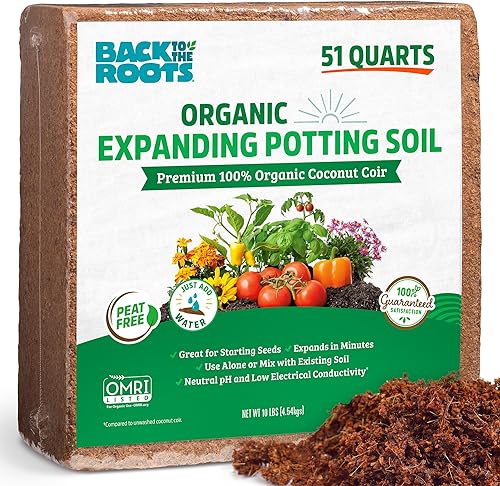
Best for: Those who want an expanding, peat-free option.
This is a convenient, peat-free potting soil that provides a generous amount of volume once hydrated. It’s OMRI listed and carries a satisfaction guarantee, which adds a layer of confidence for the buyer. It’s balanced for pH, making it truly all-purpose for vegetables, herbs, or flowers. You can use this mix alone or as an amendment for anything in a pot or in the ground, including starting seeds.
It isn’t for someone who prefers traditional, pre-moistened soil in a bag, as the expansion process is a necessary step before planting can begin. Beyond the soil itself, the brand supports a #GROWONEGIVEONE initiative. If you share a photo of your growing garden, they donate a Grow Kit and STEM curriculum to an elementary classroom of your choice.
Pros:
-
Peat-free and OMRI listed.
-
Expands to over 2 cubic feet.
-
Balanced pH for all-purpose use.
-
Satisfaction guarantee provided.
Cons:
-
Needs expansion before planting.
10. Wiggle Worm Organic Raised Bed Mix

Best for: Bulk buyers who value worm castings.
This 3-pack of 40lb bags is a heavy-duty option for filling large beds. The inclusion of worm eggs is a unique feature that can help establish a living ecosystem within your soil. It’s a straightforward, nutrient-dense mix designed to be poured directly into your planter.
As these eggs hatch, the resulting worms create tunnels that naturally improve your soil structure. These tunnels bring vital oxygen to the root zone, assist with drainage, and create necessary space for plant roots to expand. Because the worms continue to produce castings after they hatch, the soil quality often improves the longer it stays in your bed.
This isn’t for someone looking for a “lightweight” soil, as these bags are substantial and require physical effort to move. You can use the mix alone or blend it with other organic materials to suit your specific garden needs.
Pros:
-
Includes live worm eggs for soil health.
-
High-quality compost and casting mix.
-
Convenient 3-pack for larger beds.
-
Simple, effective all-in-one media.
Cons:
-
Bags are heavy and physically demanding.
Who Should Buy Which
If you’re filling a large, permanent garden bed and want the best ecosystem for your vegetables, Coast of Maine Castine is the premium choice. For the gardener who has very little storage space but needs a lot of soil, Verdana Coco Coir is the most efficient option. Beginners who want to start planting within minutes of arriving home should choose Espoma Organic Raised Bed or Michigan Peat BACCTO for their consistent, ready-to-use formulas. If you’re replacing soil that has compacted over the years, the compost-dense Raised Bed Mix from Vermont Compost Company is excellent for restoring structure. Finally, for those buying in bulk for multiple beds, the Wiggle Worm Raised Bed 3-pack provides the best value for your setup.
Mistakes That Catch Buyers Out
Choosing a soil based on the prettiest bag design rather than reading the actual ingredient list. Labels may promise results, but only the ingredients reveal if the mix provides the necessary structure, such as peat moss or coconut coir for moisture, or compost for nutrients.
Assuming that all “raised bed mixes” contain enough nutrients to last an entire season without supplemental feeding. While many blends include slow-release ingredients like worm castings or meal, high-yield vegetables often require additional support as the season progresses.
Buying too little soil because they didn’t calculate the volume of the bed before ordering. You must measure your bed dimensions to ensure you have enough medium to fill it properly.
Taking the marketing claim on the front of the bag as a guarantee of specific results in their own climate.
Frequently Asked Questions
Do I need to mix this soil with my existing dirt?
Most of the products listed are designed to be used directly in raised beds without needing to be mixed with native garden soil. However, if your existing soil is very clay-heavy, mixing in a bag of one of these high-quality blends can improve the overall structure. Always read the back of the specific bag, as some products are intended to be used as amendments rather than a complete planting medium.
How often should I refresh the soil in my raised beds?
You should aim to add a layer of fresh compost or nutrient-rich soil at the start of every growing season. Plants consume the available nutrients, and soil structure can settle or compact. Adding a few inches of fresh mix ensures your plants have the fuel they need for a productive harvest. This simple annual maintenance is much easier than replacing the entire contents of your bed.
Can I use these mixes for indoor houseplants?
While many of these mixes are technically safe for containers, they’re formulated specifically for the drainage needs of outdoor raised beds. Some may be too dense or contain coarse organic matter that isn’t ideal for the smaller pots used indoors. If you choose to use them, ensure your indoor pots have excellent drainage holes to prevent the soil from staying too wet, which can lead to fungus gnats or root issues.
Are these soils safe for organic vegetable gardening?
Yes, most of the products mentioned are suitable for organic gardening. Look for the “OMRI Listed” seal on the packaging, which confirms that the product is listed for organic use.
How do I store leftover soil if I don’t use it all?
Store any unused soil in a cool, dry place and keep the bag tightly sealed to prevent it from drying out or becoming infested with pests. If the bag is torn, transfer the contents to a plastic storage bin with a lid. Moisture-retaining mixes can become heavy and difficult to manage if they get rained on, so keeping them in a garage or shed is the best way to maintain quality.
Conclusion
Once your beds are filled with the right mix, you’ll be ready to tuck your seedlings into their new home. Don’t worry if everything doesn’t grow perfectly at first; gardening is a learning process. Grab your gloves and some seeds this weekend, and you’ll find that watching your first harvest sprout is truly rewarding.
{“@context”:”https://schema.org”,”@type”:”FAQPage”,”mainEntity”:[{“@type”:”Question”,”name”:”Do I need to mix this soil with my existing dirt?”,”acceptedAnswer”:{“@type”:”Answer”,”text”:”Most of the products listed are designed to be used directly in raised beds without needing to be mixed with native garden soil. However, if your existing soil is very clay-heavy, mixing in a bag of one of these high-quality blends can improve the overall structure. Always read the back of the specific bag, as some products are intended to be used as amendments rather than a complete planting medium.”}},{“@type”:”Question”,”name”:”How often should I refresh the soil in my raised beds?”,”acceptedAnswer”:{“@type”:”Answer”,”text”:”You should aim to add a layer of fresh compost or nutrient-rich soil at the start of every growing season. Plants consume the available nutrients, and soil structure can settle or compact. Adding a few inches of fresh mix ensures your plants have the fuel they need for a productive harvest. This simple annual maintenance is much easier than replacing the entire contents of your bed.”}},{“@type”:”Question”,”name”:”Can I use these mixes for indoor houseplants?”,”acceptedAnswer”:{“@type”:”Answer”,”text”:”While many of these mixes are technically safe for containers, they’re formulated specifically for the drainage needs of outdoor raised beds. Some may be too dense or contain coarse organic matter that isn’t ideal for the smaller pots used indoors. If you choose to use them, ensure your indoor pots have excellent drainage holes to prevent the soil from staying too wet, which can lead to fungus gnats or root issues.”}},{“@type”:”Question”,”name”:”Are these soils safe for organic vegetable gardening?”,”acceptedAnswer”:{“@type”:”Answer”,”text”:”Yes, most of the products mentioned are suitable for organic gardening. Look for the \”OMRI Listed\” seal on the packaging, which confirms that the product is listed for organic use.”}},{“@type”:”Question”,”name”:”How do I store leftover soil if I don’t use it all?”,”acceptedAnswer”:{“@type”:”Answer”,”text”:”Store any unused soil in a cool, dry place and keep the bag tightly sealed to prevent it from drying out or becoming infested with pests. If the bag is torn, transfer the contents to a plastic storage bin with a lid. Moisture-retaining mixes can become heavy and difficult to manage if they get rained on, so keeping them in a garage or shed is the best way to maintain quality.”}}]}


