




Watering your lawn too often and too lightly is the single biggest problem, because it keeps roots near the surface where they dry out fast. The most common lawn watering mistakes come down to giving the grass the wrong amount, doing it at the wrong time of day, or using a sprinkler that covers the yard unevenly. Fix those three, and the grass usually fixes itself.
The exact numbers change depending on your soil type, the kind of grass you grow, and your local climate. Sandy ground drains faster than clay, cool-season grasses need more water in July than warm-season ones do, and local rules may cap how many days a week you’re allowed to run a hose. The rest of this page explains how to read those conditions so you can set a schedule that actually fits your yard.
Who needs this lawn watering advice : what are common lawn watering mistakes
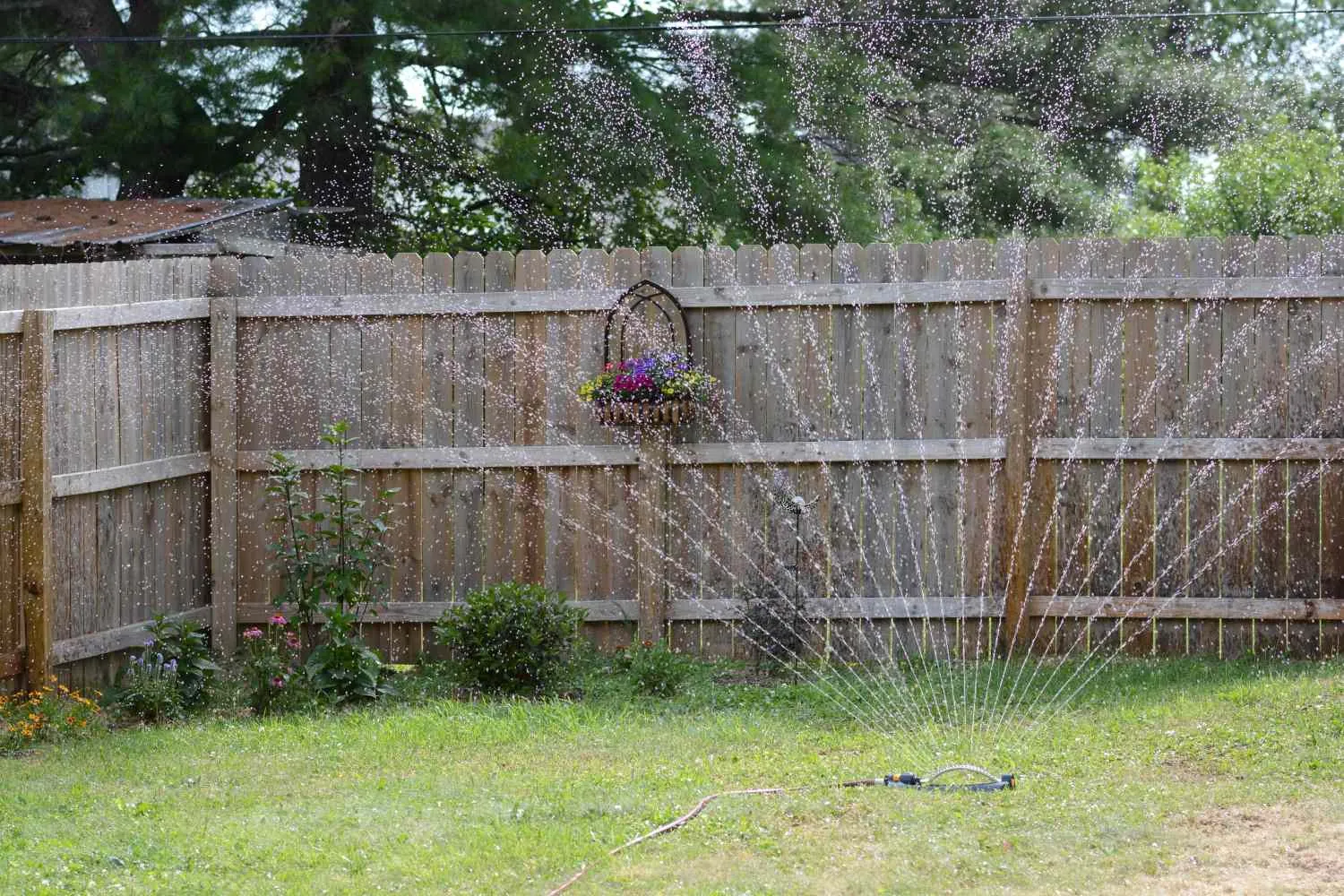
Three different people usually type this question into a search engine. The first one just moved into a house with an existing yard, has a basic hose-end sprinkler, and doesn’t know why the grass turns brown every August even though they run the water for twenty minutes each morning. They need a simple starting point with real amounts.
The second person already owns an automatic irrigation system with a timer. They’ve noticed mushrooms growing near the driveway or dry patches by the fence, and they want to know which dial to turn. They don’t need a lesson on buying equipment; they need to know how to adjust what’s already buried in the dirt.
The third reader manages a large property or a sports field. Their sprinklers cover half an acre or more, and their local water authority enforces strict limits. This page won’t help them much. Commercial turf management requires soil moisture sensors, flow meters, and sometimes a licensed irrigator to stay within legal limits. If your system draws from a dedicated well or covers more than a quarter acre, consult a certified professional instead.
This guide serves the first two readers. It assumes you’re working with a standard residential lot under 10,000 square feet, using either a basic oscillating sprinkler or a typical home timer system connected to a municipal supply. If your setup matches that description, the steps below will give you the exact figures to use.
What changes your lawn’s water needs
Four things decide how much water your grass actually takes in, and getting any one of them wrong throws off the whole schedule. Soil texture matters the most. Sandy soil lets water pass through quickly, so it needs shorter sessions more often.
Clay holds water tight, meaning you must apply it slowly or it pools on top and runs into the street. You can check your own soil by digging a hole six inches deep after watering; if the bottom is still dry, you haven’t applied enough water or it isn’t infiltrating properly.
Grass species comes next. Cool-season types like Kentucky bluegrass and tall fescue often go dormant and slow their water use significantly when summer temperatures stay above 85°F for weeks. Warm-season types like Bermuda and Zoysia thrive in that heat but need steady moisture during their spring green-up. Your local university extension office publishes the exact weekly totals for the grasses grown in your county, so check their turf guide rather than guessing.
Sprinkler output is the factor people get wrong most often. Two identical-looking sprinkler heads can deliver completely different amounts of water per hour. If you don’t measure yours, you’re just guessing. Place three flat-bottomed tuna cans around the yard, run the sprinkler for fifteen minutes, and measure the depth with a ruler. That tells you exactly how long to leave the system on to hit one inch.
Local weather shifts everything. A week of 95°F days with wind dries the soil twice as fast as a humid 75°F week. Don’t stick to a rigid calendar schedule when the forecast changes. If your region publishes an evapotranspiration index through a local university extension or state climate network, use it to adjust your weekly total up or down.
How to water a lawn correctly
Follow these steps in order. Each one gives you a specific number to work with, assuming you have a standard residential sprinkler and average loam soil. If your soil is pure sand, cut the run times in half and water twice a week instead of once.
- Pick the right time. Turn the sprinkler on between 4 AM and 8 AM. Water applied at noon loses up to 30 percent to evaporation before it reaches the roots. Evening watering leaves the blades wet all night, which invites fungal disease.
- Measure your output. Set out three empty tuna cans spaced evenly across the zone. Run the sprinkler for exactly 15 minutes. Measure the water depth in each can with a ruler and calculate the average. This tells you how many minutes it takes to deliver one inch of water.
- Set the target amount. Aim for one to one and a half inches of water per week, including rainfall. If your cans collected a quarter inch in 15 minutes, you need 60 minutes of total run time per week to hit one inch.
- Split the schedule. Divide that total time into two sessions per week. For the example above, run the sprinkler for 30 minutes on Tuesday and 30 minutes on Friday. Deep, infrequent watering forces roots to grow downward.
- Watch the runoff. If water starts flowing into the gutter before the session ends, your soil can’t absorb it fast enough. Stop the sprinkler, wait 20 minutes for the water to sink in, then finish the remaining time.
- Check the depth. Push a screwdriver into the ground two hours after watering. It should slide in easily to a depth of six inches. If it hits resistance at three inches, the water didn’t reach the root zone, and you need to add another cycle.
- Adjust for rain. Buy a cheap rain gauge or check your local weather station’s data. Subtract whatever fell from the sky from your weekly one-inch target. If it rained half an inch, only apply the remaining half inch through your sprinkler.
The single judgment call that separates a healthy lawn from a sick one is knowing when to stop. Grass that stays slightly dry between waterings builds deeper roots. If the soil feels damp two inches down before your next scheduled day, skip that session entirely. Overwatering costs more money and kills more lawns than drought does.
Different situations and what to do
Every yard presents a slightly different problem. Here is how to handle the five situations homeowners actually face, without wasting water or burning the grass.
| Your situation | What to do | What it takes | What to watch for |
|---|---|---|---|
| New sod or seed | Water lightly twice daily | 10 minutes per session | Mushrooms or rotting smell |
| Heavy clay soil | Apply water very slowly | 20 minutes, pause, repeat | Puddles forming on surface |
| Sandy soil | Water deeply but briefly | 15 minutes, three times weekly | Dry spots appearing fast |
| Shaded areas | Cut water volume in half | Half the normal run time | Moss growing thick |
| Sloped yards | Use short repeated cycles | 5 minutes on, 15 off | Water running into street |
New grass hasn’t built a root system yet, so it can’t survive a full week between drinks. But leaving new sod soaking wet overnight causes the roots to rot before they touch the soil underneath. Keep the top inch moist until the grass resists a gentle tug, then switch to the standard schedule.
Shaded grass uses less water because the sun doesn’t evaporate its moisture as quickly. If you run the same timer settings under a tree as you do in the open yard, the shaded patch will stay soggy. Cut the time in half for zones that get less than four hours of direct sunlight.
Details that keep lawn watering on track
Getting the coverage right
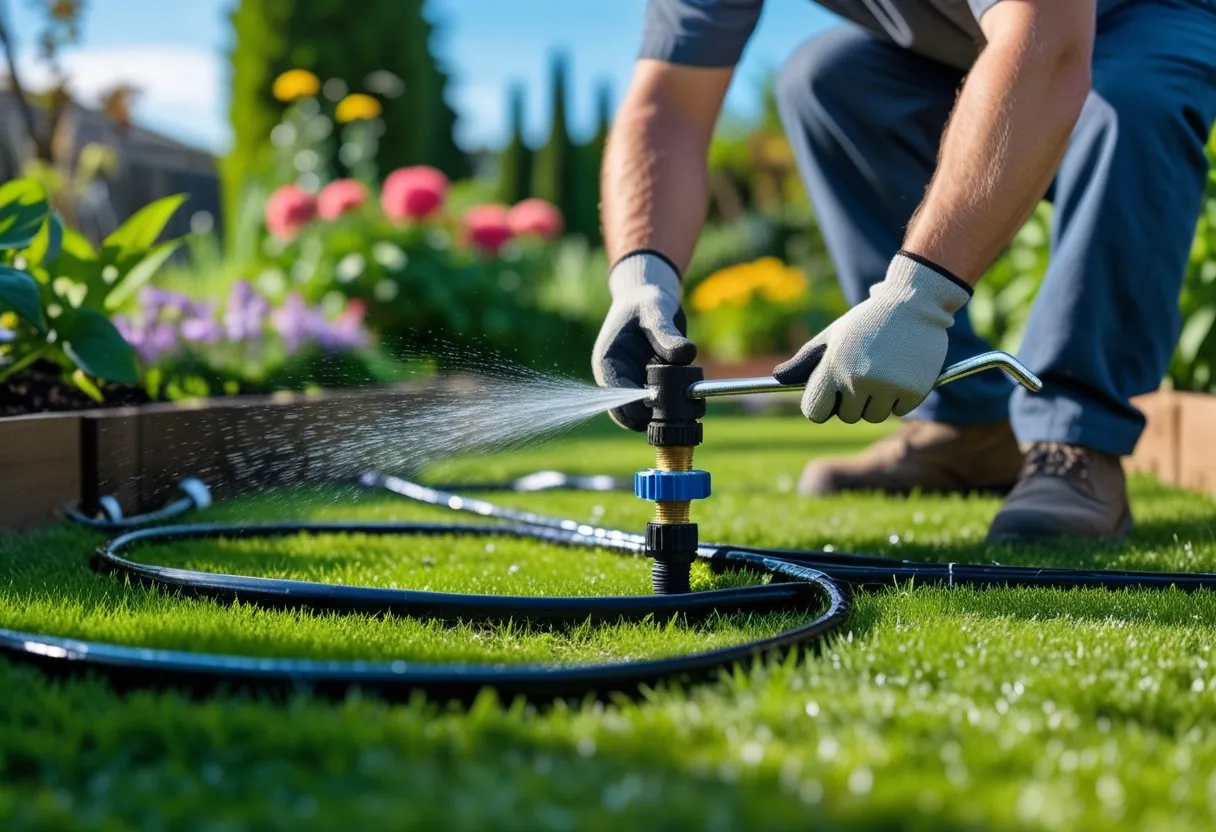
Sprinkler heads must overlap by about 50 percent to cover a square area evenly. If you space them too far apart, the edges of each spray pattern miss the grass in between. You’ll see alternating stripes of green and brown across the yard. Walk the perimeter while the system runs and look for dry gaps between the sprays.
Wind pushes water sideways. On breezy mornings, lower the spray angle if your heads allow it, or switch to rotor heads that shoot heavier droplets. Fine mist from pop-up sprayers drifts over the neighbor’s driveway instead of sinking into your soil. Check the sidewalk after a cycle; if it’s wet, you’re paying to water concrete.
Reading the grass itself
Turf tells you when it’s thirsty before it turns brown. Step on the lawn and watch your footprints. If the blades spring back immediately, the roots have plenty of moisture. If your footprints stay visible for more than ten minutes, the grass is losing turgor pressure and needs water within the next day.
Color changes happen later. A dull, bluish-gray tint means the blades are curling inward to reduce sun exposure. Once you see that, you’ve already waited a few days too long. Don’t wait for the grass to go fully brown and crispy. Dormant grass survives, but recovering it takes weeks of consistent watering and wastes the effort you already put in.
Lawn watering problems and fixes
When something goes wrong, the symptom usually points straight to the cause. Match what you see in the yard to the table below, and try the first fix before changing anything else.
| What you notice | What it usually means | What to do first | How to stop it happening again |
|---|---|---|---|
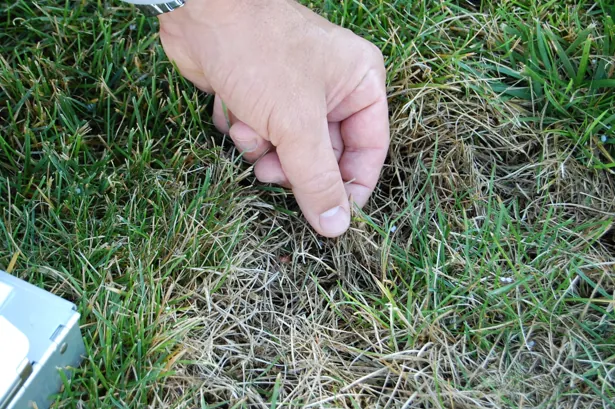
| Brown patches in circles | Fungal disease from night watering | Switch to early morning schedule | Keep blades dry overnight |
| Water pooling on surface | Clay soil absorbing too slowly | Split run time into short cycles | Aerate soil each fall |
| Grass stays footprinted | Roots lack deep moisture | Increase run time by 10 minutes | Water fewer days per week |
| Weeds outgrowing grass | Frequent shallow watering | Extend time between sessions | Train roots deeper slowly |
| Green stripe along driveway | Sprinkler overspray hitting concrete | Adjust head direction inward | Check alignment monthly |
| Soggy smell near trees | Too much water in shade | Cut that zone’s time in half | Separate shade and sun zones |
Fungus thrives when grass blades stay wet for more than eight hours. Watering at 8 PM guarantees the lawn sits damp all night. Moving the schedule to 5 AM lets the rising sun dry the blades before spores can take hold. If you already see circular brown rings with dark borders, stop watering that spot entirely for three days and let it dry out.
Weeds like crabgrass have shallow roots. If you water lightly every day, you feed the weeds while starving the turf. Stretching the time between sessions starves the weeds out naturally. It takes about three weeks for the grass to adapt, so don’t panic if it looks slightly stressed at first.
Local rules on outdoor water use
Your city or county almost certainly regulates when and how much you can water outdoors. These rules exist because municipal treatment plants have a maximum daily capacity, and summer peaks strain the system. Violating them can result in fines that are inexpensive relative to the alternative but climb with each offense.
In regions managed by the Environmental Protection Agency’s WaterSense program, local utilities often restrict irrigation to two specific days per week based on your street address. Odd-numbered houses might water on Tuesdays and Saturdays, while even-numbered ones use Wednesdays and Sundays. You can find your exact schedule on your water utility’s billing website or by calling their conservation department directly.
Some states enforce seasonal bans. During declared drought emergencies, outdoor watering might be restricted to hand-held hoses only, banning automated timers entirely. Homeowner associations can also impose stricter limits than the city does, so check your neighborhood bylaws if you live in a managed community.
If your property relies on a private well rather than city water, you aren’t bound by municipal schedules, but you’re limited by your aquifer’s recharge rate. Running a sprinkler system that demands more flow than your well pump can deliver will cause the pump to cycle rapidly or run dry, which can damage the motor. Check your pump’s gallons-per-minute rating printed on its service tag and never exceed that flow rate across all active zones combined.
What watering really costs
The price of keeping a lawn alive shows up on your water bill, measured in thousands of gallons. One inch of water spread across 1,000 square feet of grass equals roughly 623 gallons. If your yard is 5,000 square feet, hitting that one-inch weekly target uses over 3,100 gallons every seven days.
What you pay for those gallons depends entirely on your local utility’s tiered rates. Many cities charge a low base rate for the first block of usage, then double or triple the price per gallon once you cross a summer threshold. You can find your current tier pricing on the back of your latest water bill or on your utility’s online account portal.
Overshooting your schedule doesn’t just waste water; it accelerates wear on your equipment. Sprinkler valves cycled twice as often as necessary fail faster, and replacing a solenoid valve is inexpensive relative to the alternative plus labor. Running the system during peak afternoon heat wastes fuel if you use a gas-powered well pump, because you have to run it longer to compensate for evaporation losses.
The cheapest way to lower this cost is installing a rain sensor on your timer. It stops the system automatically when precipitation hits a set level. Without one, your timer blindly waters the lawn during a thunderstorm, throwing away both the water and the money used to pump it.
Keeping your schedule accurate
A watering plan isn’t something you set in April and forget until October. Seasons shift, sprinkler heads get knocked out of alignment by lawnmowers, and root systems expand. Check your tuna-can measurement test once a month to confirm the output hasn’t changed. A clogged nozzle delivers half the water you think it does.
Log your run times and the weather in a notebook or a phone note. If you watered for 30 minutes on Tuesday and it rained half an inch on Thursday, write it down. This prevents you from accidentally doubling up the following week because you forgot what already happened. Memory fails, but a written log doesn’t.
Clean your sprinkler filter screen at the start of every season. Debris from winter pipe flushing blocks the small mesh screens inside the valve boxes. A blocked screen reduces pressure downstream, creating dry spots that tempt you to increase the run time unnecessarily. Unscrew the cap, rinse the screen in a bucket, and replace it.
Watch the grass height. Taller blades shade the soil and slow down evaporation. If you mow your lawn down to two inches instead of three, the soil dries out faster, forcing you to water sooner. Keep cool-season grasses at three inches or higher during summer to protect the moisture you’ve already paid for.
When this approach is wrong
This guide assumes a standard residential lawn connected to a reliable water source. If your situation falls outside that box, following these steps will either damage your property or break the law.
If your yard sits on a steep slope dropping more than a few feet over a short distance, standard run times will send water straight into the storm drain before it sinks in. Sloped properties require specialized drip irrigation or micro-sprayers designed for erosion control. Hire a landscape contractor who handles grading and drainage to design that system.
Properties drawing from shared agricultural canals or rural water districts often operate under strict volumetric limits enforced by state engineers. Exceeding your allotted acre-feet carries heavy penalties. Consult your district manager for the exact volume assigned to your parcel before setting any timer.
If your lawn suffers from severe compaction where water stands for hours without draining, simply adjusting the timer won’t help. The soil structure is broken. You need mechanical core aeration pulling plugs three inches deep, followed by topdressing with compost. Attempting to force water into compacted clay with longer run times only creates a swamp that kills the roots. Rent a core aerator or hire a turf service to fix the soil before you worry about the schedule.
Related guides
- 10 Best Weeding Tools for Flower Beds and Lawns
- 10 Best Self Watering Tools for Plants: Our Expert Picks in 2026
Frequently asked questions
How long should I run my sprinkler each time?
Run it long enough to deliver half an inch of water per session, which takes 20 to 40 minutes for most standard pop-up sprayers. You must measure your specific output using the tuna-can method described above, because nozzle sizes and water pressure change the delivery rate significantly.
Why is my grass turning brown even though I water it?
Brown grass that receives water usually suffers from shallow roots caused by frequent, light watering, or from a fungal disease triggered by evening irrigation. Switch to deep watering twice a week in the early morning. If the brown patches form perfect circles, fungus is the likely cause.
Can I water my lawn every single day?
You can, but you shouldn’t. Daily watering keeps roots in the top inch of soil where they bake during heat waves. It also feeds shallow-rooted weeds. Stretching the interval to two or three days forces roots deeper, making the entire lawn more resilient to drought.
Is it safe to water the lawn at night?
No, nighttime watering leaves grass blades wet for eight to twelve hours, creating ideal conditions for fungal diseases like dollar spot and brown patch. Always schedule your irrigation to finish shortly after sunrise so the daytime breeze and sun can dry the foliage quickly.
What happens if I overwater my lawn?
Overwatering fills the air pockets in the soil, suffocating the roots and causing them to rot. You’ll notice a spongy feeling underfoot, a sour smell, and sudden weed invasions. Stop watering immediately, let the soil dry out until a screwdriver meets slight resistance, then resume a reduced schedule.
Does it matter what type of sprinkler head I use?
Fixed spray heads deliver water quickly and suit flat lawns with loamy soil. Rotors throw heavier streams further and work better for large areas or windy sites. Using sprays on clay causes immediate puddling and runoff.
How do I know if my soil is clay or sand?
Grab a handful of moist soil and squeeze it. Sand crumbles apart immediately when you open your hand. Clay forms a tight ribbon that holds its shape and feels sticky. Loam, the ideal middle ground, forms a loose ball that breaks apart gently when poked.
Do I need to water newly planted grass differently?
Yes, new seed or sod lacks deep roots. Water lightly for 5 to 10 minutes twice a day to keep the top inch constantly moist until the grass establishes. Once it resists a gentle pull upward, transition to the standard deep-watering schedule over two weeks.
Start fixing your lawn watering today
Go outside tomorrow morning at 5 AM and run the tuna-can test for exactly 15 minutes to find your sprinkler’s real output. You’ll know it worked when your screwdriver slides six inches into the soil easily after your next scheduled session. If you see standing water that doesn’t drain within two hours, stop the system and call a landscaper to evaluate your soil’s drainage capacity.
{“@context”:”https://schema.org”,”@type”:”FAQPage”,”mainEntity”:[{“@type”:”Question”,”name”:”How long should I run my sprinkler each time?”,”acceptedAnswer”:{“@type”:”Answer”,”text”:”Run it long enough to deliver half an inch of water per session, which takes 20 to 40 minutes for most standard pop-up sprayers. You must measure your specific output using the tuna-can method described above, because nozzle sizes and water pressure change the delivery rate significantly.”}},{“@type”:”Question”,”name”:”Why is my grass turning brown even though I water it?”,”acceptedAnswer”:{“@type”:”Answer”,”text”:”Brown grass that receives water usually suffers from shallow roots caused by frequent, light watering, or from a fungal disease triggered by evening irrigation. Switch to deep watering twice a week in the early morning. If the brown patches form perfect circles, fungus is the likely cause.”}},{“@type”:”Question”,”name”:”Can I water my lawn every single day?”,”acceptedAnswer”:{“@type”:”Answer”,”text”:”You can, but you shouldn’t. Daily watering keeps roots in the top inch of soil where they bake during heat waves. It also feeds shallow-rooted weeds. Stretching the interval to two or three days forces roots deeper, making the entire lawn more resilient to drought.”}},{“@type”:”Question”,”name”:”Is it safe to water the lawn at night?”,”acceptedAnswer”:{“@type”:”Answer”,”text”:”No, nighttime watering leaves grass blades wet for eight to twelve hours, creating ideal conditions for fungal diseases like dollar spot and brown patch. Always schedule your irrigation to finish shortly after sunrise so the daytime breeze and sun can dry the foliage quickly.”}},{“@type”:”Question”,”name”:”What happens if I overwater my lawn?”,”acceptedAnswer”:{“@type”:”Answer”,”text”:”Overwatering fills the air pockets in the soil, suffocating the roots and causing them to rot. You’ll notice a spongy feeling underfoot, a sour smell, and sudden weed invasions. Stop watering immediately, let the soil dry out until a screwdriver meets slight resistance, then resume a reduced schedule.”}},{“@type”:”Question”,”name”:”Does it matter what type of sprinkler head I use?”,”acceptedAnswer”:{“@type”:”Answer”,”text”:”Fixed spray heads deliver water quickly and suit flat lawns with loamy soil. Rotors throw heavier streams further and work better for large areas or windy sites. Using sprays on clay causes immediate puddling and runoff.”}},{“@type”:”Question”,”name”:”How do I know if my soil is clay or sand?”,”acceptedAnswer”:{“@type”:”Answer”,”text”:”Grab a handful of moist soil and squeeze it. Sand crumbles apart immediately when you open your hand. Clay forms a tight ribbon that holds its shape and feels sticky. Loam, the ideal middle ground, forms a loose ball that breaks apart gently when poked.”}},{“@type”:”Question”,”name”:”Do I need to water newly planted grass differently?”,”acceptedAnswer”:{“@type”:”Answer”,”text”:”Yes, new seed or sod lacks deep roots. Water lightly for 5 to 10 minutes twice a day to keep the top inch constantly moist until the grass establishes. Once it resists a gentle pull upward, transition to the standard deep-watering schedule over two weeks.”}}]}