
DIY Drip Irrigation System for Container Gardens: Save Water, Grow Better
Learn how to set up a DIY drip irrigation system for Container Gardens. Save water, time, and get healthier plants with our step-by-step guide.
WATERING & IRRIGATION
10/17/20254 min read
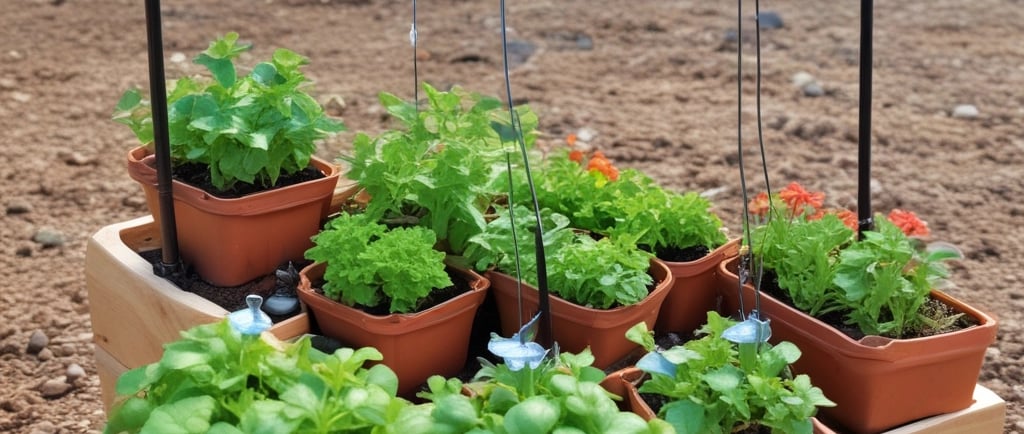

Watering container gardens can be a daily chore—especially in hot weather or for busy gardeners. Overwatering can lead to root rot, while underwatering stresses plants and stunts growth. For small-space growers, especially those on balconies or patios, a DIY drip irrigation system for pots offers a perfect balance: consistent moisture, minimal waste, and hands-free care.
In this guide, you’ll learn how to design, build, and maintain your own drip system for container gardens. Along the way, we’ll also review top Amazon kits and equipment to make your setup easier. Whether you’re growing tomatoes, herbs, or leafy greens, this system will help your plants thrive while making your life simpler.
Why Use Drip Irrigation for Containers?
Before diving into how to build one, let's look at why drip systems are ideal for container gardens:
Precision watering: Water drips directly into the soil near roots, minimizing waste.
Reduced effort: Once set up, you refill the reservoir or top up the line—no daily watering.
Conserves water: Less runoff, less evaporation.
Healthier plants: Consistent moisture is better for roots and nutrient uptake.
Scalable: Expand the system as your garden grows.
Because containers dry very quickly (especially in heat), having a drip system ensures each pot gets exactly what it needs—no more, no less.
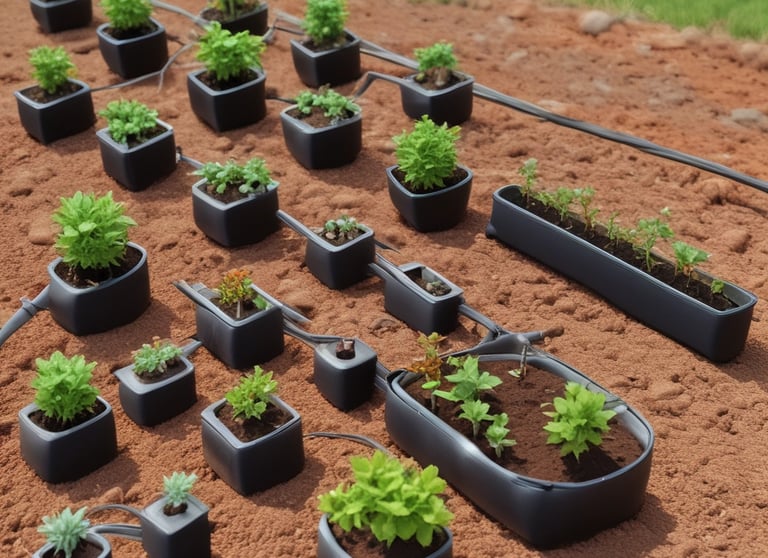
Key Components of a Drip Irrigation System for Containers
When planning your system, here are the main parts you’ll need:
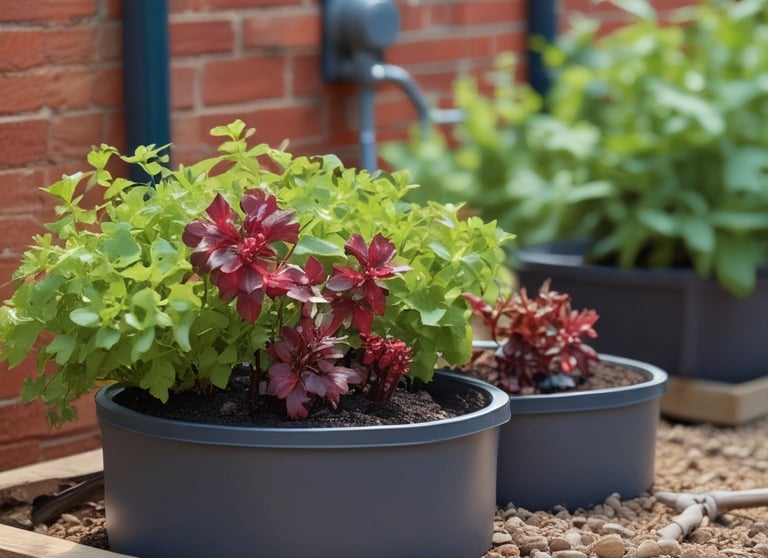
Reservoir or water source
A bucket or water tank with lid (if storing water).
A garden faucet or spigot can also feed the system.
Main tubing / supply line
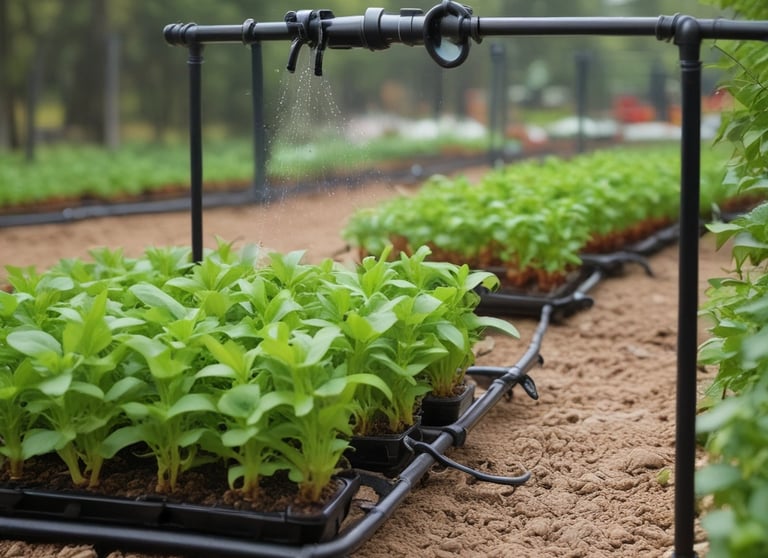
Poly tubing (¼ inch to ½ inch) that distributes water from the reservoir to each pot.
Drip emitters / drippers
These regulate flow into each container (e.g. 1 GPH, 2 GPH).
Some are adjustable for fine-tuning.
Connectors & fittings
Elbows, tees, barbed connectors to branch the tubing.
End caps to close off unused lines.
Filter & pressure regulator
Prevents clogging and ensures flow is consistent.
Helps if your water pressure is variable.
Timer / controller (optional but highly useful)
Automates watering schedules.
Ensures consistency, even if you're away.
Drip lines / microtubing
Small lines that lead from main tubing to each pot.
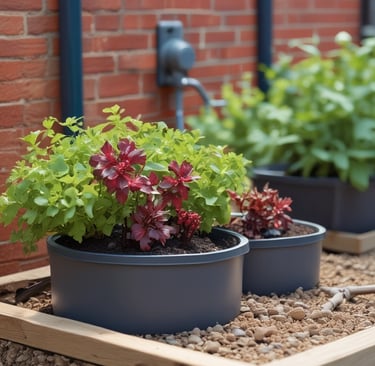
Step-by-Step: Building Your DIY Drip Irrigation System
Here’s a detailed, beginner-friendly setup:
Step 1: Plan Your Layout
Sketch your balcony or container arrangement.
Decide which pots will share lines and how long tubing needs to be.
Note the distance between pots to plan spacing.
Step 2: Set Up the Reservoir or Supply
Use a covered bucket, tank, or faucet connection.
If using rainwater, filter it before using.
Place the reservoir at a slightly elevated position to create gravity feed (if no pump).
Step 3: Lay the Main Tubing
Run the poly tubing from the reservoir to a central manifold.
Branch it with tees or elbows to reach groups of pots.
Step 4: Add Fittings & Connectors
Insert elbows, tees, and connectors as required to branch lines.
Seal ends with end caps when not in use.
Step 5: Install Emitters
Punch holes with a ½-inch punch tool.
Insert drip emitters near each container’s base.
Use adjustable emitters to control flow, or fixed ones if you have identical pots.
Step 6: Add Filters & Regulators
Install a filter at the line’s start to block particles.
Use a pressure regulator if your water pressure is high (to avoid emitter damage).
Step 7: Optional Timer / Automation
Connect a battery-powered or electric timer.
Program watering intervals (e.g. 10 minutes every morning).
Adjust based on weather or plant needs.
Step 8: Test & Adjust
Turn water on and check each emitter.
Adjust emitters or lines to ensure even flow.
Look for leaks or blockages—fix them before planting.
Choosing the Best Kits & Products
Here are excellent drip kits and components available on Amazon that make the process easier:
Rain Bird 075 GPH Drip Irrigation (Emitters pack) – reliable and adjustable for containers.
Orbit 62061 Micro Bubbler/Drip Kit – starter kit with tubing, emitters, and connectors.
Raindrip R560DP Automatic Water Timer – battery-operated and perfect for scheduling.
DIG ½ in Tubing Starter Kit – includes tubing, elbows, end caps, and fittings.
Gardener’s Supply Drip Irrigation Kit for Containers – complete kit for balcony gardeners.
Each provides ease of use, reliability, and compatibility with container gardening.
Maintenance & Best Practices
Flush your system monthly to remove blockages.
Check for emitter clogging (especially with hard water) and clean with needle or vinegar.
Reprogram timers seasonally (less in rainy season, more in summer).
Add mulch on top of the soil to reduce evaporation and maintain moisture.
Monitor plants daily during extreme heat or cold—adjust as needed.
Common Mistakes & Troubleshooting
Conclusion
A DIY drip irrigation system for container gardens is a game-changer—especially for balcony and small-space growers. It saves water, time, and stress while providing your vegetables with consistent moisture for healthy growth.
By following the steps above and using quality kit components, you can transform your balcony into a flourishing, low-maintenance garden.
👉 Ready to build your drip system? Check out our recommended Amazon kits and parts to get started today.
Happy gardening — and may your balcony burst with green and harvest!
Want to Know More on Gardening?
Please Read :
Subscribe
Join us for tips and product reviews.
Contact
Affiliate disclaimer
© 2025. All rights reserved.
As an affiliate, we may earn a commission from qualifying purchases. We get commissions for purchases made through links on this website from Amazon and other third parties.