

As an Amazon Associate, we earn from qualifying purchases. This post contains affiliate links – if you buy through them, we may earn a commission at no extra cost to you.
You’re choosing between self-watering planters that hold a week of water and ones that hold three, between sets of three pots and single large ones, and between plastic, ceramic, and terracotta. What separates them isn’t the idea — it’s the reservoir size, the material, and the sizes you actually get in the box.
Best overall: Self Watering Pots 8/10/12 — three pot sizes with a cotton wick system, a transparent water level window, and detachable trays that keep floors dry.
Best for a big single plant: YNNICO 12 Inch Planter — a deep reservoir and mesh drainage holes, built for one large plant you’d rather not water daily.
Best for small spaces: YNNICO Self Watering Planters — six pots from 5 to 8 inches, so you can fit several plants on one shelf or windowsill.
The rest of this guide walks through each pick, what it’s built from, and who it doesn’t suit.
How We Picked : best self-watering planters
We looked at Amazon listings for self-watering planters and kept the ones whose sellers state the facts a buyer needs before ordering. A listing earned a place by naming its sizes, explaining how the watering system works, and stating what comes in the box. Sellers that covered the reservoir, the drainage, and the material got a closer look.
What put a product out was vagueness. A listing that mentions self-watering but never says how water moves from reservoir to soil, or that lists a pot size without saying whether it’s the top diameter or the height, leaves the reader guessing.
Where a listing states a limit — a smaller usable planting depth, a size range that suits small plants only — that limit is in the review below, because it’s the thing that decides whether the pot fits your plant.
1Top Pick

Self Watering Pots 8/10/12
2Best for Big Houseplants
Self Watering Pots 3-Pack
3Best for Small Spaces
YNNICO Self Watering Planters
4
YNNICO 12 Inch Planter
5Best for Hanging Plants

Melphoe Hanging Planters
6Best for Windowsills
Fasmov Rectangle Planter
7Best for Handmade Look

D’vine Dev Terracotta Planter
8Best for Display Plants

Nihow Ceramic Plant Pot
9

Mayne Fairfield Planter
10

Dexceder Self Watering Planter
1. Self Watering Pots 8/10/12
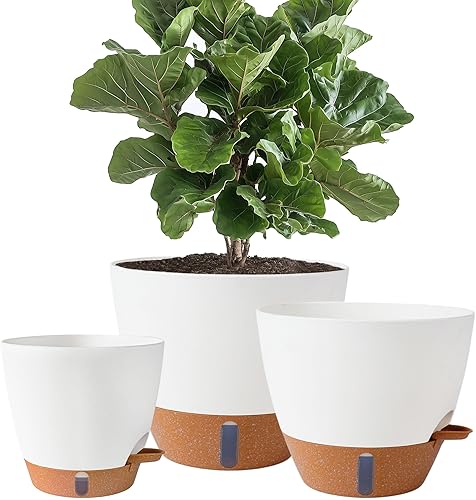
Best for: Someone who wants one set for several plant sizes.
This set gives you a graduated range of sizes, and each pot works the same way. An absorbent cotton wick pulls water up from a detachable bottom tray, so the soil stays evenly moist without you pouring from above. The listing says that keeps soil moist for up to 7-10 days, which is the kind of window that covers a short trip.
The detail worth reading twice is the planting depth. Because the reservoir sits inside the pot, usable depth is smaller than the overall height: 5.8, 6.1, and 7.6 inches. The seller recommends the pots for 4-6, 6-8, and 8-10 inch nursery pots. Measure your current pot or root ball before ordering, because a plant with a tall root ball won’t sit right in the 8-inch one.
The plastic is described as high-temperature resistant. A transparent water level window with measurement markings tells you when to refill, and the removable saucer trays are described as leak-proof, which matters if these sit on wood.
Pros:
-
A spread of sizes covers everything from compact to full-grown plants
-
Water level window with measurement markings
-
Detachable leak-proof trays protect floors
Cons:
-
Usable planting depth is less than pot height
-
Wick system needs the reservoir kept filled
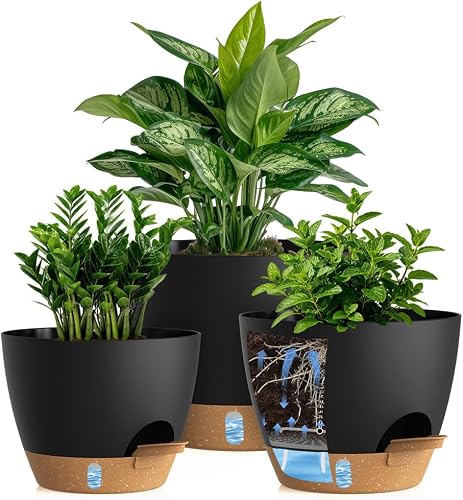
2. Self Watering Pots 3-Pack
Best for: The plant owner filling a living room with big houseplants.
This KUGAZ set runs 12, 10, and 8 inches, and the listing names monstera, fiddle leaf fig, and ZZ plant as the kind of houseplants it suits. Each pot uses an absorbent wick to move water from the reservoir to the roots, so you fill from the bottom rather than the top. The transparent water level window is the same idea as the first pick — you watch the level instead of guessing.
The listing calls these stackable and space-saving, which is a real advantage if you’re storing them between plant swaps. They’re lightweight plastic, so moving a 12-inch pot with soil in it’s manageable. The drainage holes and breathable structure are there to promote airflow and prevent root rot, which is the main risk when soil sits wet for long stretches.
This one isn’t for you if you want pots for tight, cramped spots. The listing doesn’t offer anything more compact. It’s also not for anyone who wants a decorative finish — the listing describes these as functional planters for living room, balcony, patio, or garden, and the look follows that job.
Pros:
-
A full range of sizes in one set
-
Water level indicator suits beginners
-
Stackable for easy storage
Cons:
-
Smallest pot is 8 inches
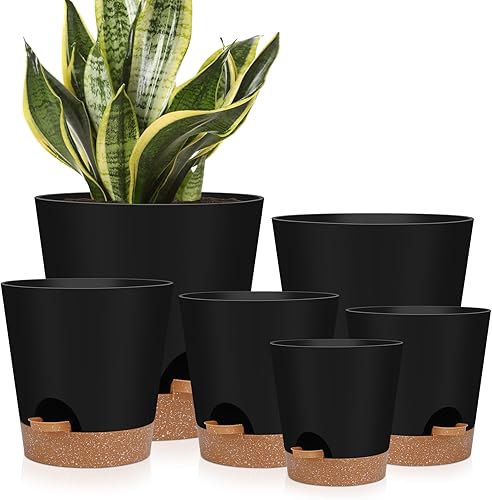
3. YNNICO Self Watering Planters
Best for: Small-space growers with several plants to water.
Six pots in one box, stepping down gradually from the biggest to the smallest. That’s the reason this set works for a windowsill, a desk, or a tiered shelf where one big pot won’t fit. The listing says the sizes suit most small and medium house and office plants, and it carries a Carbonfree Certified note.
The build details are more specific than most. Sidewalls are 4mm thick, which is thicker than a basic nursery pot, and the material is recyclable polypropylene described as sturdy in hand without being heavy. Multiple drainage holes sit in the bottom, and the watering lip is there to let air circulate around the roots.
The bottom tray is the part the listing talks about most. It’s described as big enough to catch all the extra water, and it comes with a string if you want to bottom-water. The reservoir is separate from the growing space, so the plant’s soil and the stored water don’t mix. This set isn’t for you if you need a pot bigger than 8 inches, and the listing doesn’t claim these handle a large monstera.
Pros:
-
Six sizes from 5 to 8 inches
-
4mm thick sidewalls
-
Separate reservoir and large bottom tray
Cons:
-
Nothing larger than 8 inches
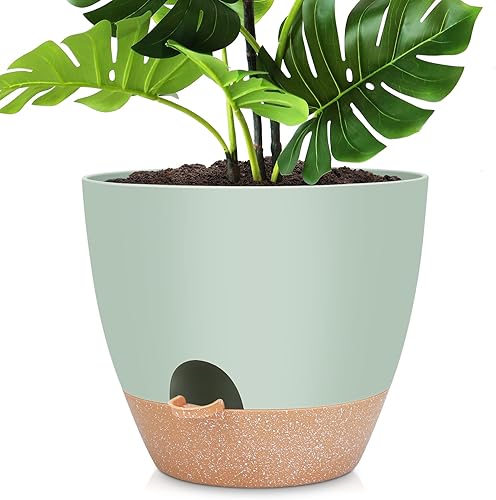
4. YNNICO 12 inch Large Self Watering Plant Pots
Best for: One large plant that’s hard to reach and water.
This is a single 12-inch pot with a deep reservoir, and the listing frames it around vacations — the idea being you don’t need someone to come over and water while you’re away. Mesh drainage holes and deep planting space are there to promote root growth and keep soil drained and ventilated.
The design detail that separates it from the sets is the removable watering feeder. You can water from the bottom directly, or water from the top and let the excess drip into the reservoir below. Either way, the plant isn’t sitting in standing water, which is what the listing says prevents root rot and keeps air moving through the soil.
The material is 6.5mm PP plastic, described as sturdy but lightweight. This pot isn’t for you if you want a matching set — it’s one pot, one size. It’s also not for small plants, since the listing frames this pot around a single substantial specimen.
Pros:
-
Deep reservoir for long stretches away
-
Water from top or bottom
-
6.5mm PP plastic construction
Cons:
-
Single pot, single size
-
Too large for small plants
5. Melphoe 2 Pack Self Watering Hanging Planters Indoor Flower Pots
Best for: Anyone hanging plants where a shelf won’t fit.
Two 6.5-inch hanging planters with a cotton rope wick that pulls water up from the bottom of a tall outer pot. The listing says the stored water can feed plants for two weeks or more, which is a longer claim than the wick sets above — worth knowing if you travel often. The outer pot is made of transparent PET, so you can see the water level without lifting the planter down.
Inside, there’s a separate inner pot with 12 drainage holes. Excess water drains into the outer pot, and the wick sends it back up to the soil. That two-layer setup is what keeps roots from sitting in water while still keeping the soil moist.
The chain is removable, and the flat bottom means these can sit on a desk without hanging. The listing says the thick-plated chain resists rust and the triple hooks add stability. This isn’t for you if you want a floor-standing planter — the 6.5-inch size suits succulents, ivy, ferns, and trailing plants, not a large upright houseplant.
Pros:
-
Two-week watering claim for travel
-
Transparent outer pot shows water level
-
Chain detaches; flat bottom sits on a desk
Cons:
-
6.5 inches only, suits small plants
-
Plants aren’t included
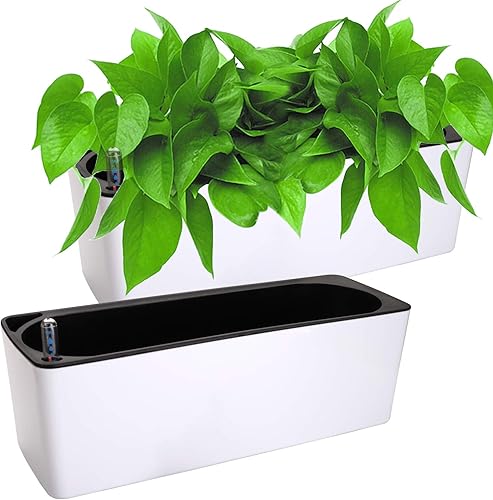
6. Fasmov 2 Pack Rectangle Self Watering Planter with Water Level
Best for: Windowsills, balconies, and narrow shelf space.
Two rectangular planters, each 16 inches long and 5.5 inches wide and tall. The shape is the point — a rectangle fits a windowsill or a bookshelf edge where a round pot wastes space, and 16 inches of length lets you grow several herbs or small flowers in one container.
The water level indicator works the same way as the round planters here: watch the level, and refill when it drops near the minimum. The listing says that turns daily watering into once a week or once a month, and that it protects plants from both under- and overwatering. The outer basin is high-gloss lacquered plastic, described as non-toxic.
This one isn’t for you if you’re growing a plant with serious height. At 5.5 inches of height, it’s built for herbs, flowers, and shallow-rooted plants. It’s also not a hanging option — the listing places these on balconies, desks, and bookshelves.
Pros:
-
16-inch length fits windowsills
-
Water level indicator visible at a glance
-
High-gloss finish suits outdoor use
Cons:
-
5.5 inches tall, suits shallow roots
-
Rectangular shape limits plant choice
7. D’vine Dev Self Watering Terracotta Planter Pot
Best for: Someone who wants a planter that looks handmade.
Two 6-inch terracotta pots, each sitting in a clear glass cup. There’s no wick and no plastic reservoir here — the terracotta itself does the work. The material is porous, so water moves through the clay into the potting soil at the rate the plant draws it out. The listing says to fill the glass with water to cover half the pot, and the clay takes what’s needed.
That’s a different mechanism from everything else on this list, and it changes how you use it. There are no drainage holes, which the listing frames as a benefit: no water or soil leaks onto your table, so there’s nothing to wipe up. The trade-off is that you can’t flush the soil from the top, so repotting and refreshing the soil matter more.
Each pot measures 6.2 inches in height and 6.2 inches across, handcrafted, so the listing notes slight size variation between pieces. This isn’t for you if you want to grow something large — the listing names herbs, aloe, and small spider plants as the right fit.
Pros:
-
Porous terracotta waters from below
-
Clear glass shows the water level
-
No drainage holes means no mess
Cons:
-
6.2 inches, suits small plants only
-
Handcrafted sizes vary slightly
8. Nihow Ceramic Self Watering Plant Pot
Best for: A plant you want on display, not tucked away.
A 6-inch ceramic pot in cream white with brown stripes, built around a cotton wick and two drainage holes. You run the cotton rope from the planter down into the water, and it keeps the soil moist between refills. The listing says that setup suits herbs, and names orchids, cactus, succulents, African violets, and spider plants as good matches.
The saucer is the part that earns its place. At 6 inches by 2.5 inches, it’s sized to store and reuse the extra water rather than just catch it, so one fill lasts longer. The listing says that covers travel and business trips without a water shortage. A rubber plug and mesh are included too — use the plug to close one drainage hole and keep the other open, and the mesh keeps soil from washing out.
The listing describes the ceramic as high-quality and durable for indoor and outdoor use. This isn’t for you if the pot will live outdoors through a freeze, and it isn’t for a large plant — 6 inches is the only size.
Pros:
-
Ceramic finish suits indoor display
-
Large saucer stores and reuses water
-
Plug and mesh included for drainage control
Cons:
-
6 inches only, one size
-
Ceramic is heavier than plastic
9. Mayne Fairfield 20in Self-Watering Square Planter
Best for: A front-door planter that stays outside all year.
A 20-inch square planter in espresso, made from UV fade resistant polyethylene. The listing says the color holds up in sun and the material protects against harsh weather, which is the claim that matters for a pot that never comes inside. The double wall design insulates roots from extreme temperatures and holds moisture in the soil.
The drainage is an overflow design — the listing says it protects roots and prevents overwatering while still encouraging growth. That’s a simpler system than the wick pots above: no indicator, no reservoir to watch, just a planter built so excess water leaves and the soil doesn’t drown. For a shrub or a small tree by a door, that’s often enough.
The listing states a 15-year limited residential warranty and says the planter is made in the USA. That’s the longest coverage on this list, and it’s the reason this one suits a permanent spot rather than a seasonal arrangement. It isn’t for you if you want to move the planter around — at 20 inches square, it’s a fixed piece, and there are no wheels.
Pros:
-
15-year limited residential warranty
-
Double wall insulates roots
-
UV fade resistant polyethylene
Cons:
-
No wheels, so it stays put
-
No water level indicator
10. Dexceder 18×17 Self Watering Planter with Wheels (White Matte)
Best for: A heavy planter you need to move for cleaning.
An 18 by 17 inch planter in white matte, with a sub-irrigation reservoir and four bottom wheels. The wheels are the practical difference: a pot this size full of soil is heavy, and being able to roll it out to sweep or reposition it for light saves a real chore. The listing says the water supply can last over three weeks, depending on the plants.
The inner basin is removable, measuring 16.73 inches across and 12.24 inches deep, with hidden handles. That means you can lift the planted section out and leave the outer pot in place, and the listing says it keeps dirt out of the outer pot. There’s also a drainage plug and a spillway hole — pull the plug to drain excess water after heavy rain if the planter sits outdoors.
The finish is described as automobile-grade matte, applied to the whole body rather than just the visible parts. The plastic is frost and UV resistant PP, and the listing says it won’t rust, peel, or dent. This isn’t for you if you want a small pot — 18 inches is a lot of planter, and it suits plants with big, dense root systems.
Pros:
-
Four wheels make a heavy pot movable
-
Removable inner basin with handles
-
Extended water supply claim
Cons:
-
Large footprint needs open floor space
-
Drain plug must be pulled after heavy rain
Also Worth Considering
Vanavazon Plants African Violet Pots — a 6-inch self-watering pot aimed at African violets and similar indoor plants. It didn’t make the main list because the listing gives fewer build details than the picks above, but the size and the self-watering setup suit a single windowsill plant.
Back Self-Watering Terracotta Olla Pot — a multi-pack of terracotta ollas, each described as providing a week of precision watering. It works differently from a planter: you bury the olla and it seeps water into the surrounding soil, which suits a garden bed or a large container rather than a single houseplant.
Bloem Self Watering Planter Pot — an 8-inch round planter in Vanilla Bean with a rolled rim, drainage holes, and a made-in-USA note. It’s a straightforward single pot for indoor or outdoor use, and it didn’t make the main list because the listing says less about the reservoir than the picks do.
How to Choose in Sixty Seconds
How do I know which size planter my plant needs?
Measure the nursery pot it’s already in, or the root ball if you’re repotting. The Self Watering Pots 8/10/12 listing gives the clearest guidance here: it recommends its pots for 4-6, 6-8, and 8-10 inch nursery pots, and warns that usable planting depth is smaller than overall height. Going one size up is normal. Going three sizes up leaves wet soil around roots that can’t drink it fast enough, which is the mistake most people make.
What’s the difference between a wick system and a terracotta planter?
A wick system, like the one in Self Watering Pots 3-Pack, uses a cotton rope to pull water from a reservoir into the soil, and you refill when the level window drops. A terracotta planter, like D’vine Dev Terracotta Planter, lets water seep through porous clay at the rate the soil draws it. Wick systems hold more water and suit travel. Terracotta gives you no reservoir to watch and no drainage holes, so nothing leaks — but it holds less.
Do I need drainage holes if the pot has a reservoir?
Not always, but know which type you’re buying. The Nihow Ceramic Plant Pot has two drainage holes plus a plug and mesh, so you choose how much drains. The D’vine Dev Terracotta Planter has none, and the listing treats that as the point — no leakage, no cleanup. If you tend to water from the top out of habit, drainage holes plus a reservoir give you more room for error than a sealed pot does.
What should I check before ordering a self-watering planter?
Three things. First, the material and what it’s rated for — Mayne Fairfield Planter states UV fade resistance and a 15-year limited residential warranty, which tells you it’s built to stay outside. Second, whether the reservoir is separate from the soil, as YNNICO Self Watering Planters describes. Third, the refill window each listing claims, since those figures assume a certain plant size.
Frequently Asked Questions
How long can a self-watering planter actually go between refills?
It depends on the reservoir size and the plant. Self Watering Pots 8/10/12 says its wick system keeps soil evenly moist for up to 7-10 days, Melphoe Hanging Planters says two weeks or more, and Dexceder Self Watering Planter says over three weeks. Those numbers assume a plant suited to the pot’s size.
Do self-watering planters need special soil?
The reason is the reservoir: water has to move up through the soil by capillary action, and a dense mix either blocks that movement or stays waterlogged. The Nihow Ceramic Plant Pot listing includes mesh to stop soil washing out through the drainage holes, which tells you the mix is expected to be loose enough to shift. Repot with a standard potting mix rather than soil dug from the yard.
What goes wrong first with a self-watering planter?
Root rot from a reservoir that never empties, or soil that stays wet because the plant isn’t drinking fast enough. Self Watering Pots 3-Pack uses drainage holes and a breathable structure to promote airflow, while YNNICO 12 Inch Planter keeps the plant out of standing water entirely. A wick that clogs or dries out is another common issue.
Is the simplest planter on this list enough?
For a single small plant, often yes. D’vine Dev Terracotta Planter has no wick, no indicator, and no drainage holes — you fill a glass cup and the clay does the rest. That’s enough for an herb, an aloe, or a small spider plant, which is what its listing names. If you travel for weeks at a time, a reservoir with a level indicator gives you more margin.
Closing
For most people, Self Watering Pots 8/10/12 covers the widest range of plants in one purchase — a graduated spread of sizes, a wick system, and a water level window that tells you when to refill. If you’re watering one large houseplant instead, YNNICO 12 Inch Planter gives you the deep reservoir and the option to water from the top or the bottom. Before you order either, measure the pot your plant is in right now, then check the sizing notes in that listing against it.
{“@context”:”https://schema.org”,”@type”:”FAQPage”,”mainEntity”:[{“@type”:”Question”,”name”:”How long can a self-watering planter actually go between refills?”,”acceptedAnswer”:{“@type”:”Answer”,”text”:”It depends on the reservoir size and the plant. Self Watering Pots 8/10/12 says its wick system keeps soil evenly moist for up to 7-10 days, Melphoe Hanging Planters says two weeks or more, and Dexceder Self Watering Planter says over three weeks. Those numbers assume a plant suited to the pot’s size.”}},{“@type”:”Question”,”name”:”Do self-watering planters need special soil?”,”acceptedAnswer”:{“@type”:”Answer”,”text”:”The reason is the reservoir: water has to move up through the soil by capillary action, and a dense mix either blocks that movement or stays waterlogged. The Nihow Ceramic Plant Pot listing includes mesh to stop soil washing out through the drainage holes, which tells you the mix is expected to be loose enough to shift. Repot with a standard potting mix rather than soil dug from the yard.”}},{“@type”:”Question”,”name”:”What goes wrong first with a self-watering planter?”,”acceptedAnswer”:{“@type”:”Answer”,”text”:”Root rot from a reservoir that never empties, or soil that stays wet because the plant isn’t drinking fast enough. Self Watering Pots 3-Pack uses drainage holes and a breathable structure to promote airflow, while YNNICO 12 Inch Planter keeps the plant out of standing water entirely. A wick that clogs or dries out is another common issue.”}},{“@type”:”Question”,”name”:”Is the simplest planter on this list enough?”,”acceptedAnswer”:{“@type”:”Answer”,”text”:”For a single small plant, often yes. D’vine Dev Terracotta Planter has no wick, no indicator, and no drainage holes — you fill a glass cup and the clay does the rest. That’s enough for an herb, an aloe, or a small spider plant, which is what its listing names. If you travel for weeks at a time, a reservoir with a level indicator gives you more margin.”}}]}


